ROB WARZYNIAK wades knee deep through a pile of ‘dead canaries’ of Trumpist policies which exacerbated the horrors of US capitalism domestically


 Latest editorial

It's time for Sarwar and Baillie to go
Scottish Labour's leaders cannot keep blaming Westminster for the collapse at the ballot box, says VINCE MILLS
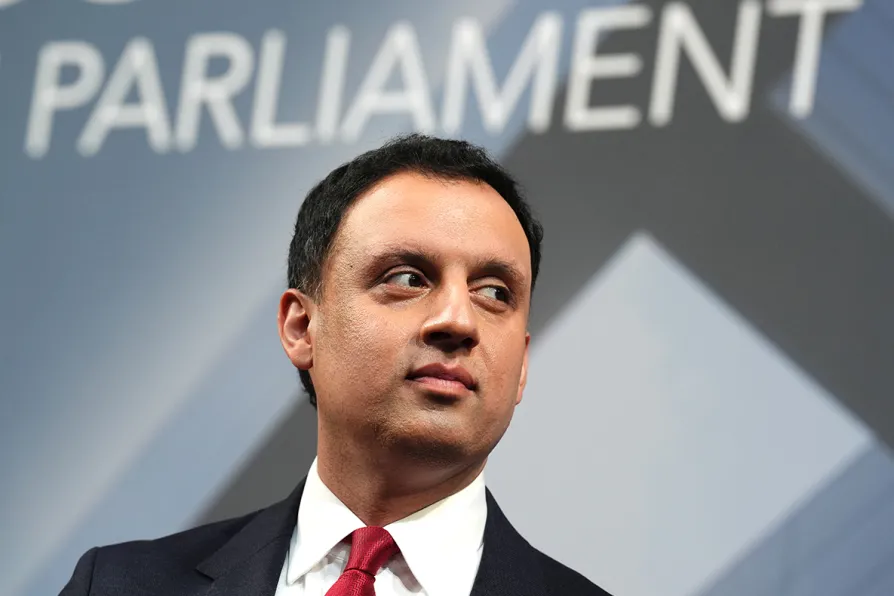 Scottish Labour leader Anas Sarwar looks on following his defeat in the Holyrood election at Glasgow International Arena, May 8, 2026

Without evidence or Nato consultations Berlin’s answer to the Leipzig incident is a rupture of relations. SEVIM DAGDELEN examines why
FRANCISCO DOMINGUEZ introduces the background to a conference on defending Latin America’s sovereignty
The glacier collapse in Nepal is yet another warning that a warming planet is making Himalayan disasters more frequent and destructive – but the countries facing the greatest risks are often those least responsible, says LI YANG
Nick Blair is set to benefit from a hugely lucrative contract to ‘virtually’ train the British army for its next war. Like father, like son, writes SOLOMON HUGHES
Even when tragedy strikes, Western media cannot resist the opportunity to turn it into a sordid propaganda opportunity, as the Nepal-China border tragedy shows, writes CARLOS MARTINEZ
Trade unions should be at the heart of the anti-racist push for reparations for the historic legacy and continuing impact of slavery, writes ROGER McKENZIE





IN AN extraordinary attempt to shift the blame for the existential threat to Scottish Labour as an electoral force, the Scottish leadership is trying to blame to “noises off” as Jackie Baillie, depute leader of the Scottish Labour Party, put it.
This is her euphemism for the hapless Keir Starmer, still rattling about Downing Street, like a poltergeist who hasn’t found the light yet. That would be the same Jackie Baillie who was responsible, along with leader Anas Sarwar, not only for the electoral “strategy” of the defeated Scottish Labour Party, but also ensuring the political orthodoxy of Labour candidates.
So, what was that “strategy” exactly? Here is what I wrote in the Morning Star in January about Scottish Labour’s proposed approach for the May election:
“… Each constituency that is targeted by Scottish Labour will be subject to the “Hamilton” process. In the Hamilton by-election of last June, Scottish Labour defeated the SNP by identifying who the Labour voters were and just as importantly delivering them to the ballot box booth … Would delivering the Labour vote alone be enough to win them a significant number of first past the post seats? No…”
Alan Roden a former communications director for the Scottish Labour Party confirmed on BBC Radio Scotland, the day after the election that had indeed been Scottish Labour’s electoral strategy.
In the end, Scottish Labour only won three seats in the constituency section and one of them, Na h-Eileanan an Iar (the Western Isles) was a complete surprise and won on a campaign against the SNP’s appalling failures on the provision of a decent ferry service. Indeed, it provided a kind of model on how Scottish Labour could have conducted itself, by identifying working-class concerns and then fighting to address them.
Let me cite an example. In the last few weeks, workers in higher education institutions in Scotland have been taking action in defence of pay and jobs. There is a veritable tsunami of job losses because of underfunding the Scottish higher education sector, as well as poor pay. But there were no aspiring Scottish Labour candidates (or any others for that matter) at the demonstration in Glasgow I attended. There was no-one there to leaflet union members saying how Scottish Labour would address their problems.
The reason was not, I hope, diffidence on the part of Scottish Labour candidates. It was because they would have had nothing to say had they got there. Faced with the funding crisis in higher education, a devolved issue remember, Scottish Labour’s manifesto said that it would fix higher education by : “…working in partnership on a future funding and governance model that delivers accountability and financial stability, and ensures Scotland continues to have a vibrant university sector.”
No, I don’t really know what that means either and it was much the same across the whole of Scottish Labour’s manifesto. In the words of a former chair of the Scottish Labour Party and former Unison official Dave Watson: “The Scottish Labour manifesto was yet another piece of managerial tinkering […] Instead of a radical plan that would distinguish Scottish Labour from the pack, it dissolved into platitudes that convinced no-one.”
Consequently, Scottish Labour could not build an alliance of groups hostile to the failures of the SNP, an alliance that could have covered a wide range of communities of resistance including health, schools, local government and transport as well as higher education. And whose responsibility was Scottish Labour’s manifesto? Yes, step forward Anas and Jackie. They have to take responsibility for the disastrous “strategy” and the anodyne manifesto which together contributed to the utter failure of Scottish Labour’s election campaign. Instead, and how ironic is this? They have gone for the SNP excuse: “a big boy done it and ran away.” Even if that description somewhat glorifies Starmer.
The situation for Scottish Labour is now deadly serious. The consequence of Scottish Labour’s failure in this election is not just that they will have to share the role of official opposition with Reform in the Scottish parliament, giving Reform endless political space to ‘mainstream’ ultra-right ideological ravings, but it also calls into question the institutional alliance of trade unions and constituency activists that is the Labour Party.
Probably Sharon Graham, leader of Unite, has been most explicit in highlighting this: “Only fundamental, irreversible change will stem the tide. If the party does not shift decisively towards the working class it is finished. It is change or die. Now or never.” This is no empty rhetoric. Next year there will be what is called a rules conference in Unite at which there will certainly be a proposal to change the rules to allow Unite to disaffiliate from the Labour Party. Unison has a different relationship to the Labour Party, through the Unison Labour Link, but its new leader Andrea Egan is also committed to reviewing affiliation.
Sarwar and Baillie have to resign to allow major reassessment of Scottish Labour’s political direction and reconnection with the working class. It is Sarwar’s and Baillie’s strategy and their policies and their practices that have led to this disaster and if they refuse to go, their presence could lead to the demise of the Scottish Labour Party by hastening the disaffiliation of its trade union base. They have a right to a dignified exit but they do not have the right — and they should not be allowed — to destroy the Scottish Labour Party.
