Trade unions need to step up and force a turn in the policies of the labour movement to effectively confront the far-right threat, argues NICK WRIGHT


 Latest editorial

How British spooks trained Brazil’s torturers
Newly revealed documents reveal that MI5 taught Brazilian secret police the techniques deployed by the 1964-85 military dictatorship in horrific prisons like Rio de Janeiro’s House of Death. SARA VIVACQUA reports
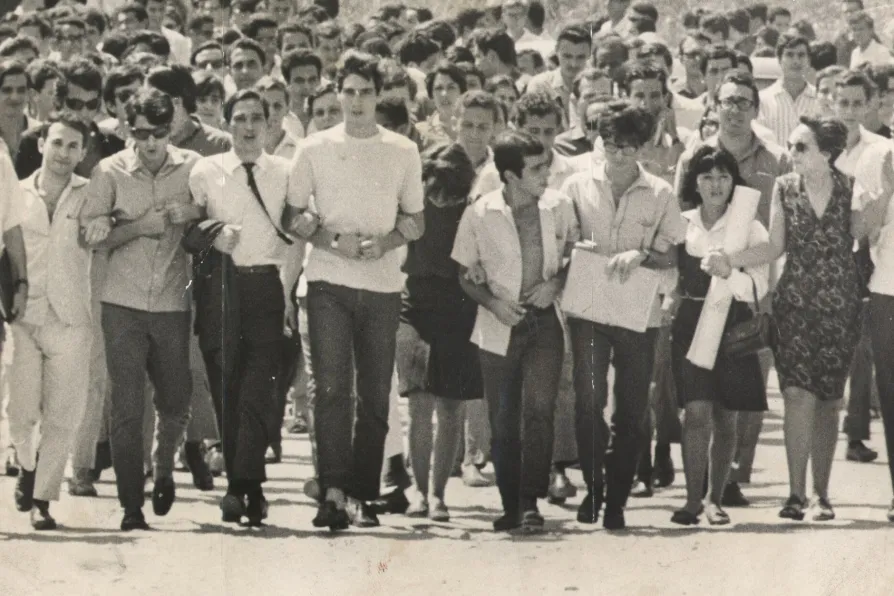 Brazilian students march against the military dictatorship, 1966
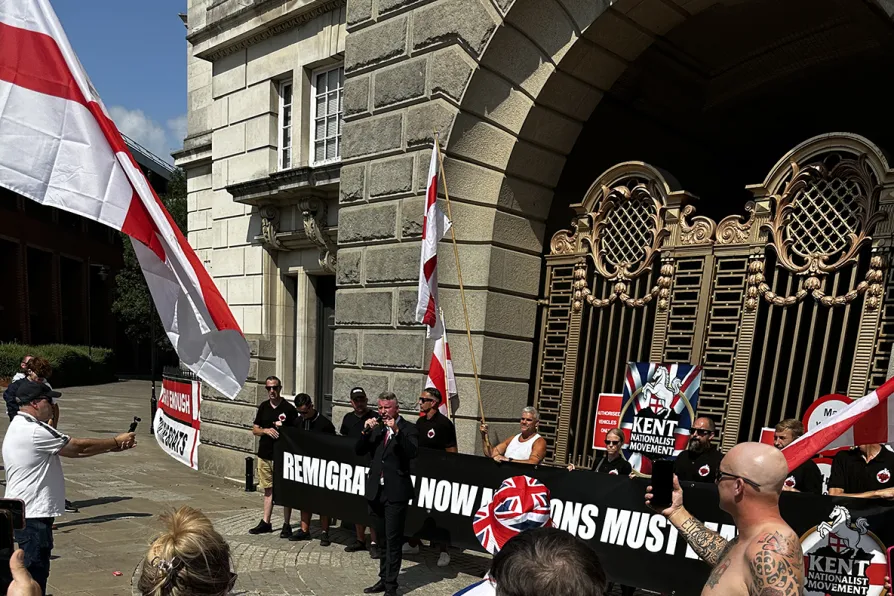
As the 90th anniversary of the outbreak of the Spanish civil war is marked, Teesside campaigners will gather to remember the local men and women who stood against fascism, explains TONY FOX
Whatever differences exist among international sympathisers of the Bolivarian revolution about its current trajectory, they should unite against the imperialist power that is the source of an enforced retreat, argues ROGER D HARRIS
Washington’s inability to subjugate Iran is an example of how it is trying to preserve a regional order that no longer exists, argues RAMZY BAROUD
US financial instability is exposing the limits of a dollar-dominated global economy — and giving the Global South a historic chance to build an alternative, says MURAD QURESHI
Deprivation is a fundamental factor in criminal behaviour that must be addressed but, KENNY MacASKILL argues, there needs to a major rethink in sentencing to tackle overcrowding





THREE investigative reporters in Brazil — Juliana Dal Piva, Chico Otavio, and Igor Mello — have unravelled one of the great mysteries of Brazil’s “years of lead” — the military dictatorship, 1964–1985. They uncovered the direct connection between the dictatorship’s repressive apparatus and British intelligence services, including MI5 and MI6.
The report was based on the archive left by Colonel Cyro Etchegoyen, code name “Dr Bruno,” who was one of the heads of the Brazilian Army Intelligence Centre, CIE, from 1971 to 1974. The archive contains 23 folders with 3,000 pages of secret documents. This personal archive, which he kept illegally and which was recently obtained by journalists, details the inner workings of the dictatorship’s worst clandestine torture facility: a house in Petropolis, Rio de Janeiro, known as the “House of Death.”
The colonel revealed the connection between the “tigrada” — the gang, or tiger group — and Britain: British intelligence services taught interrogation techniques that were used by the dictatorship in Brazil. The tigers were known for their ruthless brutality and hard-line stance within the repression apparatus.
US government support for the 1964 coup in Brazil, and for anti-communist military regimes across Latin America during the Cold War, is extensively documented. Declassified records show that Lyndon B Johnson’s administration was prepared to support the Brazilian military plotters, including through Operation Brother Sam, which involved plans for naval deployment, fuel supplies, ammunition, and other logistical assistance. By contrast, Britain’s role in Brazil’s repressive apparatus remained largely underexamined, underreported, and officially unaccounted for. Britain never accepted responsibility for its material involvement — or complicity — in the Brazilian dictatorship’s repressive apparatus.
The “House of Death”
The CIE operated a clandestine facility in Petropolis, in the mountainous region of Rio de Janeiro, known as the “Casa da Morte” — the House of Death. It was a factory for creating cachorros, or “dogs:” the name given to left-wing militants who were captured, “turned” into double agents, and reinserted into the resistance.
Those who refused to co-operate were killed. An estimated 22 people were murdered there. Only one person survived to tell what she saw: Ines Etienne Romeu, 1942–2015.
The manual details the techniques they learnt from the British, which were then implemented at the House of Death.
The archive includes a 165-page manual detailing interrogation techniques learnt from MI5 and SIS/MI6 during trips to England in 1970–1971. Brazilian officers visited as “official guests” of the British government. Torture methods taught by the British included total isolation; sensory deprivation, including hooding and walking in circles; sleep deprivation, including 58-hour interrogations; extreme temperature changes, known as the “refrigerator;” spartan cells measuring 1.5m x 2m, with black walls, a cot, a toilet, and “nothing more;” and the building of infiltration networks.
The documents of the House of Death revealed systematic crimes, such as rape, the robbery of victims’ belongings, detailed financial accounting of operations — amounting to the equivalent of R$1 million for about 30 actions resulting in deaths — and a list of 73 CIE agents.
The manual teaches a system of intense psychological pressure designed to break a prisoner’s will without leaving physical marks.
Unearthing our dead
One of the first victims was Carlos Alberto Soares de Freitas, known as “Beto,” a commander in the armed guerilla group VAR-Palmares (Vanguarda Armada Revolucionária Palmares) and former superior of Dilma Rousseff, who would later become Brazil’s president.
Beto disappeared on February 15 1971. When Dilma was chosen as Lula’s successor in 2010, she gave an emotional speech honouring her fallen comrades. Addressing Beto directly, she said: “Beto, you would have loved to be here with us.”
He is believed to have been the first person killed in the Petropolis House of Death, shot in the head after interrogators were unsatisfied with his report. The manual’s authors “do not record that the English taught them to kill.”
Beto was also a close friend of my parents, and I grew up hearing about him. Who knows where Beto is? One of his fellow comrades, Oroslinda Goulart, wrote: “Beto had been a comrade in struggle since 1966 — or rather, he had been in the struggle since before the coup. He was also a very close friend. He was an exceptional person: combative, firm, but at the same time tender, at a time when we were hardening and losing our tenderness. He was joyful; he liked to sing. And he was beautiful, with large blue eyes. This is the first time I have seen a newspaper publish something that speaks explicitly about Beto’s torture and murder at the House of Death. My heart raced. And it bled.”
The Brazilian Dictatorship
For those who came of age after the Cold War, the military dictatorships that once scarred Latin America can feel like a distant, abstract horror. But for countless families across the continent, that horror has a name, a date, and an empty chair at the table.
Brazil’s particular version of that nightmare began with the 1964 coup that overthrew President Joao Goulart, known as “Jango,” ushering in two decades of authoritarian rule. The regime’s true face of terror, however, emerged with Institutional Act Number Five, AI-5, in 1968, which suspended habeas corpus, shut down Congress, and granted the president dictatorial powers.
Backed by the CIA’s Cold War crusade against left-wing movements across Latin America, the Brazilian state built an elaborate machinery of kidnapping, torture, and execution. Thousands were arrested, hundreds were killed, and to this day hundreds of Brazilians remain officially listed as “disappeared” — their bodies never found, their fates still a state secret.

Similar stories

Memory, inheritance and resistance: a compelling Brazilian memoir, Argentinian short stories about the Japanese diaspora, and the Chilean skies of childhood, with LEO BOIX
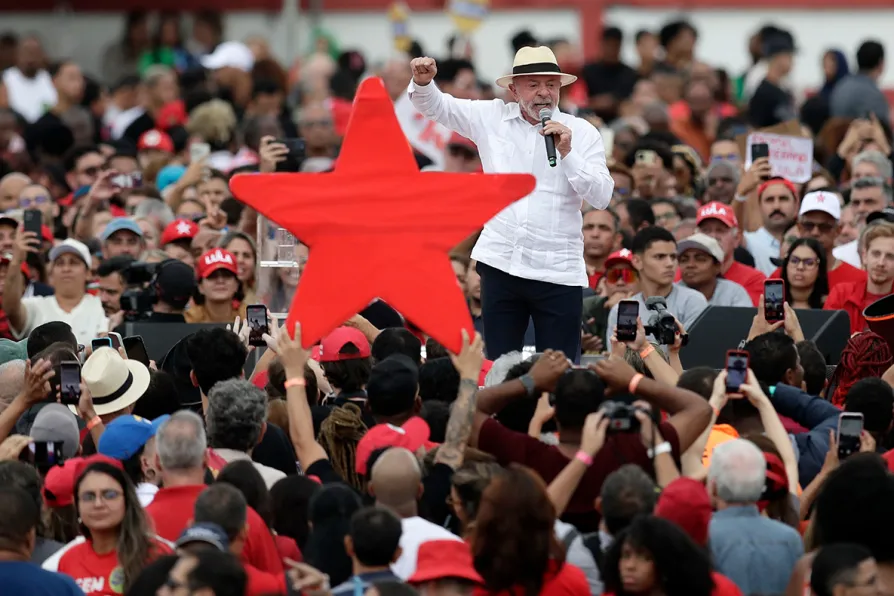
Sovereignty and the rule of law are under threat from Trump’s attacks on Lula’s administration just as they have been across Latin America, argue CARLOS MARTINEZ and SARA VIVACQUA
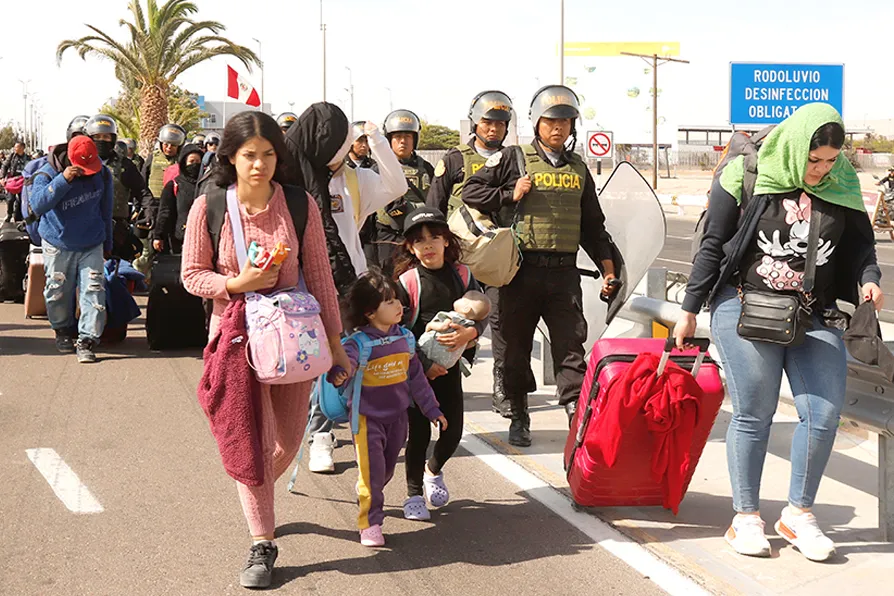
Far-right forces are rising across Latin America and the Caribbean, armed with a common agenda of anti-communism, the culture war, and neoliberal economics, writes VIJAY PRASHAD
![SHAMELESS DISPLAY OF COERCION: Previously unreleased photos of Guantanamo captives, 2002, brought to Guantanamo Bay from Afghanistan by way of Incirlik, Turkey. [Pic: Staff Sergeant Jeremy Lock/CC]](https://msd11.gn.apc.org/sites/default/files/styles/desktop/public/2025-11/cia%20web2.jpg.webp?itok=o_Dyxu_T)
GUILLERMO THOMAS enjoys a survey of the current state of the CIA (aka Langley) from an expert and insider of sorts