


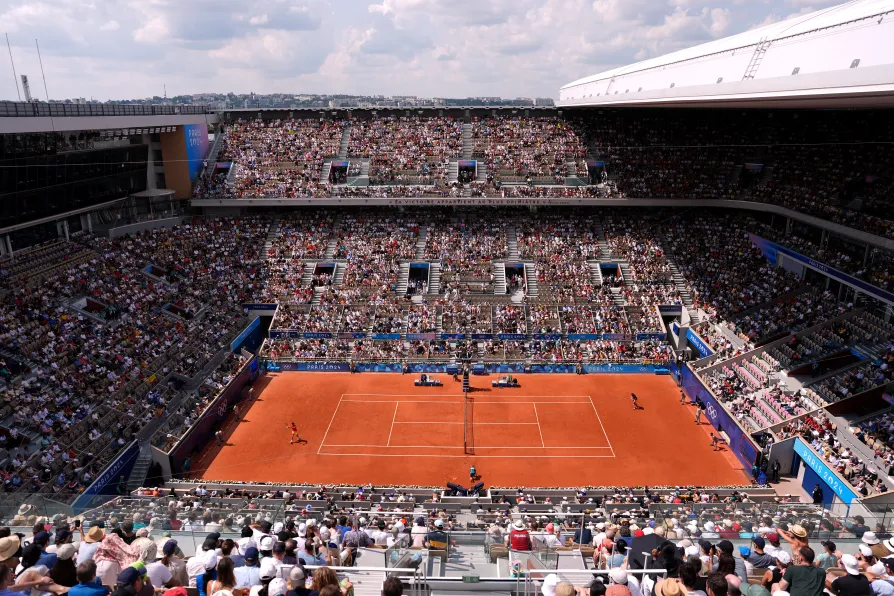
 A general view of Spain's Carlos Alcaraz and USA's Tommy Paul in action in their Men's Singles Quarter Final match during the tennis at Roland-Garros on the sixth day of the 2024 Paris Olympic Games in France, August 1, 2024





THE world’s leading tennis players have expressed deep disappointment at the French Open’s prize money and a lack of progress on addressing other complaints.
Last May, 20 players, including world number ones Jannik Sinner and Aryna Sabalenka, Carlos Alcaraz, Novak Djokovic, Coco Gauff and Iga Swiatek, wrote a letter to the four grand slam tournaments calling for a greater share of revenue and increased input.
The slams have made encouraging noises since about a willingness to engage but frustration among players has been growing and the same 20, who include the majority of the top 10 on the ATP and WTA Tours, have now released a statement.
French Open organisers earlier this month announced an increase of 9.5 per cent year-on-year in overall prize money, with the singles champions each collecting €2.8 million (approximately £2.4m).
That has not satisfied the players, though, who claim that increased tournament revenue means their share of the pot will have declined from 2024 to less than 15 per cent — well short of their 22 per cent target.
It is also dwarfed by the 20 per cent rise seen at last year’s US Open, while the Australian Open increased prize money by nearly 16 per cent in January.
The players’ other key complaints are the lack of a response regarding investment in welfare programmes, including pension contributions, and no progress on representation at decision-making level.
“As Roland Garros looks to post record revenues, players are therefore receiving a declining share of the value they help create,” the statement reads.
“More critically, the announcement does nothing to address the structural issues that players have consistently and reasonably raised over the past year.
“There has been no engagement on player welfare and no progress towards establishing a formal mechanism for player consultation within grand slam decision-making.
“While other major international sports are modernising governance, aligning stakeholders and building long-term value, the grand slams remain resistant to change.
“The absence of player consultation and the continued lack of investment in player welfare reflect a system that does not adequately represent the interests of those who are central to the sport’s success.”
The statement concludes by saying the players “will continue to advocate for constructive dialogue and for reforms that ensure the long-term health and integrity of professional tennis.”
