A World Cup full of memorable moments was also marked by exclusion, exploitation and unprecedented political meddling, writes JAMES NALTON


 Latest editorial

The strike that forged a cricketing generation
Hardship during the 1926 lockout helped uncover talent that would go on to define county cricket, writes JON GEMMELL
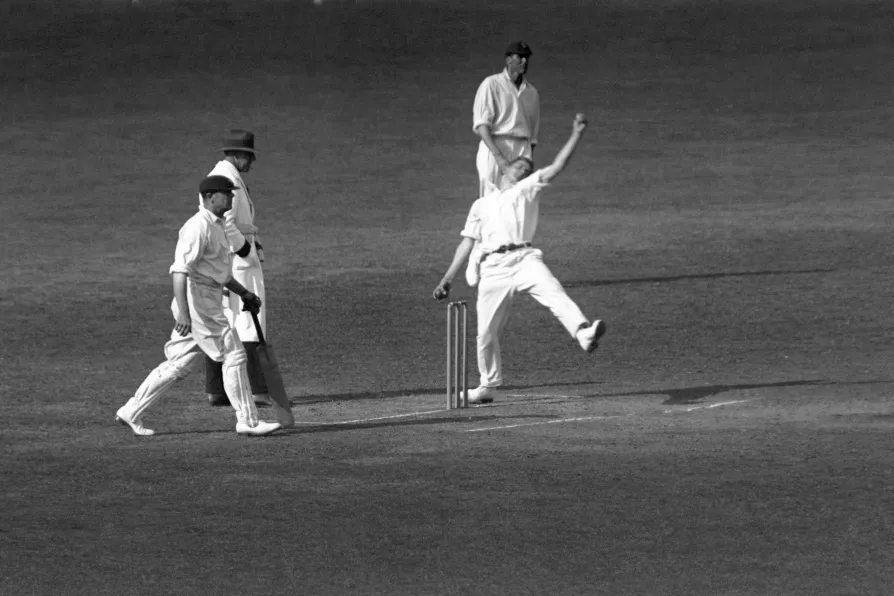 England's Harold Larwood bowling to Warren Bardsley, August 18, 1926

From Barry McGuigan and Carl Frampton to Tyrone McKenna and Lewis Crocker, the city’s fighters carry a complex history into the ring, writes JOHN WIGHT





COAL lay at the heart of British economic life in the first half of the 20th century.
Nowhere was this more evident than in the mining communities of northern England and the Midlands, where harsh working conditions fostered both physical resilience and a strong sense of solidarity.
Industrial conflict became a defining feature of mining culture, most notably in the General Strike of 1926. This same culture also found expression in sport, which became a crucial outlet for community identity and collective pride.
Though often portrayed as a middle-class pastime, cricket maintained deep connections with the working class and, as such, the mining industry. Between the wars, the County Championship was dominated by northern clubs. Yorkshire won the title 12 times, Lancashire five, with additional victories for Nottinghamshire in 1929 and Derbyshire in 1936. That Derbyshire side, the only championship‐winning team from outside the traditional “big six” counties during this period, was heavily shaped by the local coalfields.
In the interwar years, coal was Britain’s largest industry and the only one employing more than a million workers. Around one in 10 people relied directly on the mines or related industries. In regions such as north-east Derbyshire and west Nottinghamshire, almost every town or village had its own pit. These pits were not just places of employment but hubs of social life, often supporting sports clubs that gave workers structure, recreation and opportunity.
Harold Larwood was perhaps the most famous miner‐cricketer of his age. He began work at the Annesley Colliery as a pony pit‐boy at just 14. The mining historian John Threlkeld argued that the physical demands of pit work were crucial to Larwood’s development, suggesting that had he been an office worker he would never have acquired the leg strength, shoulder power or mental toughness required of an intimidating fast bowler.
Had he been an office worker, he might have been paid more: Nottinghamshire only offered Larwood the same rate as he was getting for working underground.
Larwood was far from unique. Before the first world war, Nottinghamshire professionals Fred Barratt, Tom Oates and “Topsy” Wass all worked in the mines. In 1936, six of their players receiving winter pay — Charlie Harris, Walter Keeton, Larwood, Bill Voce, Arthur Staples and Arthur Wheat — had mining backgrounds.
It is part of cricketing folklore that the miners’ strike of 1926 helped discover two of Derbyshire’s greatest performers – Bill Copson and Tommy Mitchell. The lockout began on May 1 after miners rejected longer hours for lower pay, a response to falling coal prices and owners’ refusal to accept reduced profits or reforms in working practices.
Hardship was an undeniable feature of miners’ lives. Many had served in the first world war, and the strike was widely perceived as a moral struggle. AJP Taylor argued that both wartime enlistment and the strike reflected “acts of spontaneous generosity.” Winston Churchill disagreed, famously branding the miners “the enemy” and calling for their “unconditional surrender.”
With time to fill during the lockout, many miners turned to sport. Some were later picked up by colliery cricket sides, including both Copson and Mitchell. As Derbyshire historian John Shawcroft observed, it was not the major leagues of Lancashire and Yorkshire but the smaller colliery teams to which Derbyshire cricket owed its greatest debt.
Competitions such as the Bassetlaw and District League, which brought together clubs from Derbyshire, Nottinghamshire, South Yorkshire and Lincolnshire, flourished during the 1920s. Many of its strongest teams were pit sides, and during the 21 interwar seasons, colliery clubs were crowned champions in all but one year. In a crucial match during Derbyshire’s 1936 title‐winning campaign against Nottinghamshire, sixteen players with Bassetlaw League connections took the field.
Derbyshire’s championship win in 1936 remains the county’s greatest achievement. Financially weaker than its northern neighbours and reliant on a smaller membership base, the club survived through local talent. Every professional in the side was raised in the county, most from the coalfield areas, the same ones that also provided the backbone of Nottinghamshire’s championship team in 1929.
Fast bowler Bill Copson began work at the pit at 14 and was employed at Morton Colliery at the time of the 1926 strike. He played for the pit side for four years before breaking into county cricket. Although Copson possessed the talent to rank alongside fellow miner‐bowlers Larwood and Voce, his career was curtailed by poor health, itself a product of the difficult conditions he endured as a young miner.
The leg-spinner Tommy Mitchell was a face worker at Cresswell Colliery. During the strike, Derbyshire captain Guy Jackson brought a team to play at Cresswell and was taken by Mitchell’s bowling. Initially Mitchell was reluctant to turn professional, rejecting an early offer of £3 a week from Derbyshire on the grounds that he could earn more in the pit. He eventually accepted £4.
Mitchell went on to become Derbyshire’s most prolific bowler, taking over 100 wickets in 10 consecutive seasons. Selected alongside Larwood and Voce for the 1932–33 Bodyline tour of Australia and New Zealand, he played only in the fourth Test but famously dismissed Don Bradman for one in a match against New South Wales.
Mitchell’s career was marked by a strained relationship with authority: he was dropped in 1933 for swearing at an amateur teammate and later told England captain Bob Wyatt that he “couldn’t captain a box of bloody lead soldiers.” He never played for England again.
Those who had served apprenticeships in the mines developed a spirit of frankness and mutual reliance that often clashed with amateur sensibilities. Wisden described Derbyshire as a side built on teamwork rather than individual brilliance, animated by a will‐to‐win rooted in collective effort. Mitchell himself remarked that he was “as good a workman down the pit as on the cricket field.”
Similar sentiments were later echoed by Yorkshire and Leicestershire’s Dickie Bird, who worked at Monk Bretton Colliery. He recalled miners as “honest, straight and good living men” who spoke plainly and stood by one another — hard men, but with “big hearts.”
Needless to say, their likes will never be seen again. At the time of nationalisation there were 68 collieries in Derbyshire; today there are none, the last deep mine having closed in 1993. Whether that spirit of comradeship can be recaptured could help determine not just the future direction, but also the wider popularity of cricket.
