A California union’s decision to host a meeting about US policy towards Cuba has prompted a congressional probe and renewed attacks on international solidarity, writes CAMERON HARRISON



Starmer has chosen landlord profits over the needs of ordinary people
Britain’s housing crisis is no accident but a political choice, says CLAUDIA WEBBE
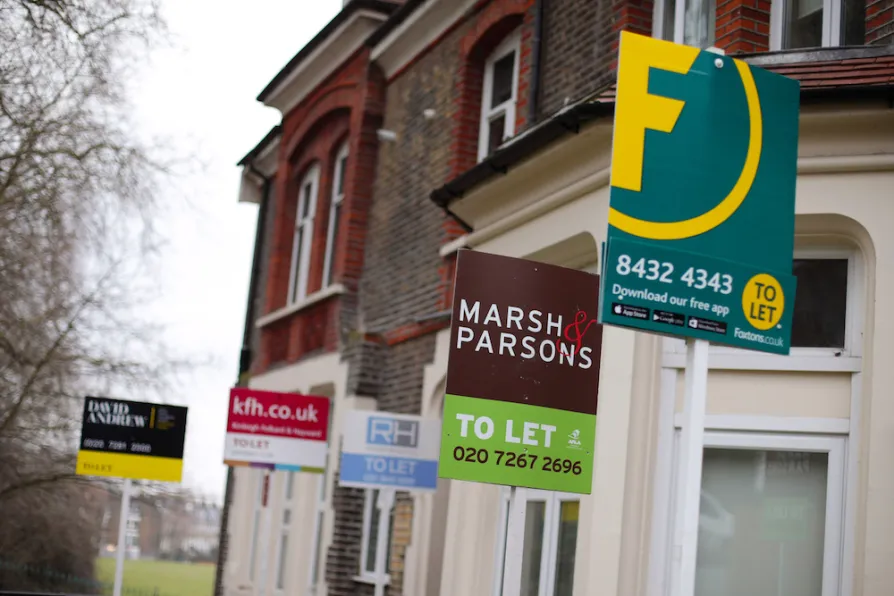
 A row of letting agent signs placed outside houses

The Baltic state is set to reverse its constitutional prohibition on nuclear weapons and foreign bases as part of accelerated Nato war preparations, warns TOM UNTERRAINER
Long-term underfunding and state neglect, while simultaneously probation services have been undermined, have intensified the prison crises, argues SOLOMON HUGHES
Holyrood incompetence has cost jobs and put the future of Clydeside’s Ferguson Marine shipyard into jeopardy. Its future should have been assured, argues KENNY MACASKILL
With the agitated debate now raging in the media about the early release schemes, Prison Officers Association general secretary STEVE GILLAN gives the view of those who work in the sector
The hounding of the late Jason Arday is an all too familiar experience for many black people. ROGER McKENZIE calls for collective action to combat what can feel like personal isolation





EARLIER this month thousands of people from over 70 organisations, which included six national trade unions, marched through London to demand rent controls and a new generation of council homes. They marched because the numbers have become intolerable, because the political excuses have become exhausted, and because every parliamentary delay now has a human face attached to it.
On June 14 2017, less than a week after Jeremy Corbyn came close to winning the general election, 72 people were killed in the Grenfell Tower fire in west London. Sixty-one of the 72 victims were non-white. The building had been wrapped in flammable cladding — not for the safety of residents, but to improve the aesthetic of the area for wealthy neighbours. The council chose cheaper, more dangerous materials.
Cheaper. As if the lives inside had a discount rate. The firm that made the cladding knew it was a fire danger. For years, residents have complained and campaigned. For years, they have been ignored.
But Grenfell is only one example of the appalling treatment of tenants by the powerful. Awaab Ishak was two years old when respiratory illness caused by living in a mould-riddled Rochdale housing association flat killed him in December 2020. Two years old.
Awaab’s father had complained for three years about the mould and damp. Nothing was done. Awaab Ishak died because a housing association decided a black family’s distress was tolerable.
That a child breathing fungal spores was tolerable. That poverty was tolerable. Not worth spending money to fix.
Meanwhile, landlords are celebrating all the way to the bank. Eighty-five per cent of landlords are currently making a profit. The total property income declared by landlords in 2023-24 was £55.53 billion. This was the highest in five years. The average landlord earns £75,000 a year in gross rental income.
As with energy, these profits are accelerated by the exploitation of crises. Private rents have risen 44 per cent since the pandemic. Only 2.4 per cent of private rental properties are affordable for people receiving housing benefit. Housing benefit was immediately frozen after the pandemic, too — a freeze that lasted for four years. The lifting only lasted a year before the Labour government reimposed it.
These freezes mean that, right now, 48 per cent of privately renting families on universal credit face a shortfall between their benefit and their rent. Some 80,000 people, including 30,000 children, are pushed into very deep poverty just by the housing benefit freeze alone. Forty per cent of landlords refuse to take tenants on housing benefit at all.
Driven by this, the number of children living in temporary accommodation is at a record high: over 172,000. This is the equivalent of a child doing homework in a bed and breakfast corridor or a mother calculating whether tomorrow’s rent will leave enough for school shoes.
A record 4,793 people slept rough in England on a single night in autumn 2025 — this is up 56 per cent in three years. The number of women sleeping rough has risen 111 per cent since 2021. The social housing waiting list stands at 1.33 million households, with families in 32 local authorities facing waits longer than 18 years.
Asking rents have risen 44 per cent since the pandemic. The average one-bedroom flat now consumes 47 per cent of women’s median earnings. Only 2.4 per cent of private rental properties are affordable for people on housing benefit.
The feminist economics case is compelling. If housing were decommodified and if rents were controlled, if social housing were adequate in supply and quality then the gender pay gap would lose one of its sharpest material expressions. A woman who spends 47 per cent of her income on a single-bedroom flat is not experiencing an unfortunate market outcome.
She is experiencing the intersection of the gender pay gap and the housing crisis meeting in her bank account every month. Nowhere in England is the average rental home affordable for a woman on median earnings.
The foundation of this architecture is Right to Buy. Over 40 per cent of former council homes are now in the private rented sector thus bought from the public at a discount, rented back at a profit.
This is redistribution in reverse — an enormous upward transfer of wealth from the many to the few and from the struggling renter to the portfolio landlord, from the child in temporary accommodation to the investor watching their yields climb to a decade high.
In a country crying out for the redistribution of wealth after 14 years of Tory government, the housing situation is doing the opposite — now with the support of a Labour government. The situation is also being worsened by the eagerness of councils to collaborate with developers in gentrification. This drives out people who have grown up in an area, putting property prices and rents far out of reach and completely changing the character of an area.
Your Party’s Jeremy Corbyn recently visited Tottenham in London to see the demolition of Love Lane and support socialist candidates opposing it. The Love Lane gentrification is being driven by Spurs football club, whose roots in the area mean they should be protecting it for the local people who have made the club what it is.
The club’s new ground comes with planning permission for almost 600 new homes. The percentage that has to be “affordable” — already a problematic term — is zero. In addition, the local council is breaking its own policy by keeping 130 flats in the area empty.
Campaigners say that this is “because council officers are scared that new temporary accommodation tenants would have rehousing rights, and a right to vote” on any revised development scheme. Similar scenes are playing out up and down the country.
Tenants in Britain are being squeezed from both sides, by a shortage of social housing stock on one side and resulting high rents on the other. The situation is often treated as if it’s insurmountable and putting it right would be “unsustainable,” but the examples of comparable European neighbours expose this as a convenient lie. Sixteen per cent of UK residents live in social or council housing, compared to 30 per cent in the Netherlands and 24 per cent in Austria. Countries like Germany that have low social housing numbers address this by putting a “brake” on rents, setting a local reference rent that landlords and developers have to respect.
The result is that landlords are not able to make those who are able to find a home at all pay through the nose for it. The UK has the second-highest proportion of people forced to pay out more than 40 per cent of their income just on rent — 43 per cent for social renters and 46 per cent for private, according to the latest government data.
Compare this to the 1970s — held up by capital as a supposed example of how badly left-wing politics and worker “militancy” affected Britain — where average rent costs were just 11 per cent of the average wage.
Those who call the demands the housing march impractical should consult the historical record. In the mid-1950s, the UK built over 200,000 social homes a year. Vienna today houses 60 per cent of its residents in subsidised accommodation. Singapore’s public housing serves the majority of the population at genuinely affordable rates.
The idea that only the market can provide homes is a political assertion, not an economic law. States can build. States have built. What is missing is not capacity but the political courage in the face of a landlord class with significant representation on both front benches.
The principle that housing is a human right and recognised in the Universal Declaration of Human Rights is too long ignored in practice. A decent home is one of the basics of human dignity. Like health, it should not be a vehicle for someone else’s profit.
Yet Keir Starmer’s Labour government has made clear it prioritises the profits of the landlord class over the fundamental needs of the working class. Despite the Labour branding, the current government is little different from any of the Tory administrations that preceded it.
A Labour government has the legislative capacity to introduce rent controls and freeze service charges. It has not done so. Service charges in social housing, which are currently unregulated and uncapped, have doubled in some buildings within three years. The government’s own target of 1.5 million homes by 2029 is weighted toward market and affordable housing rather than the social rent homes the crisis demands. Meanwhile, only 17,000 social homes were delivered last year against the 90,000 required to stop the waiting list from growing.
The housing march demanded three immediate things: rent controls so landlords cannot raise rents beyond what people can afford; a freeze on service charges; and a mass programme of genuinely social, council-built homes — homes for the many, not luxury flats for the few. These are not radical demands by historical standards. They are the minimum restatement of a social contract that neoliberalism has spent 45 years dismantling.
The housing emergency is a political choice. It can be unchosen. Those who marched are the voices of the people who bear its weight. These are renters, social housing tenants, those locked out entirely, working families, black communities, women priced out of every region, young people told to wait a generation for stability. They deserve our solidarity and support.
The cost of continued inaction is being paid in years, in health, in childhoods, and in lives.
Claudia Webbe was member of Parliament for Leicester East (2019-24). You can follow her at www.facebook.com/claudiaforLE and x.com/claudiawebbe.
