


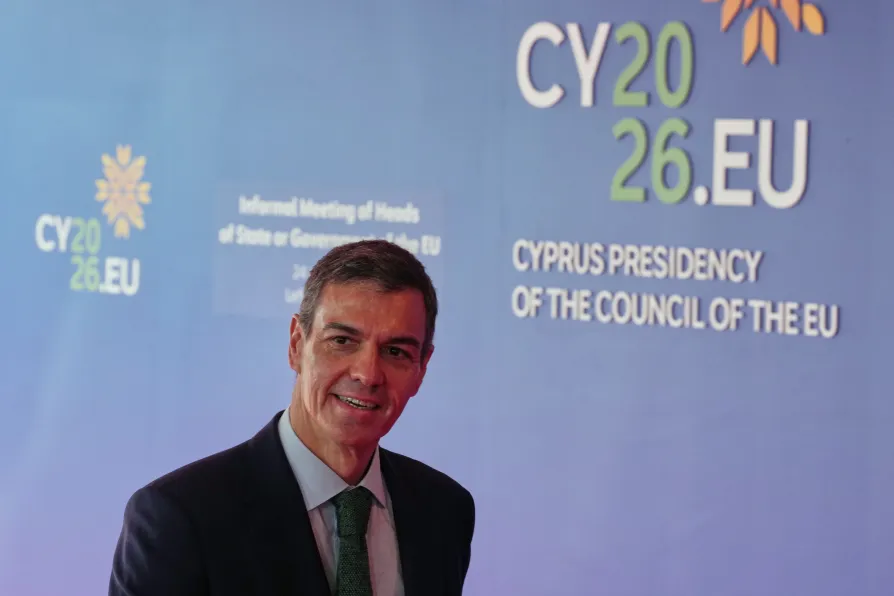
 Spain's Prime Minister Pedro Sanchez arrives for the EU Summit in Nicosia, Cyprus, April 24, 2026
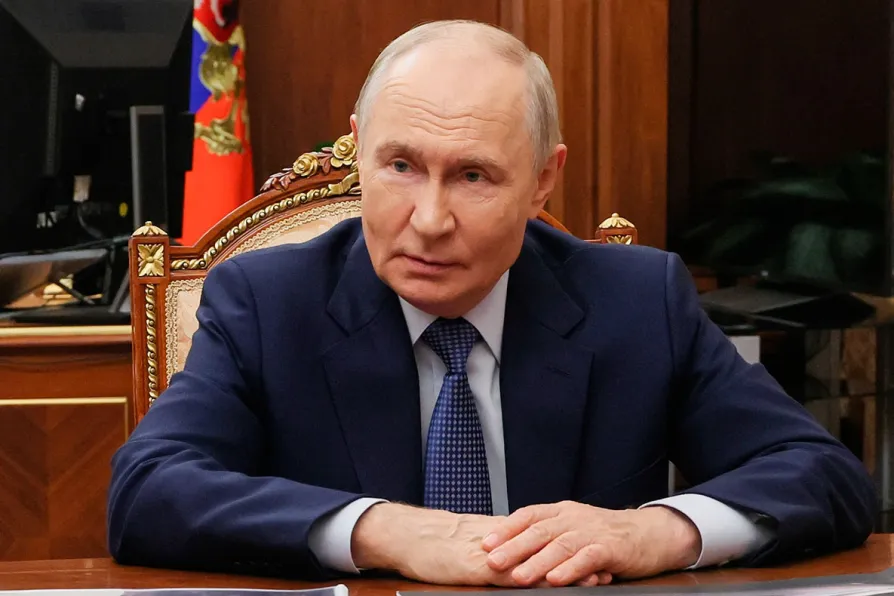





SPANISH Prime Minister Pedro Sanchez refused to be drawn into a dispute with the US today over reports that the Pentagon is weighing whether to punish Nato members that fail to support US operations in the Iran war.
Among those in the firing line is Spain, which has refused to allow US forces involved in the war to use bases on its territory or air space. Spain says that US-Israeli actions in the Iran war contravene international law.
France has also refused to give US forces free rein to use their territory for the bombing campaign.
The Pentagon is reported to be mulling whether to suspend Spain from Nato, according to an unidentified US official referring to a US Defence Department email, and quoted by the Reuters news agency.
“Well, we do not work with emails,” Mr Sanchez told reporters at a European Union summit in Cyprus. “We work with official documents and positions taken, in this case, by the government of the United States.
“The position of the government of Spain is clear: absolute collaboration with the allies, but always within the framework of international legality,” he said.
EU leaders are set to discuss how they might come to each other’s aid should one of them come under attack.
Cypriot President Nikos Christodoulides, whose country holds the bloc’s presidency until July, said that the leaders had tasked the European Commission to “prepare a blueprint on how we respond” should a member seek help under Article 42.7 of the EU treaties.
It has only ever been used once, by France after the Paris terror attacks in 2015.
EU envoys and ministers are set next month to conduct “table-top exercises” to game out how the treaty article might be used, drawing on the bloc’s military capacities, but also other assets not available to Nato, like trade, border and visa policies.
Meanwhile, the EU approved a €90 billion (£78.1bn) loan package to help Ukraine meet its economic and military needs for two years after oil began flowing through a key pipeline to Hungary and Slovakia, ending months of political deadlock.
The measures were prepared early this year and had been set to be announced in February to mark the fourth anniversary of the conflict, but Hungary and Slovakia opposed the move.
The countries had been feuding with Ukraine since Russian oil deliveries were halted in January after a pipeline was damaged. Ukrainian officials blamed the damage on Russian drone attacks. Both countries confirmed on Thursday that deliveries have resumed.
