


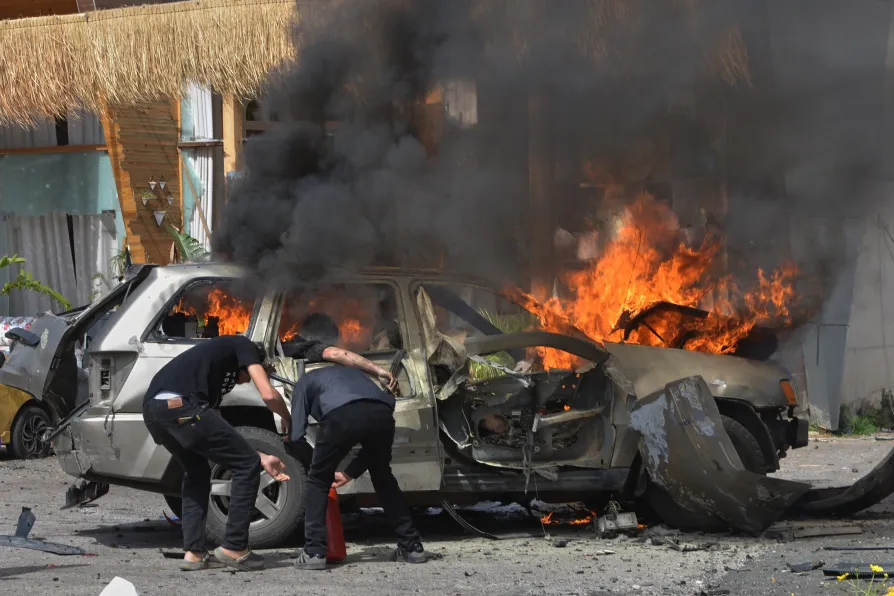
 A person is seen inside a burning vehicle as men attempt to put out the fire after an Israeli air strike hits a car in the coastal town of Barja, south of Beirut, Lebanon, May 13, 2026





A THIRD round of direct talks between Israel and Lebanon began in Washington on Thursday.
This comes days before the expiration of a truce that reduced but did not stop the fighting between Israel and the Lebanese resistance group Hezbollah.
Lebanese officials are hoping that the two-day negotiations will yield a new ceasefire deal and pave the way for tackling a series of thorny issues, including the withdrawal of Israeli forces from southern Lebanon and the disarmament of Hezbollah.
A source from the US State Department described the full day of discussions on Thursday as “productive and positive.”
But Hezbollah, which is doing the actual fighting, is not part of those talks and has been vocally opposed to Lebanon engaging in direct negotiations with the Israelis.
Israel and Hezbollah have continued to trade near-constant fire across the border despite a US-brokered ceasefire on April 17. Initially a 10-day truce, it was then extended for another three weeks.
The Israelis have occupied swathes of southern Lebanon on which they claim it is their intention to remain as a “security buffer” against Hezbollah.
Israeli ambassador to the US Yechiel Leiter in an interview with Israeli news site Walla News on Thursday said Israel aims “to negotiate for full peace as if Hezbollah does not exist — borders, embassies, visas, tourism, everything.”
Despite Lebanese officials’ assertions that diplomatic normalisation is not currently on the table, he said he believes “it is possible to reach such an agreement within a few months.”
But, he added: “It would be conditioned on the success of the second track — dismantling Hezbollah.”
Lebanon’s Health Ministry says that since the war began on March 2, 2,896 people have been killed — including around 400 since the nominal ceasefire was implemented — and 8,824 wounded.
Israel has reported that 18 Israeli soldiers, two Israeli civilians inside Israel and a defence contractor working in southern Lebanon have been killed in the conflict.
