

 Latest editorial
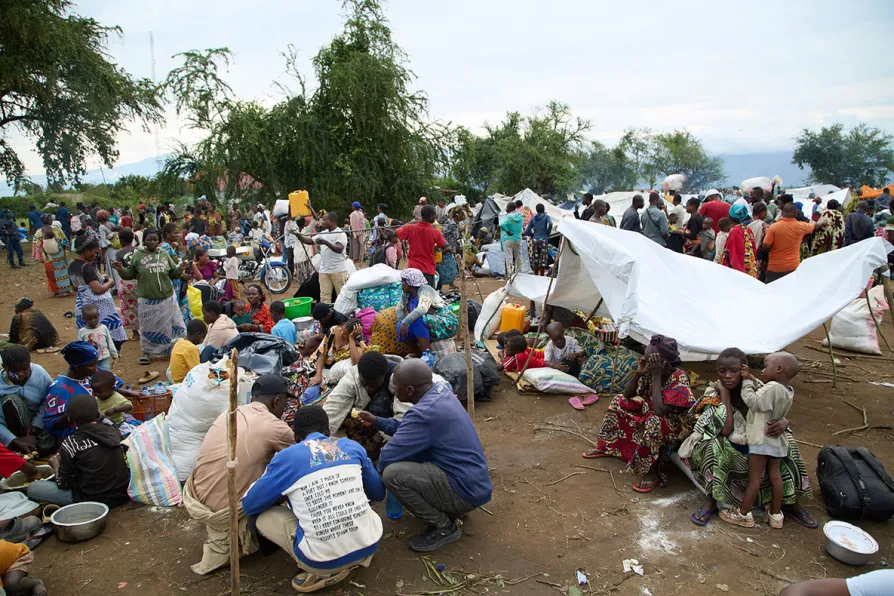 Internally displaced people (IDPs) fleeing fighting in Congo's South Kivu province arrive in Cibitoke, Kansega, Burundi, December 11, 2025





THOUSANDS of refugees in Burundi have returned to their homes across the border in eastern Democratic Republic of Congo (DRC) following the withdrawal of Rwandan-backed rebels from a key town.
Some 470 people crossed the border after fleeing violence in and around Uvira nearly four months ago.
They sought shelter in the Busuma refugee camp in Burundi, and were among at least 33,000 people who have returned home as of March, according to the UN.
The M23 rebels, who last year seized wide areas of North and South Kivu on the border with Rwanda, later withdrew further south from Uvira under international pressure.
Thursday’s repatriation event was overseen by a representative of the Congolese embassy in Burundi.
The UN High Commissioner for Refugees said the operation would continue for weeks, with at least two bus convoys each week.
“I am happy, very joyful,” said Hassan Masemo, who was among the returnees, adding he was also grateful to Burundian authorities for “reopening the border for us.”
According to the UN Refugee Agency (UNHCR), Burundi currently hosts more than 200,000 Congolese refugees, including 66,000 in the Busuma camp.
The camp was established in December 2025 to accommodate those fleeing the rebel advance on Uvira, which prompted Burundi to close the Gatumba border crossing. It reopened after M23 withdrew.
“This is being done only for those who are going straight to their homes, because for areas which are not yet safe for return, we are not going to organise the return,” Brigitte Mukanga-Eno, UNHCR representative in Burundi, said.
The DRC’s mineral-rich east has been scourged by decades of unrest as government forces fight more than 100 armed groups, the most potent of which is M23.
US President Donald Trump recently got involved in the conflict as something of a peacemaker, but also sought to open the country’s minerals, critical for much of the world’s modern technology, up to US companies.
Although neither Rwanda nor M23 have publicly acknowledged the presence of Rwandan troops fighting alongside the rebels, UN experts have reported evidence of their involvement.
Rwanda frames its role as defensive measures to protect its territory from Hutu rebels responsible for the 1994 genocide in Rwanda.
