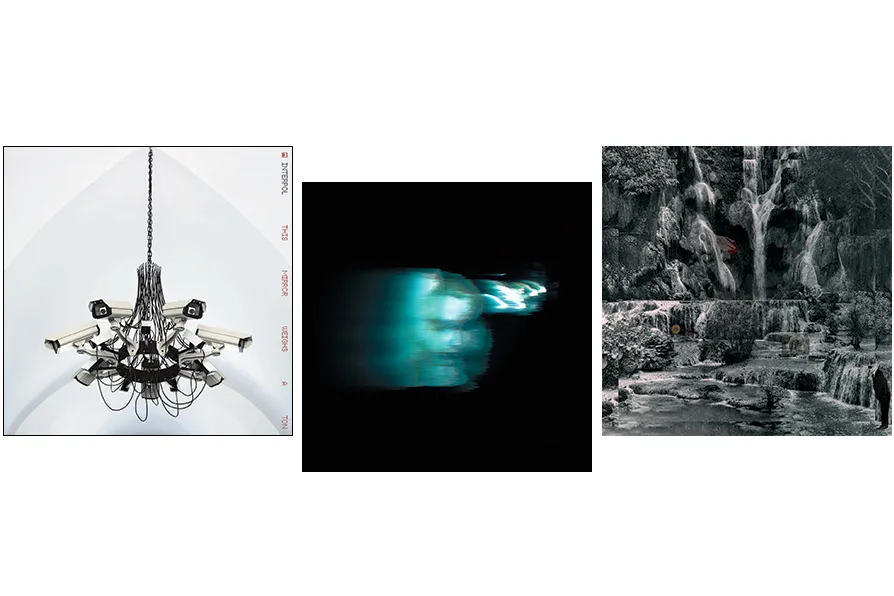
New releases by Interpol, Phoebe Bridgers, Lambchop


 Latest editorial

An unsatisfactory mixture of fact, conspiracy theory and speculation
JOHN GREEN has reservations about a film that tries hard to rise above the cliches but in the end fails to do so
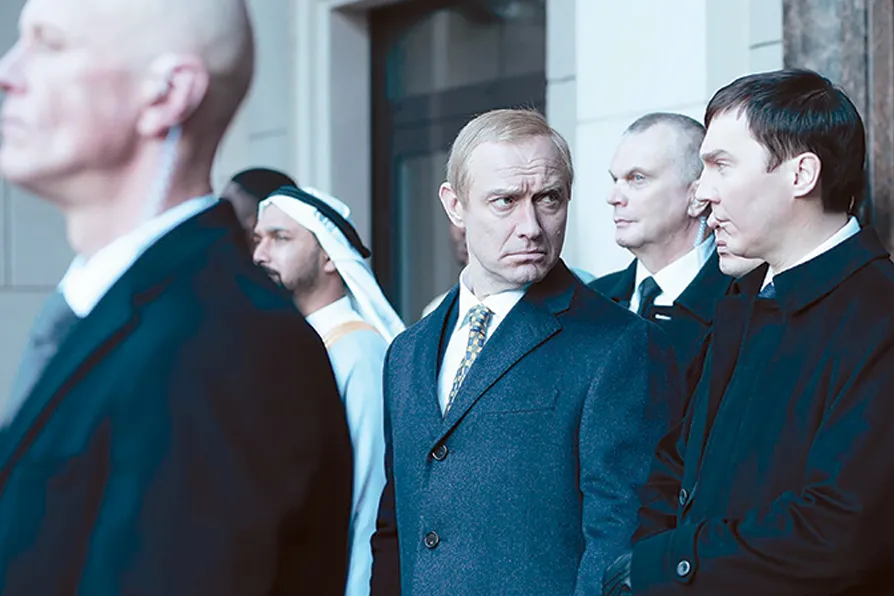 Jude Law and Paul Dano in The Wizard of the Kremlin / Pic: carole bethuel/Courtesy of Vertical/IMDb
ANGUS REID urges us to understand the persecution of Jason Arday from a political and historical perspective, and to see the victim in human terms
Re-releases of the classics Gypsy Rhumba and Buena Vista Social Club, and a stunning album by Palestinian artist Faris Ishaq
Nothing, says ANDY HEDGECOCK, can rescue this undistinguished amalgam of ponderous melodrama and shallow philosophical speculation
JAMIE BRITTON invites readers to visit 3,500 locals as part of a marathon artistic pub crawl
JOHN GREEN welcomes a valuable and incisive analysis of a world become hyperpolitical but without the mass movement institutions to represent it





Wizard of the Kremlin (15)
Directed by Olivier Assayas
★★★☆☆
THE Wizard of the Kremlin is described as a political thriller and dark comedy, but there is scant humour. Directed by Olivier Assayas, it follows the fictional character of Vadim Baranov (Paul Dano), a Rasputin-like figure, during the final years of the Soviet Union and the turbulent aftermath.
Baranov morphs from a young theatrical artist in 1990s Russia into an influential government official and a sort of Alastair Campbell spin doctor to Vladimir Putin.
Jude Law plays Putin (he is superb, endowing him with rare flesh-and-blood realism and keen intelligence). The secondary figures are the usual Western cliches: wooden and robotic caricatures with clipped, comic accents and stony-faced, inscrutable faces.
After withdrawing from Putin’s circle and retreating into silence, Baranov agrees to talk to a US researcher, and this functions as the framing device. What he reveals makes us question the boundaries between truth and fiction.
Assayas’s film is based on the novel of the same name by Giuliano da Empoli: Russia in the early 1990s. Amid the chaos, Putin emerges as the key figure capable of rebuilding the country.
It charts the period of the collapse of the Soviet Union, Boris Yeltsin’s calamitous interregnum, the rise of the oligarchs and the descent of the country into jungle capitalism.
Putin emerges as the strong leader who takes on the oligarchs and reinstates order. As he puts it, there are two ways a country can be governed — “vertically as it was under Stalin or the tsar or horizontally as under Yeltsin, which spells chaos.” Putin reimposes verticality.
The old Soviet Union is unsurprisingly depicted as a grey Stalinist prison, obscuring the fact that Stalin died in 1953, 36 years before the collapse of the Soviet Union.
The narrative plays out in the bubble of the political elite; we see nothing of the lives of ordinary Russians. Putin is the only individual who comes across as a three-dimensional character, albeit a tough one. He is depicted as a genuine nationalist who sees his destiny as the saviour of the Russia nation, breaking the power of the oligarchs and restoring national pride.
It covers the Chechen war, the September 1999 Islamist terrorist atrocities in Moscow and other big cities that killed more than 300, injuring more than 1,000, spreading fear across the country, and triggering the second Chechen war.
It covers the Maidan “orange revolution.” Baranov raises the issue of the CIA instigating the Ukrainian uprising and the role of the US in introducing wild-west capitalism under Yeltsin.
Very much a slow burner, and I wonder if it will mean much to today’s generation. It never really overcomes its cardboard characters and sluggish pacing. It is an unsatisfactory mixture of fact, conspiracy theory and speculation and offers no deeper insights or understanding into that key period in Russian history.
In cinemas from today.
