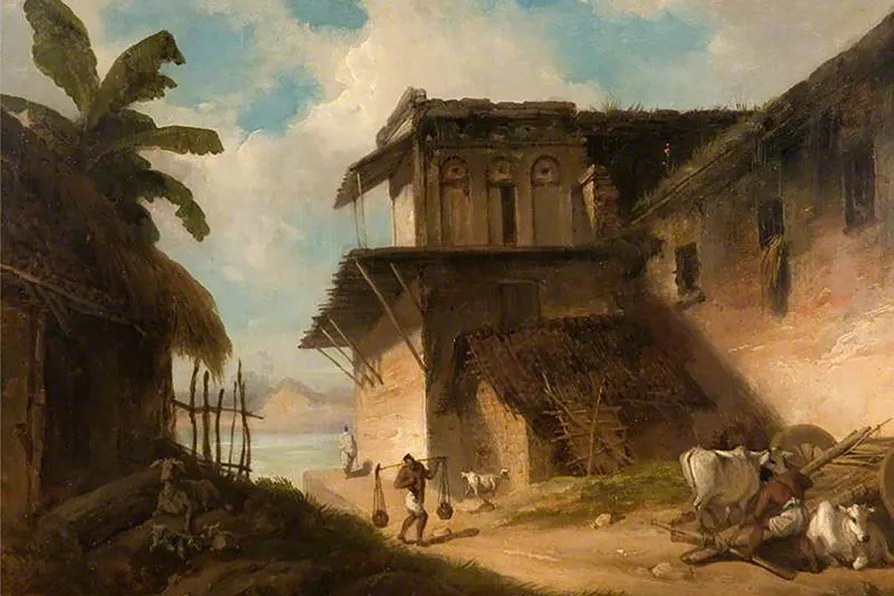
APURBA CHATTERJEE explains how British artists in India used the “picturesque” to reshape colonial landscapes and celebrate imperial power


 Latest editorial

Letters from Latin America with Leo Boix: April 1, 2026
Reviews of a compelling account of a tragedy that shook Chile in 2005, a poetry collection about home and belonging, and a bilingual poetry collection on migration, fire, and art, drawing on the work of Hieronymus Bosch
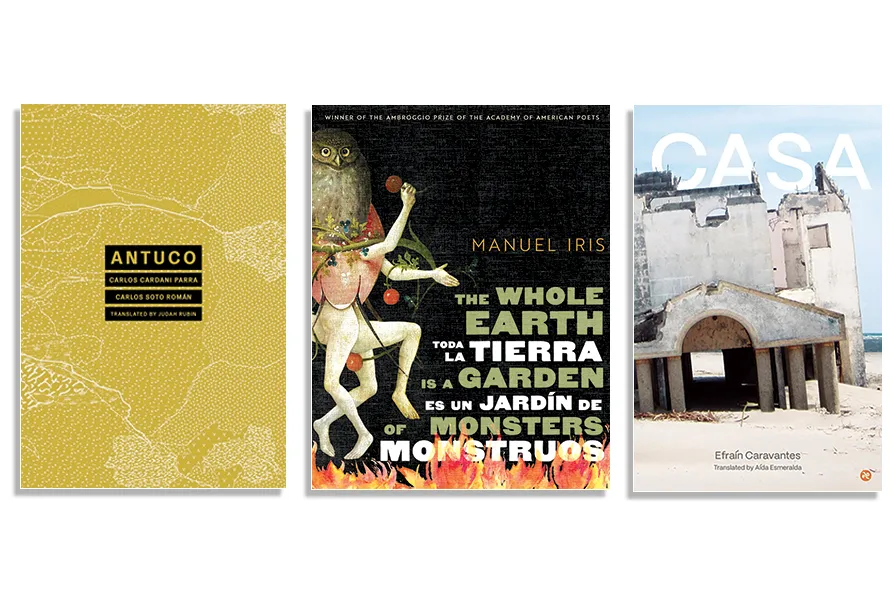 covers
PAUL DONOVAN welcomes a revival of Reginald Rose’s classic play that reminds us of the fundamental need for trials with juries
SIMON PARSONS applauds an exceptional performance of Wesker’s little-known play, by the same actor for whom it was written 45 years ago
ANDY HEDGECOCK and MARIA DUARTE review Late Fame, The Death of Robin Hood, Leviticus, and Gail Daughtry and the Celebrity Sex Pass
ANGUS REID recommends a uniquely accomplished documentary collage that contemplates our relation to the natural world
GORDON PARSONS enjoys Kant’s ‘mind-boggling’ theory of human reality: that we create the reality we experience





DURING a 2005 Chilean military alpine training mission near the Antuco volcano, located in the Bio Bio south-central region of Chile, 45 conscript soldiers died preventable deaths in an extreme snowstorm, with many others injured.
Subsequent investigations revealed how failures in command and decision-making processes endangered these young, often poor and vulnerable soldiers. Yet those responsible largely evaded accountability. Antuco (Cardboard House Press, £17), a bilingual collaboration between Carlos Cardani Parra and Carlos Soto Roman, translated by Judah Rubin, revisits this tragedy through a formally daring poetic reconstruction.
Drawing on official documents, testimonies, visual poetry, and fragmented narratives, the collection reconstructs not only the event but the institutional violence that made it possible.
“Cold is a state of mind,” one poem begins, before dismantling the phrase into something far more ominous — “Cold is a consequence… a descriptive property without explanation.”
Through this interplay of voices and forms, Parra and Soto Roman create a work that is collaborative, overwhelming, and politically urgent. Antuco transcends its specific historical moment to expose broader systems of inequality, oppression, and state power, confronting the reader with the human cost of bureaucratic indifference.
If Antuco interrogates institutional failure, Casa (Kalina, £12), by Salvadoran poet Efrain Caravantes and translated by AÌda Esmeralda, turns inward, exploring the intimate terrain of home, memory, and belonging.
Composed of a series of untitled poems that flow seamlessly into one another, the collection feels both delicate and expansive. Caravantes asks: “When did we stop dreaming of a house?” — a question that echoes across the book, accumulating emotional weight with each repetition.
In Casa, the house becomes a shifting metaphor: for the body, for family, for language, and for the fragile structures that hold identity together. The poems are tender yet unsettling, attentive to loss as much as to the possibility of shelter.
What emerges is a meditation on displacement that resists spectacle, instead offering a quiet, lyrical exploration of what it means to inhabit — and to lose — a sense of place.
Manuel Iris’s The Whole Earth Is a Garden of Monsters (The University of Arizona Press, £14), translated by Iris with Kevin McHugh, expands this exploration onto a broader historical and imaginative canvas. Inspired by the work and legacy of Hieronymus Bosch, the collection draws a parallel between the painter — “portraitist of fire” — and Juan Dominguez, a composite migrant figure drawn from “the biographies of thousands of people” who have experienced forced migration across the Americas.
Through this dual narrative, Iris suggests that the monstrous visions of Bosch’s paintings are not relics of the past but reflections of a present shaped by violence, displacement, and survival.
Formally intricate and thematically ambitious, the collection moves between ekphrasis, testimony, and lyric meditation, often mirroring the triptych structure of Bosch’s work.
Fire recurs as both origin and rupture — an event that transforms identity and forces movement. In Iris’s hands, the desert, the border, and the journey north become sites where “hell” is not metaphorical but lived, inscribed on the body.
The bilingual format reinforces this sense of crossing, not only between languages but between histories and selves, suggesting that identity itself is always in motion.
Taken together, Antuco, Casa, and The Whole Earth Is a Garden of Monsters form a powerful triptych of contemporary Latin American poetry in translation. Each confronts, in distinct ways, the conditions that shape human vulnerability: the violence of the state, the fragility of home, and the enduring realities of migration.
While their approaches differ — documentary, intimate, and mythic — they share a commitment to bearing witness and to reimagining how poetry can hold collective memory.
These are works that do not look away. Instead, they insist on confronting what is often obscured, reminding us that poetry remains one of the most vital forms through which to understand — and resist — the forces that shape our world.
