
Tackling climate change is not just an urgent environmental necessity but provides an opportunity for economic restructuring in the interests of the Welsh people


Bombs cannot break a nation
From Vietnam to Iran, US leaders repeat a failed strategy of terror bombing – one that history shows cannot break a determined, resilient society, says DYLAN MURPHY
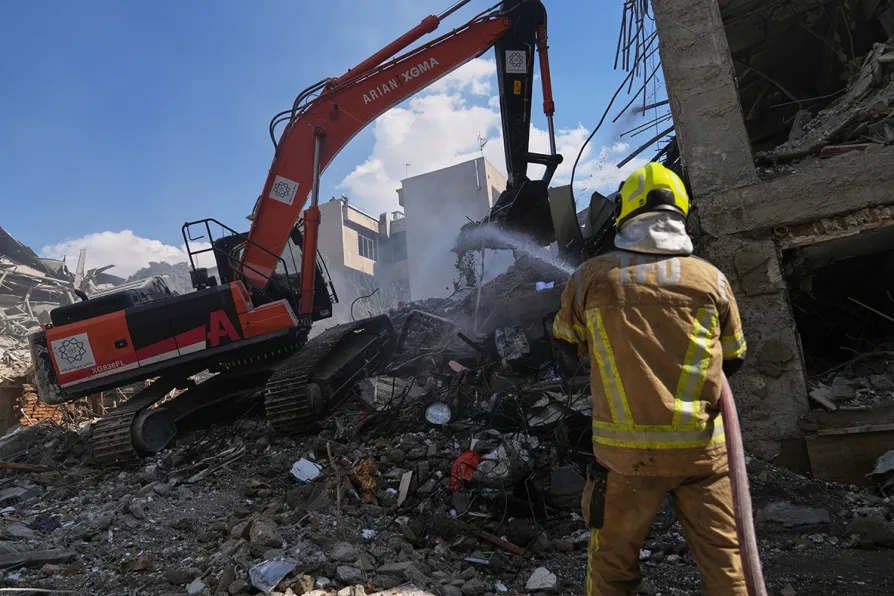
 An excavator removes rubble as a firefighter sprays water on smoldering debris at the site of a strike that destroyed half of the Khorasaniha Synagogue and nearby residential buildings in Tehran, Iran, April 7, 2026
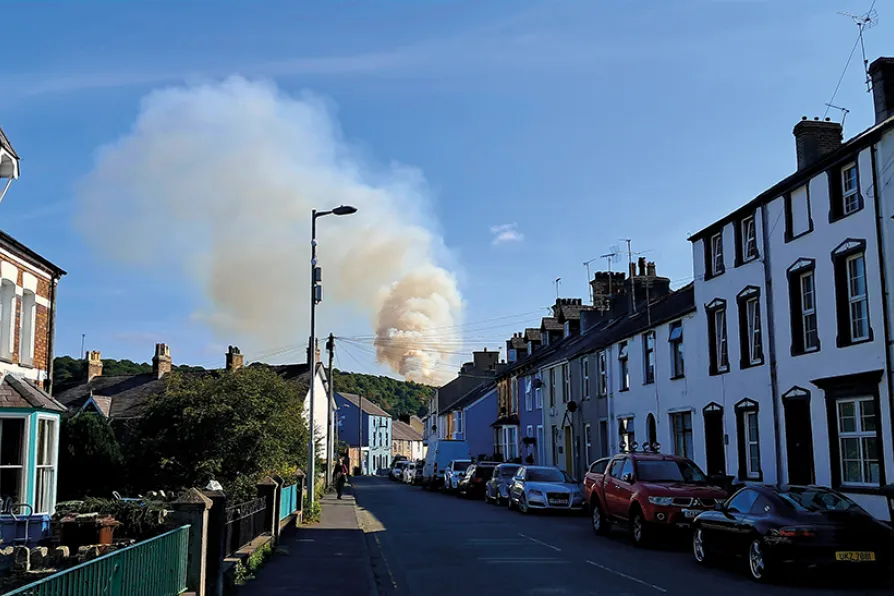
A spate of bomb recoveries across Dhaka raise questions whether extremism is making a comeback, says SIAM SAROWER JAMIL
Poverty, refugee displacement, child labour and militia violence are exacerbating the challenge of health workers to limit this deadly contagious disease. CONSTANT SAME BAGALWA and MARK BANCHEREAU report
CLAUDIA WEBBE speaks out against the lethal mechanics of Britain’s culture-war press
Powerful agribusiness interests are trying to overturn efforts by the Lula government to protect the environment and indigenous peoples of the Amazon region, writes GABRIELA SA PESSOA
Trade unions and community groups are mobilising to push back against Trump’s racist raids after new revelations of spying on legal protesters. MARK GRUENBERG reports from the US state of Minnesota
The best wildfire service may begin with the community, argues KOMAL RAJ ARYAL





TODAY, we see a dangerous repetition of US hubris as Donald Trump copies Richard Nixon’s “madman” tactics by openly threatening to destroy the life-sustaining infrastructure of Iran.
This openly stated intention would be a major war crime. It represents a desperate attempt to terrorise the Iranian people and in turn break the will of the government of Iran. Trump and his inner circle of grifting cronies assume that a massive sustained aerial bombardment can destroy a 3,000-year-old civilisation. History tells a different story.
The reality of the air war over Vietnam was vastly different from the sanitised US narrative. The US bombing campaigns, from Operation Rolling Thunder (1965-68) to the massive Linebacker offensives of 1972, suffered a catastrophic failure.
They failed not because of a lack of firepower, but because strategic air power proved completely incapable of dismantling a decentralised, agrarian society with an iron will, bolstered by a massive civil defence network and an unbroken lifeline of support from the Soviet Union and China.
German generals writing after the World War II agreed upon the catastrophic consequences of fighting a genocidal war of attrition against a fully mobilised population and planned economy. The Americans in Vietnam were forced to learn this lesson the hard way.
The United States launched Operation Rolling Thunder on March 2 1965. Conceived as a campaign of “gradualism,” it was designed to slowly escalate the bombing to coerce Hanoi into a negotiated settlement without triggering a wider war with the USSR or China. Over the next three years, the US flew over 300,000 attack sorties.
Despite the massive scale of the bombardment, Rolling Thunder failed to completely destroy North Vietnam’s power grid. When US bombs destroyed 87 per cent of the main power capacity by mid-1967, the North Vietnamese government managed to keep the lights on through a brilliant strategy of decentralisation.
They imported around 2,000 small diesel units from the Soviet Union and China, each generating 15-20MW, and scattered them across the countryside. Key facilities were physically moved underground; the 3/2 Thermal Power Plant, for instance, was completely rebuilt inside Huyen Trung Cave to shield it from bombers.
Strict rationing cut power to all non-essential users, ensuring the military and vital infrastructure survived.
Following the calamitous defeat of the South Vietnamese forces during the Easter Offensive of 1972, the US launched Operation Linebacker I.
This campaign, lasting from May to October, marked a significant escalation. US aircraft dropped over 150,000 tons of bombs, extensively using new laser-guided and so called “smart bombs.” It failed to break Hanoi’s political resolve.
When peace talks stalled in December 1972, president Nixon ordered Operation Linebacker II, the infamous “Christmas Bombings.” This was the largest B-52 bombing campaign of all time. Over 11 days, more than 700 B-52 sorties delivered over 20,000 tons of bombs on the Hanoi and Haiphong areas.
The objective was purely coercive: to force the North Vietnamese back to the negotiating table on US terms. This murderous bombing campaign killed thousands of civilians, destroyed over a hundred factories, schools and hospitals and 80 per cent of the country’s electrical power production. Over 500,000 workers were mobilised to repair the damage.
As the Marxist historian Gabriel Kolko documents in Anatomy of a War, this campaign was fundamentally an act of terrorism born of desperation as the US had lost the war on the ground. The Christmas bombing was designed to intimidate and terrorise the Democratic Republic of Vietnam (DRV) into submission, serving as a desperate reassertion to the world of Nixon’s willingness to use raw unfettered military power.
Kolko highlights that the US constantly presented ambiguous positions at the Paris peace talks, retracting proposals whenever it suited them. The Christmas bombing was a cynical attempt by Nixon to portray himself as a “madman” to extract concessions.
However, the DRV refused to negotiate out of fear. The bombing achieved no durable military impact. Instead, it resulted in staggering US losses. North Vietnam’s active military defence, anchored by Soviet-supplied SAMs and MiG fighters, mauled US attack formations. The US lost between 22 and 27 B-52s and 12 other aircraft.
The operation was so costly that Pentagon officials admitted they had not realised the price would be so high. The Christmas bombing did not break the DRV. It merely isolated the Nixon administration politically and horrified the world.
A major reason these massive campaigns of terror failed to bludgeon North Vietnam into submission were the civil defence measures implemented by the government. To protect its civilian population, Hanoi adopted a strategy that moved far beyond simple individual shelters.
The most critical step was the large-scale evacuation of non-essential personnel from major cities. Ahead of the Christmas bombings in December 1972, over 500,000 people — around 85 per cent of Hanoi’s urban population — were evacuated to the countryside. Nearly all schools, universities and non-essential institutions were relocated.
The core of the plan was the construction of a vast and varied network of shelters. Hanoi alone had around 400,000 individual “ash-can” shelters, often made from concrete pipes or bamboo, alongside hundreds of thousands of group tunnels and bunkers.
The population was mobilised to dig an extensive network of tunnels, which reportedly reached 50,000 kilometres in total length by the war’s end.
This effort culminated in fully functional “underground villages.” In the heavily bombarded DMZ area, the Vinh Moc tunnels housed roughly 1,200 people for nearly 2,000 days on three levels reaching 30 metres deep. It was a complete community, featuring freshwater wells, communal kitchens and even an underground maternity ward where 17 children were born.
This massive infrastructure project, built almost entirely by hand using local materials and recycled scrap metal from dud shells, allowed society to continue functioning under constant threat.
The resilience displayed by North Vietnam was backed by the Soviet Union and China. Despite Henry Kissinger’s delusions that detente had isolated Hanoi, Kolko points out that Chinese military aid to the DRV in 1972 was double that of 1971, and Soviet arms aid more than doubled. Both nations overcame their past wrangling to speed supplies by rail to circumvent the US blockade.
In the end, the US bombing campaigns failed because they could not destroy the North’s will to resist or its logistical lifeline from China and the USSR. The ultimate failure lay in air power’s inability to resolve the political and military realities of the ground conflict.
The US war machine, much like the Wehrmacht on the Eastern Front decades earlier, found that technological superiority alone cannot conquer a mobilised and determined people.
Today, as the United States contemplates using these exact same tactics against Iran, it seems the Pentagon has learned nothing from its calamitous defeat in south-east Asia. Iran is a vast, mountainous country with a deeply entrenched decentralised military infrastructure, a massive and highly motivated population and a sophisticated civil defence network.
Much like North Vietnam, Iran has spent decades preparing for a US air assault by moving its critical nuclear and military facilities deep underground.
Furthermore, the United States remains the same bad-faith actor it was during the Paris Peace Accords of the early 1970s. Just as Nixon and Kissinger used the Christmas bombings to terrorise Hanoi under the guise of seeking peace, Washington today speaks of negotiations while actively undermining any ceasefire.
We saw this duplicity a mere 12 hours after the agreed ceasefire. Israel, with US collusion, blatantly broke the terms of the deal with Iran by using its airforce to massacre hundreds of Lebanese civilians.
Any attempt by the US to destroy Iran through saturation bombing will hopefully meet the same disastrous fate as Operation Rolling Thunder and Linebacker II. The hubris of imperial air power will once again shatter against the unbreakable will of a nation fighting for its survival.

Similar stories
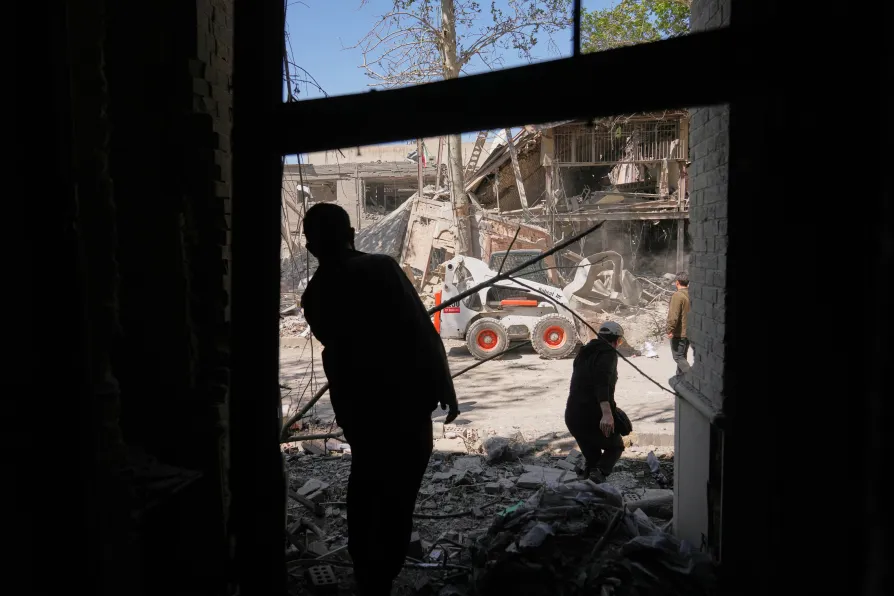
The Committee for the Defence of the Iranian People’s Rights (Codir) cautiously welcomes the ceasefire, but remains suspicious of US and Israeli intentions
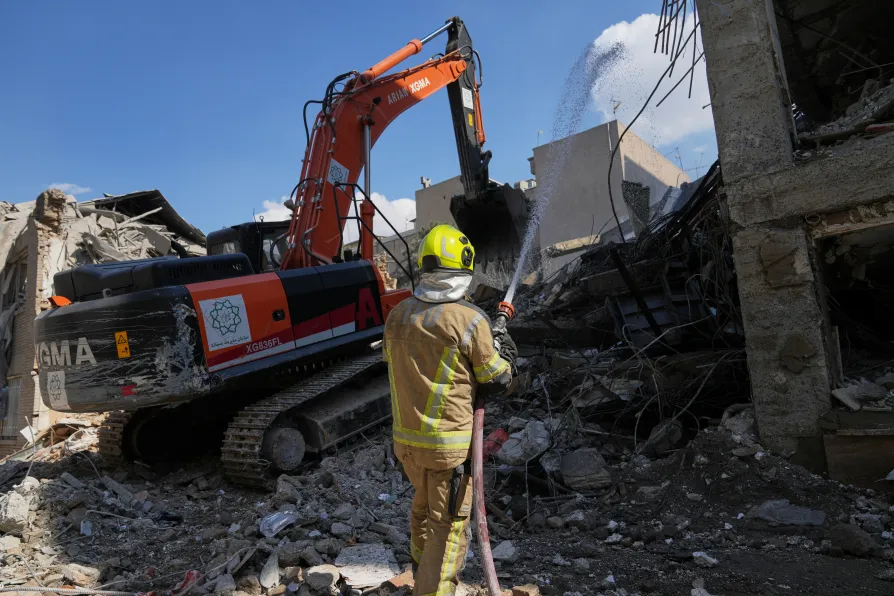
With attacks on industry, healthcare and education intensifying, JAMSHID AHMADI warns of a deliberate drive to cripple Iran and calls for urgent global action

The PM is drawing cautious distance from Donald Trump over Iran – but history suggests Britain’s support may run deeper than it appears, just as it did during the Vietnam war, says KEITH FLETT

KEVAN NELSON reports back from a delegation to the epic celebrations for the anniversary of Vietnam’s 1945 revolution, where British communists found a thriving, prosperous socialist country, brimming with ambition and well-earned national pride