PCS general secretary FRAN HEATHCOTE explains why opposing war is inseparable from defending jobs, wages and public services – and why readers should come to the London Peace Conference on Saturday June 20


 Latest editorial
We will not be silenced – defending our right to protest for Palestine
JAYNE FISHER on why the government’s latest amendments to the Crime & Policing Bill, which returns to the Commons on Tuesday, is a serious threat to our freedoms
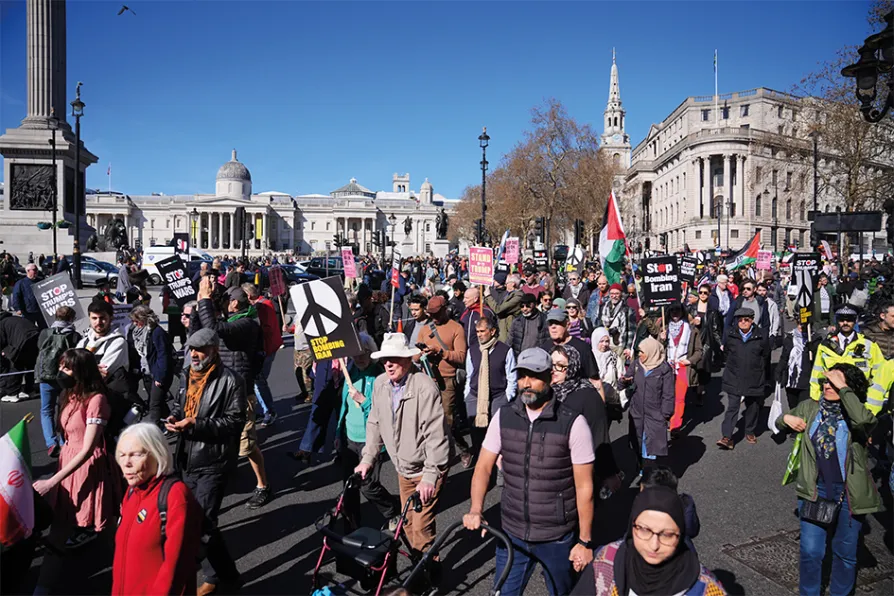
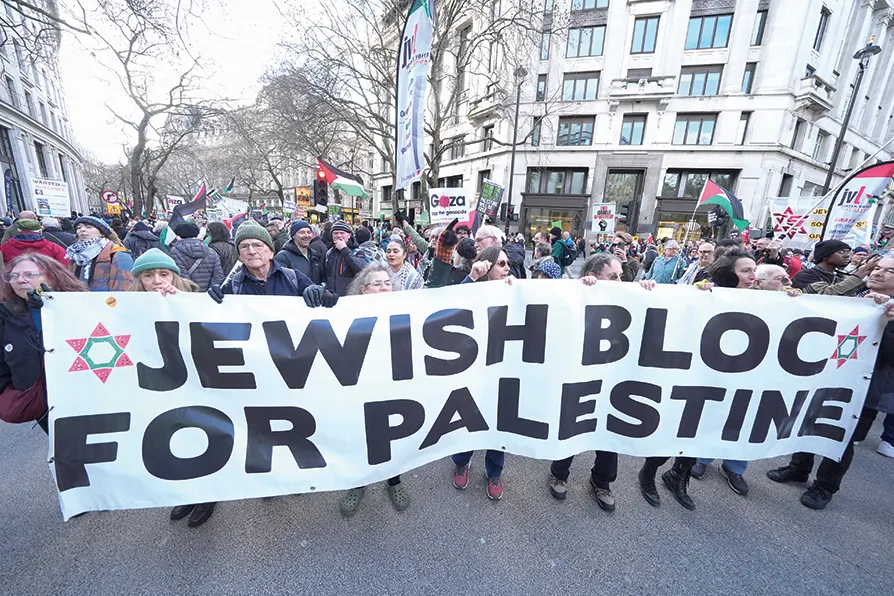 LOUD AND CLEAR: Palestine Coalition march in central London onJanuary 31 2026
As protests erupt over Henry Nowak’s murder, ANDREW MURRAY argues that anger is being exploited to advance a wider racist and anti-immigration agenda
CARLOS MARTINEZ explains the sound case for car manufacturing co-operation with China
The National Emergency Briefing outlines the need for urgent action to address environmental crisis, says PAUL DONOVAN, warning that there’s no time to indulge the arguments of the fossil-fuel-funded climate-change deniers
Campaigners say criticism of Labour MP Stephen Morgan’s position on Gaza has been met with police intervention and cancelled opportunities for debate. HESTER WOLFE reports
The Committee for the Defence of Iranian People’s Rights warns of escalation danger in Iran war





NEXT Tuesday the government will attempt to push through Parliament one of the most draconian, anti-democratic pieces of legislation in modern times, to maintain its complicity in Israel’s ongoing genocide against the Palestinian people.
If passed, this represents a further attack on our fundamental right to protest. Coming on the back of a raft of regressive laws and politicised policing actions in recent years, the impact of this latest assault on our rights cannot be overestimated.
First introduced in the House of Lords as an amendment to the vast Crime and Policing Bill, the government want to give police even greater powers which would “require” them take account of the “cumulative disruption” caused by public processions and assemblies.
This will apply to repeated protests in an unspecified “area,” which could mean a whole town or indeed the whole of central London and that “it does not matter” if the procession or assembly is organised by the same people.
In other words, an anti-racist march could be banned from happening one week because a farmers’ protest had been held the week before in the same “area.”
Political marches, by their nature, regularly focus on governments or parliaments — be it Westminster, the Senedd or a local council — and are likely to be repeated in the same location.
Marches to Downing Street or Parliament Square could be routinely banned or rerouted under this law.
We all know that this has nothing to do with protecting communities but is about repressing expressions of support for the Palestinian people.
The current government cannot tolerate the fact that a majority of the public utterly oppose their shameful complicity in Israel’s genocide, evidenced by the millions of people who have taken to the streets in recent years.
This latest proposal will give police far-reaching new powers to curtail this, affecting not only the marches for Palestine, but the wider right to freedom of expression, association and assembly that underpins all protest rights, affecting all causes and movements.
As Peter Hain pointed out when he and other peers opposed the plans in the Lords, no protest movement has ever brought about change through one single march or action.
It is precisely the cumulative nature of protest that has resulted in progressive change and held governments to account, from Civil Rights to the Anti-Apartheid Movement.
These marches would have been banned as is happening too frequently under this power. The Suffragette movement would have been barred from Westminster due to their “serious disruption” when repeatedly protesting for the vote.
By its very nature, protest is disruptive. It seeks to draw attention and make an argument. Any government that legislates to shield itself from such accountability is on a dangerous path. Enhanced police powers are an undemocratic response to protests and political disagreement.
Yet confronting this kind of politicised policing has become the norm for the movement in solidarity with Palestine.
Every single national march in London protesting at Israel’s genocide has been subject to conditions and restrictions, using those same sections of the Public Order Act that the government now seeks to strengthen further.
Our protests routinely face disruptive restrictions. This has included a ban on banging pots and pans, as happened during the protests opposing Israel’s use of starvation as a weapon of war.
Megaphones were banned when protesting the shameful visit of Israel’s President Isaac Herzog last year.
Most recently, our emergency protest against Israel’s racist execution law was banned from taking place outside the Israeli embassy at the eleventh hour.
The reason for all of this is clear. After the disgraceful court verdict in the trial of Ben Jamal and Chris Nineham last week, Ben pointed out that these actions “are designed to repress support for the Palestinian struggle for liberation and our campaign to end all UK complicity in Israel’s ongoing genocide.”
Indeed, successive governments have repeatedly sought to criminalise the movement and make protest as difficult as possible. In 2022 and again in 2023 the Tories brought in expanded police powers to prevent protests based on a vague definition of “disruptive.”
Suella Braverman’s attempts to push through a similar “cumulative disruption” provision was subsequently struck down in the courts following a challenge brought by human rights organisation Liberty, as exceeding government powers.
Labour unsuccessfully fought to appeal that decision in government and are now bringing these plans back, making them even harsher.
In parallel we have seen the government’s unlawful proscription of non-violent direct action group Palestine Action, the unsuccessful prosecution of performance artists, the appalling treatment of Palestine Action protesters in jails and the mass arrests of people for simply holding ups signs.
This is all designed to have a “chilling” effect on protests. All of this has happened in the teeth of growing opposition — and undermines the rights guaranteed by article 20 of the Universal Declaration of Human Rights and articles 10 and 11 of the ECHR.
The current government has shamefully sought to demonise and falsely characterise the broad and diverse movement for Palestinian rights.
It has used horrendous events such as the attack on the Manchester Synagogue last year to justify its plans.
Contrary to the grotesque accusations that the marches for Palestine are “hate marches” and those taking part are motivated by anti-semitism, every single march has been attended by many thousands of Jewish people, and by those of all faiths and none.
These have been the largest, most sustained mobilisations in many of our lifetimes and involve a broad cross section of society. Every march has a substantial and integral Jewish Bloc, which has also condemned this latest cynical move.
There are existing laws which can and should be used against incitement to hatred and violence, including the actual hate marches of the far right, who were allowed to rampage through our streets and attack Muslims and asylum-seekers last year. The failure to do this exposes the truth — that this proposal is nothing to do with protecting communities.
In response, many organisations from across civil society have united as part of a broad coalition to oppose this attack, including the trade unions and the TUC, joining PSC and groups such as Greenpeace and Liberty, who lobbied parliament last month. The trade unions know the implications for workers engaged in strikes and protests in support of industrial actions, who would be hit by this law.
The TUC warned that these attacks on the right to protest “seriously endanger democracy” in a Congress motion last year.
At an international level, Britain is now seen as a country setting an example of worst practice on these issues, as UN Special Rapporteur on the Rights to Freedom of Peaceful Assembly and Association Gina Romero told MPs last month. She warned that laws to restrict protest would be harder to turn back, once enshrined for any future governments.
MPs will consider the clause for the first time on Tuesday, when the Bill comes back to the Commons for its final stages.
The Palestine Solidarity Campaign and other organisations have been working with MPs across Parliament to oppose the government amendment and urge sufficient time for scrutiny and — importantly — a vote.
With just one day for the entire Bill, this will be a steep ask. To coincide with this, the Palestine Coalition has called a protest outside Parliament for Tuesday April 14 at 6pm.
Join us to make clear to the government — we will not be silenced.
