Preferable to Starmer he may be, but there is scant sign of a sharp political break in Burnham’s policies so far — while left challenges aren’t making much of a running either, finds ANDREW MURRAY. How can socialism be put back on the map?


 Latest editorial

Cuba and Donald Trump – which side are you on?
While US restrictions tighten economic and social pressures on Cuba, international allies and grassroots campaigns are stepping in to support the island’s resilience, writes BERNARD REGAN, secretary of Cuba Solidarity Campaign
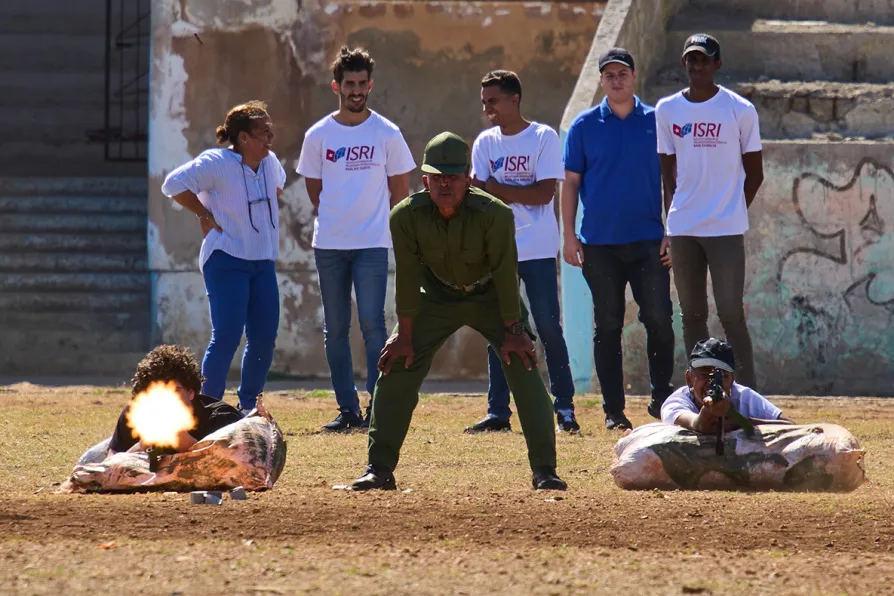 Civilians fire blanks during basic military training given by soldiers who rotate weekly lessons through different neighbourhoods, called ‘Defense Day,’ in Havana, Cuba, March 27, 2026
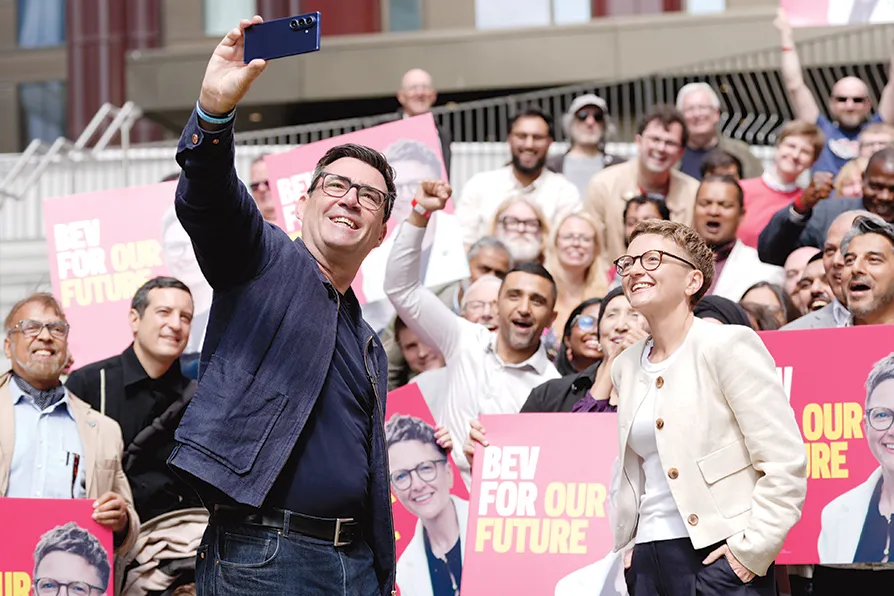
CHARLEY ALLAN reports from Clacton on Farage’s fears his by-election stunt has backfired
JEREMY CORBYN says we should never forget the horrific reality of nuclear weapons, or cease our efforts to rid the planet of them entirely
The new TUC Cymru general secretary speaks to Morning Star Wales reporter David Nicholson about her trade union background and ambitions for the movement
Internationalism is deeply embedded in socialist theory and practice. Examination illuminates its complexity asserts the Marx Memorial Library and Workers’ School
The Claudia Sheinbaum government is no pushover and is holding firm despite US abuses of the relationship, says DAVID RABY
As we approach the grim anniversaries of Hiroshima and Nagasaki, SIMON BARROW sounds the alarm over the dangerous and murderous direction our government is heading





ON JANUARY 29 2026, President Donald Trump issued an executive order calling Cuba “a national security threat” to the United States of America.
This absurd charge added even more tyrannical measures on top of the existing punitive Helms Burton and Torricelli laws, together with Trump’s labelling of the island as “state sponsor of terrorism” (SSOT), tightening the 66-year-old blockade even further. Cuba faces a medieval siege.
At the centre of this action, the Trump regime has threatened punitive tariffs against any country delivering vital oil supplies to the island causing regular cuts to the electricity grid. Oil from one of their main suppliers, Venezuela, has ended and at present shipments from others such as Mexico have been halted. These actions affect every facet of life: homes, schools, universities, hospitals and workplaces. Lighting, water supply and refrigeration for food and medicines are critically jeopardised.
Of course, Cuba is not standing still — it is taking measures to protect the whole population through lessening its dependency on oil installing solar farms imported from China. However, this initiative, together with some locally produced oil, only meets around 30 to 40 per cent of needs. In the short-term oil is vital to fully restore the electricity supply, together with the ability to purchase the spare parts vital to keep the national grid generators running.
How does this affect life in Cuba? Let’s look at one facet — education.
Education on the island is a priority and is completely free, from pre-school to postgraduate level. Students, including those from overseas like the 250 Palestinian medical students studying at the Latin America School of Medicine, study for free. Unlike in Britain the is no such thing as student debt.
Around 23 per cent of the state budget is assigned to education — more than any other country in the world. The 2025 report to the United Nations summarising the blockade’s impact for the previous year outlined the consequences on education preventing the acquisition or manufacture of pencils, paper, notebooks and other educational materials. A total of 2,147,300 textbooks could not be printed for the academic year 2024. This coming year will be worse without a reversal of the blockade.
In 2025, of a total of 1,093 pre-school childcare facilities nationally, 35 had to be closed because of the lack of materials to repair critical structural problems. In all these facilities there is a shortage of toys and teaching aids. All children and young people are affected — computer use, along with lighting and anything requiring electricity supply, is impossible.
At institutions like the Central University of Las Villas (UCLV), there are virtual events every week in which it is impossible to participate due to the US ban on access to web platforms.
Young people with special educational needs and disabilities face additional challenges. In 2025 to meet the needs of children with motor and hearing disabilities, 538 electric and conventional wheelchairs and 1,107 hearing aids were needed. The blockade prevents Cuba purchasing them. The examples go on and on.
Providing some relief from these punitive measures, teachers from the National Education Union in 2025, and for years before, have made an invaluable contribution to alleviating this situation by taking over 100 Braille machines, along with other educational materials to Cuba on their annual delegations. The NEU sent a 40-foot shipping container of educational equipment to Cuba as part of the Viva La Educacion inititiative, including 300 reconditioned computers and hundreds of thousands of exercise books and school supplies.
In the health field there is a growing challenge. Despite emergency measures backlogs are building up in the health sector. Some 96,000 patients are waiting for treatment, 32,000 pregnant women denied prenatal examinations, 11,000 children prevented from getting their vaccinations, 16,000 radiotherapy patients remain to be treated alongside 3,000 haemodialysis patients.
Cuba is banned from trading with anyone in the United States of America itself and any foreign vessels which deliver goods to the island are banned from entering US ports for at least six months. As a result Cuba has to obtain such goods further afield adding transport and insurance costs.
On top of this companies worldwide cannot sell goods to Cuba which contain 10 per cent or more materials or components produced in the US.
The impact of the siege however does not stop there — branding the island a SSOT prohibits Cuba using international mechanisms for trading like Swift (Society for Worldwide International Financial Telecommunications) which is used by around 11,000 companies in over 200 countries and regions.
Can Cuba survive? The answer from the island is a positive one. Measures to protect the whole population and ensure the equitable distribution of goods and services are under way. The whole onslaught could be rendered meaningless of course if countries, like Britain, which have voted at the United Nations general assembly 33 times against the blockade turned their votes into action.
Politically Cuba does not stand alone
On February 16 this year, 55 African Union countries condemned Trump’s actions, reaffirming the historical, political and solidarity ties between the peoples of Cuba and Africa. Mexican President Claudia Sheinbaum has declared the blockade illegal and has sent food and aid to Cuba. Internationally trade unions and solidarity organisations in Europe and the Unted States itself, are sending foodstuffs and medicines. The flotilla, Nuestra America, has delivered material aid to the island accompanied by prominent public figures like Jeremy Corbyn MP and Richard Burgon MP among others. The Cuba Solidarity Campaign has already sent six 40-foot containers of life-saving medical aid and food supplies to the island through the Cuba Vive appeal and more are on their way right now.
Cuba’s economy
There are some ill-informed voices being raised purporting to analyse what is happening. An article in the Financial Times claimed the problem is the Cuban government’s “mismanagement” — but the problem is not Cuba; the problem is Trump and the policies of the current Washington.
The cost of two months of the existing blockade, $1,600,000,000, would pay for all the fuel needed to meet the country’s regular power demand.
Left to develop unhindered Cuba can more than cope. In the 1980s Cuba developed a world-leading pharmaceutical industry serving domestic as well as international needs. Cuba’s success in the health and education sectors were the envy of the Americas.
From the 1990s Cuba developed a flourishing tourist industry, sometimes working with companies like the Spanish Melia Hotel group — but the consequences of Trump’s actions mean that fewer people are visiting the island.
Some foreign governments, including Britain, have erroneously said that tourists cannot get flights and insurance. Flights are simply refuelling in the Dominican Republic or another adjacent island, adding a mere 30 minutes or so to the journey.
What has Cuba ever done for anyone?
In contrast to the negative and vindictive Trump assault on the island, Cuba has made numerous positive contributions worldwide, saving and improving lives globally.
Cuba has made breakthroughs in a variety of medical fields treating cancer and dementia, for example, yet because the US will not accept payments for patents for these pharmaceutical products these treatments are vulnerable to theft by others such as Big Pharma.
In sharp contrast Cuba has given so much to the world in the health field — since the revolution 605,000 Cuban medics have treated people globally in health co-operation with countries across the globe as well as emergency missions to countries affected by natural disasters, conflict and health emergencies such as in the Covid pandemic and the Ebola crisis in west Africa.
Trump, however, is putting economic and political pressures on countries to expel Cuban medics. As a consequence, the government of Honduras, for example, has withdrawn its support for the Cuban medics who had carried out 30 million consultations, with 900,000 receiving surgical treatment.
Cuban medics who had been in Guatemala since 1998 have been asked to leave the country. On March 4, the government of Jamaica announced its unilateral decision to terminate the health co-operation agreement with Cuba, under which more than 8,176,000 patients were treated and some 90,000 lives were saved, according to official figures.
Solidarity with Cuba is needed now!
The British government has voted 33 times against the blockade and now is the time to act. The government spoke up to defend Greenland against Trump’s threats to take over the island.
Prime Minister Sir Keir Starmer repeatedly said that the future of the island must be decided by its people and by Denmark.
If that is the position of the British government on Greenland, then it should take the same position on Cuba. The future of Cuba is a matter for the Cuban people to decide and no-one else.
Over 100 members of Parliament have signed early day motion 2739 against Trump’s measures and calling on the British government to take action to support Cuba.
Here in Britain, the Cuba Solidarity Campaign’s Cuba Vive campaign is raising funds for medicines and now foodstuffs. As a result, powdered milk, rice and pulses have been sent alongside life saving medical aid. Many unions have responded magnificently but more is needed. Solidarity means, above all, action.
Donate to the Cuba Vive Appeal; urge your MP to sign EDM2739; join the Cuba Solidarity Campaign. For more information visit cuba-solidarity.org.uk.
Bernard Regan will be speaking alongside Cuba teachers at the Hands Off Cuba — Education Under Blockade Fringe meeting at NEU conference on Tuesday March 31, 12.45pm, Syndicate 2, Brighton Centre.
