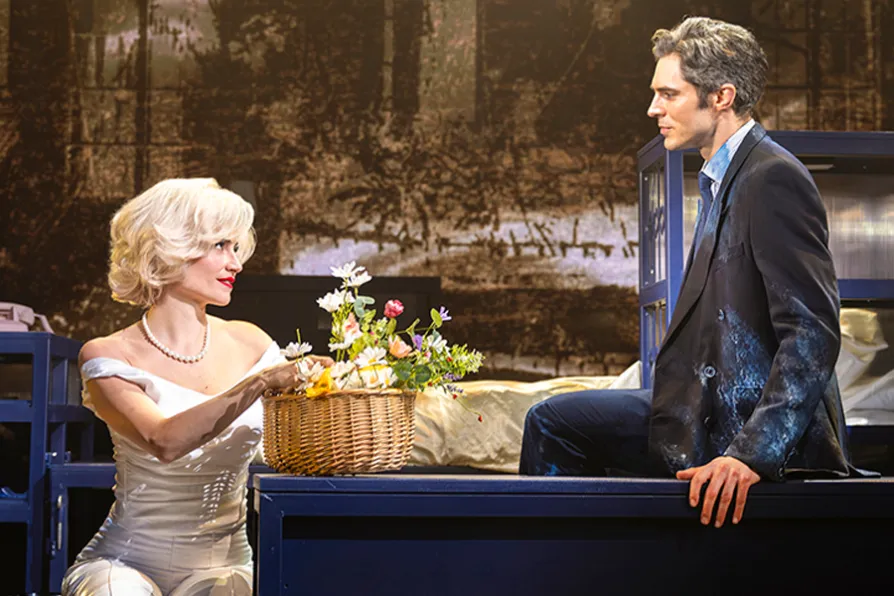
PAUL DONOVAN applauds an intriguing multi-layered depiction, dominated by a stunning impersonation of Marilyn herself


 Latest editorial

Revolutionary jazz
ROGER McKENZIE grooves to the message that jazz supports, expresses and sparks fresh political movements and ideas
 Producer and film-maker Rita Hargrave [Pic: Amy Tolbert]
LEO BOIX applauds an audacious, self-questioning film about grief, friendship and film-making
MARY CONWAY admires a brave and topical study of Armageddon that is, unfortunately, unable to come to a conclusion
ANDY HEDGECOCK, JAMES WALSH and JAMIE BRITTON review Hanging by a Wire, I Want Your Sex, The Pout-Pout Fish, and Rise of the Foot Soldier: Retribution
Chris Searle speaks to US pianist RAN BLAKE
The Bard hands out medals for his Edinburgh campaign and urges us to support The Men They Couldn’t Hang





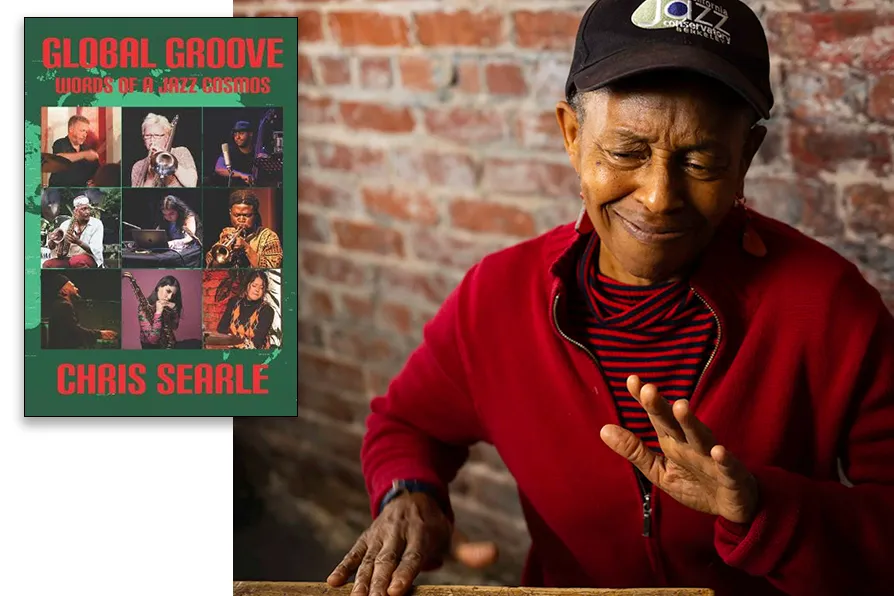
Global Groove: Word of a Jazz Cosmos
Chris Searle, Jazz in Britain, £15
JAZZ is a feeling and a spirit that my colleague at the Morning Star, Chris Searle, gets all too well.
In his latest book, Global Groove: Word of a Jazz Cosmos, Searle brings together a new collection of articles that have mostly appeared in the pages of the Star.
Searle does not take the easy and somewhat understandable path of concentrating solely on the superstars of the music, such as Louis Armstrong and John Coltrane. He directs us towards other jazz artists whose artistry and message we would do well to listen to.
This is the essence of what Searle does in his Star articles. He tells us that jazz music, the spirit that emerged from the gumbo of African rhythms, European harmonic structure and the day to day existence of the plantation, has grown and developed and taken on the influences of multiple cultures.
One of the many reasons why Searle’s columns are so indispensable to the readers of the Star and why his previous three books on jazz also require our attention is because he makes the simple and important point that jazz, like many other forms of music, can carry a revolutionary message.
The message here is that jazz improvises not only in the way it presents itself in its music but also by taking on numerous global influences.
Jazz may have started in New Orleans but it is now very much a global phenomenon. As the enslaved Africans were forced to shape shift and improvise to survive, so has jazz music.
For a music that has, from time to time, been given its last rites, jazz continues to survive because it has managed to adapt and take on the sounds and customs of whatever shores it lands in.
Searle, in Global Groove, captures not only the survival of this fantastic music, but also its multiple phoenix-like rebirths. But Searle also clearly illustrates that part of the life support system of jazz is its ability to support, express and, sometimes, to spark fresh political movements and ideas.
Global Groove shows the breadth of the global messages jazz musicians are attempting to spread. These range from “The voice of a defiant Greece” as Searle lauds the 2012 Athens protests against austerity and the recording of the live gig by Charles Lloyd and Maria Farantouri, to David Binney’s “Tribute to the Lakota Sioux.” Searle weaves the music in with a political narrative that is powerful and at times inspiring.
The review of Anouar Brahem’s “Blue Maqams” is a good example of how jazz fuses with other musical traditions. Arabic and jazz music fused together and played by a quartet including Brahem, a Tunisian Oud player, ace Chicago-born drummer Jack DeJohnette, bassist Dave Holland from Wolverhampton and Django Bates, a pianist from Beckenham.
One of my favourites in the book is the interview with Rita Hargrave about her 2025 album Salsa De La Bahia: Vol 3 Renegade Queens. The music brings together the vibrant sounds of Venezuela, Cuba, Colombia and Brazil, all nations being targeted one way or another by the United States empire.
The album brings together the artistry, creativity of over 50 women musicians. A rarity, to say the least, in a music genre still heavily dominated by men. The album is worth listening too to enjoy the music and to marvel at the unheralded skill of these excellent musicians.
So how do the musicians and this music stand up to the chaos and rampant racism, misogyny, and imperialism of Trump 2.0?
Hargrave tells Searle: “The social, political and economic challenges we face are daily struggles for all women. What do we do? We work, we teach, get the job done and problem solve together. We also cherish our allies, male and female.”
The book is highly recommended for that reminder alone.
