

 Latest editorial

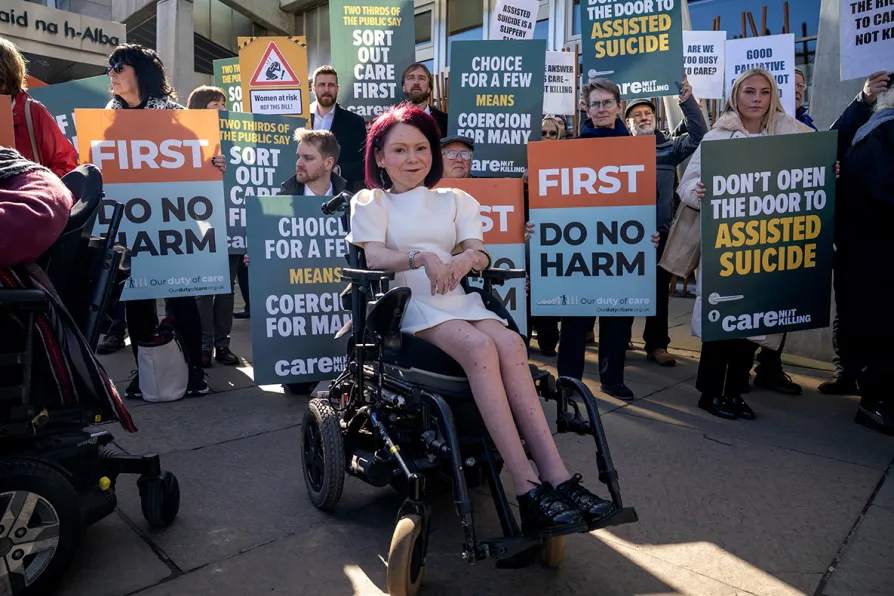 Pam Duncan-Glancy MSP joined protesters take part in a rally organised by Care Not Killing, to oppose the Assisted Dying Bill outside the Scottish Parliament in Edinburgh, March 17, 2026





ASSISTED dying legislation will not become law in the current session of Parliament, opposing and supporting lawmakers admitted today.
Backers and opponents came together in a joint letter to MPs writing that “It is now clear that the Terminally ill (End of Life) Bill will fall.”
Plans to allow assisted suicide in Britain are still being debated in the House of Lords despite a number of peers stating the process has hit too many roadblocks to be passed by the next general election.
The Assisted Dying Bill introduced by Labour backbencher Kim Leadbeater was approved by MPs in the Commons last June, but has since struggled to progress through the Lords, where debate timelines are less strict and where each amendment can be discussed.
Extra time scrutiny in the Lords was granted by the government but lawmakers are still only on day 13 of 14 at committee stage, with further stages still ahead.
Supporters of the Bill, which would allow terminally ill people with a life expectancy of less than six months to end their life, said earlier this month it would be “effectively impossible” to reach a conclusion on the Bill before the end of the parliament.
Opponents, including Paralympian Baroness Grey-Thompson, have now agreed, signing on to the letter which said the proposal “does not sufficiently guard against coercion or protect the most vulnerable people in our society.”
They also said a Bill brought forward by a backbencher was the “wrong vehicle for a change of this scale and sensitivity.”
Additionally, the letter expressed concern that supporters could try to force the Bill through Parliament, for example by using the Parliament Acts as suggested by supporter Lord Falconer. But this “nuclear option,” designed for impasses between the Commons and the Lords, is generally reserved for overruling attempts to block the elected government’s agenda rather than a private member’s Bill.
Labour peer Luciana Berger said: “The Assisted Dying Bill will fall because supporters have refused to engage with its massive flaws — the Bill is unsafe and unworkable.”
