New releases by Interpol, Phoebe Bridgers, Lambchop


 Latest editorial

The nation-state has no autonomy - so what next?
JOHN GREEN appreciates an informative and readable account of the nation state and its current dilemmas, but doubts the solutions this author has to offer

ANGUS REID urges us to understand the persecution of Jason Arday from a political and historical perspective, and to see the victim in human terms
Re-releases of the classics Gypsy Rhumba and Buena Vista Social Club, and a stunning album by Palestinian artist Faris Ishaq
Nothing, says ANDY HEDGECOCK, can rescue this undistinguished amalgam of ponderous melodrama and shallow philosophical speculation
JAMIE BRITTON invites readers to visit 3,500 locals as part of a marathon artistic pub crawl
JOHN GREEN welcomes a valuable and incisive analysis of a world become hyperpolitical but without the mass movement institutions to represent it





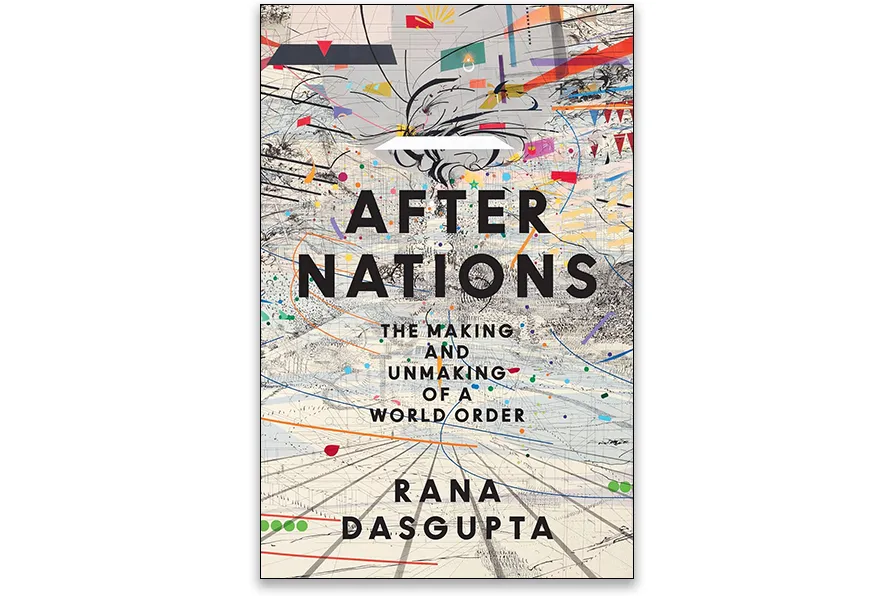
After Nations — The Making and Unmaking of a World Order
Rana Dasgupta, William Collins, £30
IN THIS magisterial history of the development of nations as a political concept, Dasgupta takes us on a vivid and highly informative journey, delivering key insights.
The modern world is made up of nations and the system of sovereign nations is a universally accepted way of conducting political and economic relations (despite Trump’s attempts to ignore and flout this consensual view).
So, how did this system arise, what purpose did it serve, and — above all — where has it reached in its life cycle? Dasgupta attempts to answer those questions.
Nation states acquired significant moral prestige in the decades following the second world war and their role was enshrined in the UN Charter. The political theory behind national states emphasised the welfare and protection of citizens, when states tended to have authentic control over their national realities.
This was the era of decolonisation, when nation states delivered one-third of humanity from the humiliation of imperial rule, restoring political autonomy and dignity where these had long been removed. In the West, nation states produced an expansion of equality, democracy and material security. “The political philosophers could close their books: there was no next chapter,” Dasgupta writes, tongue in cheek.
But this naive view tended to overlook the destructive violence of the cold war and the ever-increasing inequality between nations. “It owed much of its credibility to the fact that the international system, [and] the leading schools of governments were still controlled largely by the West, where the nation state was invented in the first place and where its most spectacular rewards are enjoyed,” he writes. That view is no longer tenable.
In the late 1970s there began a set of processes which restored the autonomy of financial capital, reset the purpose of politics, and generated a number of new competitors to the nation state. What the processes were, and where they will lead, forms the core of this book.
He details how the impact of the “revolution” of the 1970s, led by Reagan and Thatcher, restored the supremacy of capital after decades of subjection to the national state. It began, from the banking centres of New York and London, to extend across the world. It brought about the reconstitution of the national state, to begin with by disabling its capacity to contain capital, forcing states to compete for capital in international markets. Political power was redistributed and many central banks were removed from the democratic sphere. All undertakings, including utilities, health, education etc, became subject to market forces and beholden to international capital.
Today, nearly five decades later, the nation state is unable even in theory to manage reality as it once did. Its capacity to deliver progress and human welfare has been undermined. The nation state has been usurped by giant corporations with their own rival visions of social and political arrangements. Even rich states have forfeited their primordial power over money and as a result they struggle to uphold their commitments to their peoples. And it is this inability which is fuelling disillusion, distrust and anger in nation states.
Meanwhile the resurgence of Eurasian empires — notable China and Russia — strikes at the heart of the order established under US hegemony.
In his analysis of the role of capitalism in the emergence of nation states Dasgupta does, however, ignore the impact of the Bolshevik Revolution and the existence of the Soviet Union for over 60 years. The democratic rights and freedoms which Western industrialised states granted their citizens during the 20th century, he thinks came about as a result of “liberalism” (a vague and unhelpful term), while ignoring the battles waged by working people and socialists for their democratic freedoms. Many of the rights we had until recently taken for granted, were not granted by the ruling class out of generosity, but because the latter feared revolution. The Soviet example, however flawed, acted as an alternative system to that of capitalist exploitation.
In his conclusion, Dasgupta attempts to answer the question: how can we emerge from the present collapse or impotence of nation states? but his responses falls very short of adequacy. While again he has some interesting and innovative ideas, they are so much wishful thinking. He suggests, for instance, that alternative or parallel currencies could be used to deal with poverty and people being left out of the monetary system; he suggests a form of universal digital citizenship, rather than a national one.
One might not agree with everything in Dasgupta’s interpretation of the history of nations but his analyses are certainly informative and thought-provoking.
