EWAN CAMERON picks out two fascinating music shows, fusing the Korean, and the Celtic, with the modern



Film round-up: March 19, 2026
JOHN GREEN, MICHAL BONCZA and BELLA KATZ review The Good Boy, Broken English, and Don't Be Prey
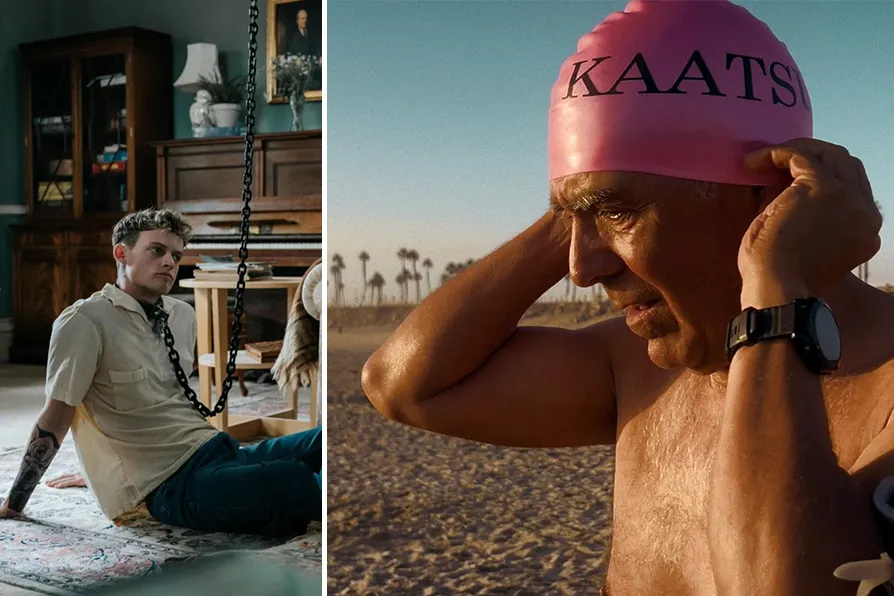
 (L) Anson Boon in The Good Boy; (R) Steven Munatones in Don't Be Prey
BENJAMIN POTHIER suggests that Palaeolithic cave paintings in Spain point to the ceremonial use of hallucinogenic flora
The bard confirms that the right has a humour bypass, and replays the English Revolution on period instruments
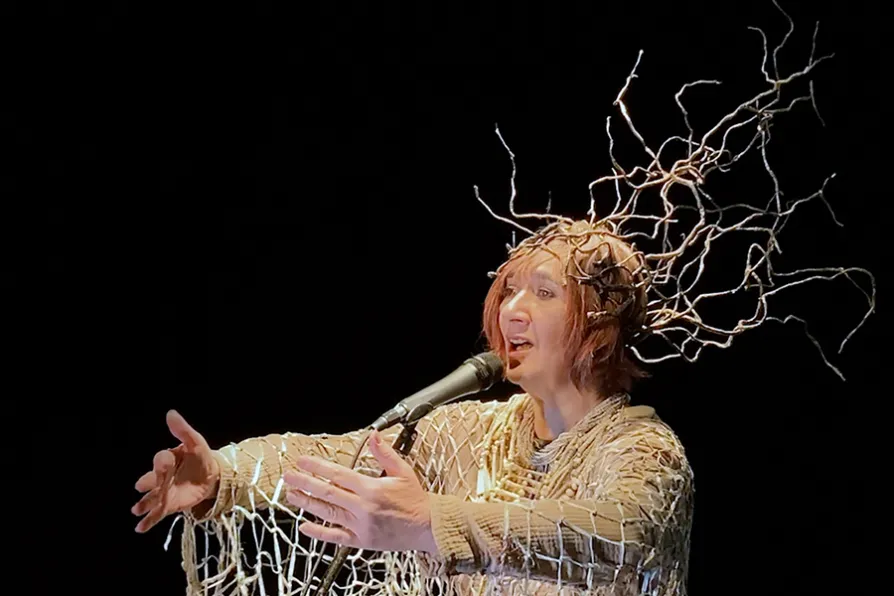
MARIA DUARTE and ANDY HEDGECOCK review Sunny Dancer, Tony, Songs of Forgotten Trees, and The End of Oak Street
JOHN GREEN relishes a powerful and moving drama that explores the lived realities of west London’s Punjabi community
MARTIN HALL welcomes a plea for greater compassion between believer and non-believer via the framework of philosophical enquiry





The Good Boy (15A)
Directed by Jan Komasa
★☆☆☆☆
DIRECTED by Jan Komasa, this is his first English-language film: a dystopian story about 19 year-old Tommy (Anson Boon), an out of control delinquent. The screenplay, originally in Polish and set in Warsaw, was adapted into English and set in Yorkshire.
It opens with a rapid montage of a group of hedonist youngsters dropping pills and downing alcohol as if there is no tomorrow. In the centre of the group is Tommy, a narcissist teenager with a strong streak of viciousness. His income comes from successful social media streams depicting him racing stolen cars with his cronies. His online profile has caught the disapproving eye of Chris (Stephen Graham, Adolescence), a middle-aged road-safety campaigner and conservative family values bloke, who is married to a depressed and mute wraith of a wife.
After a night of drugs and violence, Tommy is abducted by Chris, and chained in the basement of his incongruously gated mansion set in spacious grounds, buried deep in the countryside. There, Tommy is subjected to a violent and twisted rehabilitation process. As he complies with this rigorous regime, he frantically searches for a way to escape. The idea is to turn him into a “good boy” through an intense carrot and stick approach, the “stick” being a truncheon, together with taser guns, tear gas and a chain around his neck.
Chris is on a mission to train Tommy to be a good son to them, and an exemplary older brother to the couple’s 10-year-old robotic and cowed son Jonathan, who maintains a fixed smile and mask of suppressed fear.
One has to wonder what motivates people to make such a misanthropic horror film? We learn nothing of the real psychological or emotional background of the protagonists, nor can we easily identify or sympathise with them. What are we supposed to glean from a fabricated fairy story of coercion, violence and misguided, perverse educational methods?
An absurdist nightmare, certainly not a film to entertain, educate or enlighten. Give it a wide berth.
JG
In cinemas March 20
Broken English (15)
Directed by Iain Forsyth and Jane Pollard
★★★☆☆
IN THE cavernous offices of the Ministry of Not Forgetting its lead apparatchik, The Overseer (a cool Tilda Swinton), decides that the singer Marianne Faithfull meets the institution’s convoluted requirements to be “memorised” by its system.
What follows is an excessively art-housed documentary on the life and travails, musical and otherwise, of the venerated singer. The excess of the 1930s noir mise-en-scene and elongated “behind the scenes” contrived orchestrations will test patience and get in the way of the commentary emanating from the gracious Faithfull.
There are glorious clips of Faithful rehearsing Betthold Brecht and Kurt Weill’s Seven Deadly Sins and intimating that Anger and Pride remain her favourites.
Somewhat appropriately and touchingly, her father, an eccentric British MI6 agent turned professor of Italian literature, collected diligently, unbeknown to her, press cuttings in scrapbooks.
The piece de resistance — if you last that long — comes in a studio rendering of her Misunderstanding in a tender duet with Nick Cave.
MB
In cinemas now
Don’t Be Prey (12A)
Directed by Jeff Tseng
★★★☆☆
THIS resonant documentary by Jeff Tseng dives into the world of extreme sport and open-water swimming, focusing on the perilous marathon challenge “Oceans Seven.”
Originally conceived as the swimming equivalent of the better-known “Seven Summits,” it sees athletes attempt to cross seven international channels, pushing the limits of body and mind in unforgiving conditions.
The film follows the decade-long journey of Australian swimmer Mark Sowerby, a former investment banker seeking to reclaim his sense of identity and find new meaning.
Captivating drone footage conveys the sheer scale of the challenge, while beautifully shot sequences capture Sowerby on location as he faces his fears head-on.
Though ultimately a solo pursuit, the sport is underpinned by a supportive community of men and women of all ages, abilities, shapes and sizes, united by their shared ambitions.
But why would anyone willingly endure such suffering? The answer soon becomes clear, as the title suggests: “Don’t become prey.”
The film captures both the chaos of modern life and the serenity the water offers those who escape into it.
Of course, the human psyche is not the only hurdle — freezing conditions, funding and treacherous currents all play their part.
Perhaps the most terrifying factor is the predators lurking beneath the surface, sharks and jellyfish, adding another layer of danger.
The film works as both a compelling story and a broader metaphor: you don’t necessarily need to go and dive into shark-infested waters, but it may inspire you to do something that scares you.
BK
In cinemas March 20
