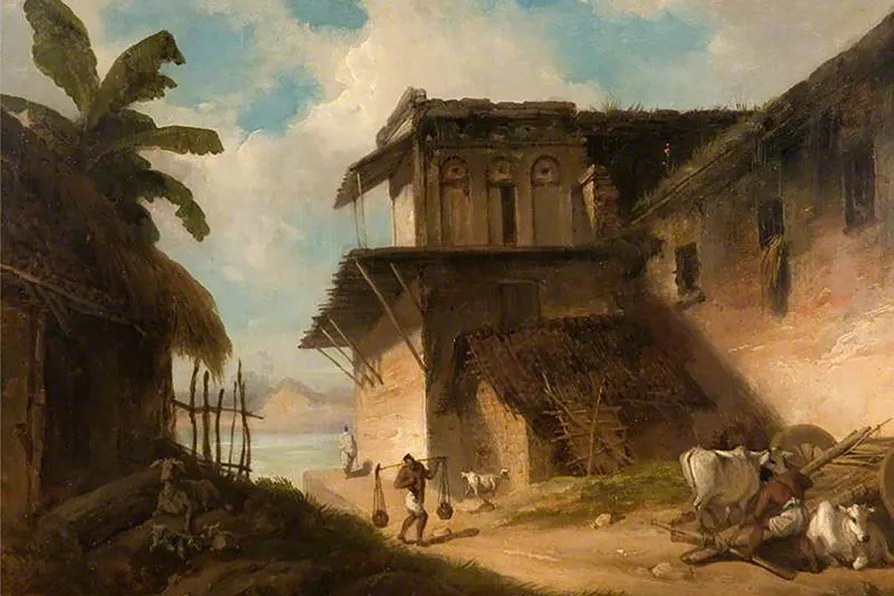
APURBA CHATTERJEE explains how British artists in India used the “picturesque” to reshape colonial landscapes and celebrate imperial power


 Latest editorial

Letters from Latin America: March 13, 2026
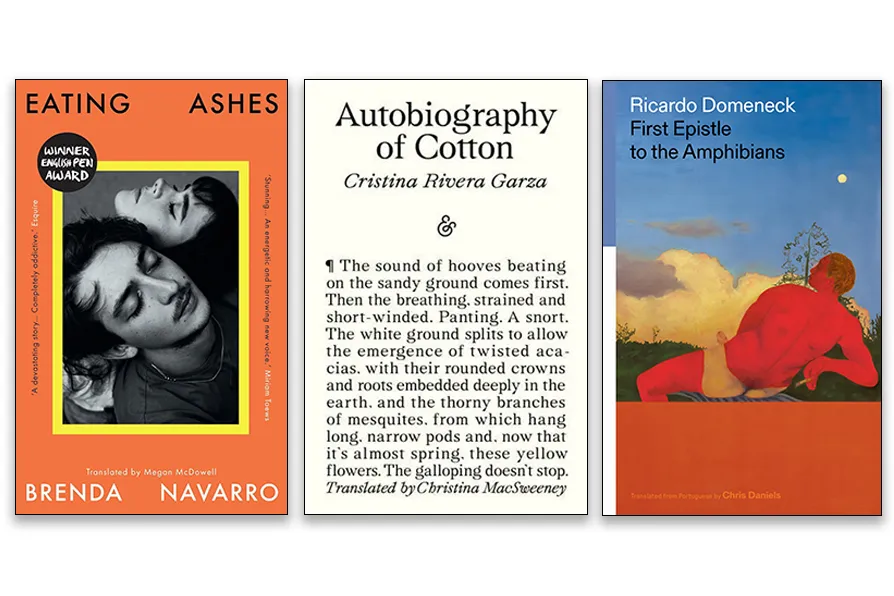
A dazzling novel, and autobiographical fiction, by Mexicans Brenda Navarro and Cristina Rivera Garza, and poetry by Brazilian Ricardo Domeneck
PAUL DONOVAN welcomes a revival of Reginald Rose’s classic play that reminds us of the fundamental need for trials with juries
SIMON PARSONS applauds an exceptional performance of Wesker’s little-known play, by the same actor for whom it was written 45 years ago
ANDY HEDGECOCK and MARIA DUARTE review Late Fame, The Death of Robin Hood, Leviticus, and Gail Daughtry and the Celebrity Sex Pass
ANGUS REID recommends a uniquely accomplished documentary collage that contemplates our relation to the natural world
GORDON PARSONS enjoys Kant’s ‘mind-boggling’ theory of human reality: that we create the reality we experience





“I DIDN’T see it myself, but it’s as if I had, because I feel it drilling into my head and I can’t sleep at night. Always the same image: Diego falls and his body hits the ground.”
So begins Eating Ashes (Oneworld, £14.99), the devastatingly beautiful second novel by Mexican author Brenda Navarro, translated by Megan McDowell. It’s the kind of opening that grabs you by the throat and refuses to let go.
Navarro’s novel follows a sister and her younger brother who follow their mother from Mexico to Madrid, but what unfolds is far more than a migration story. It is about political and domestic violence, teenage bewilderment, and the fragile intimacy between siblings trying to survive a world that feels increasingly hostile.
Ashes are everywhere in this book: literal ashes, the ashes of a person, the symbolic ashes of a country, the invisible residue migrants carry across borders. “I read online that the ashes of dead people aren’t toxic… I never got sick from eating Diego’s ashes,” the narrator says with devastating calm.
Navarro’s language is stark and unsentimental — direct, visceral, stripped of nostalgia. The emotional force of this novel is staggering. What remains is the quiet but brutal reminder that violence — whether inflicted by the state, the police, the family or society — burns long after the fire is out.
From the intimate devastation of Navarro’s novel, we move to a different but related terrain in Cristina Rivera Garza’s Autobiography of Cotton (And Other Stories, £14.99), brilliantly translated by Christina MacSweeney. To inquire into one’s origins, Rivera Garza suggests, is to open the door to silences as much as answers.
In this ambitious and deeply personal book, she follows the footsteps of the workers and peasants who populate her family history — cotton farmers who lived and laboured on the land that now forms the border between Tamaulipas and Texas.
Once, the cotton economy brought prosperity to the region. Its eventual collapse left behind a landscape shaped by migration, deportation and displacement — territories now marked by the violence of the so-called war on drugs. Rivera Garza approaches this history not as a distant chronicler but as a descendant, tracing her own genealogy back to great-grandparents who endured the hardships of rural life in the early 20th century. The result is both an intimate family narrative and a broader meditation on land, labour and memory.
What makes Autobiography of Cotton so compelling is Rivera Garza’s remarkable ability to merge archival research with the imaginative reach of fiction. Her prose moves fluidly between personal reflection, historical reconstruction and literary speculation, building a layered portrait of a region whose past is too often forgotten.
By the time Rivera Garza reaches her closing pages, the many threads of research, memory and imagination converge with remarkable clarity. Few contemporary writers end a book with such quiet authority. Autobiography of Cotton ultimately becomes more than a family history: it is a meditation on how the past survives in the landscapes we inhabit and in the stories we continue to tell.
The third book moves us from narrative into lyric intensity. Brazilian poet Ricardo Domeneck’s First Epistle To The Amphibians (World Poetry Books, £20), translated from Portuguese by Chris Daniels, brings together more than two decades of work by one of Brazil’s most distinctive contemporary voices.
Domeneck’s poems are sensual, bodily, restless. They explore queer experience, intimacy, and the politics of language and migration. They move through cities, languages, lovers, and landscapes while insisting on the body’s stubborn presence — its fluids, its desires, its vulnerabilities. “Changing countries doesn’t mean changing bodies,” he writes, capturing the strange persistence of self across migration and language.
The poems are erudite and playful, sometimes baroque, sometimes disarmingly intimate. Domeneck draws on a transnational lineage of queer poets — from Cavafy to Pasolini to O’Hara — while forging a voice that feels unmistakably his own: witty, angry, tender and fiercely alive.
Taken together, these three books remind us how literature confronts displacement and memory. Navarro writes from the ashes of personal and political violence. Rivera Garza excavates the buried histories of labour and migration along the borderlands. Domeneck turns the migrant body itself into a lyric archive. Different forms, different voices, but all asking the same urgent question: what remains of us after we cross the border between one life and another?
