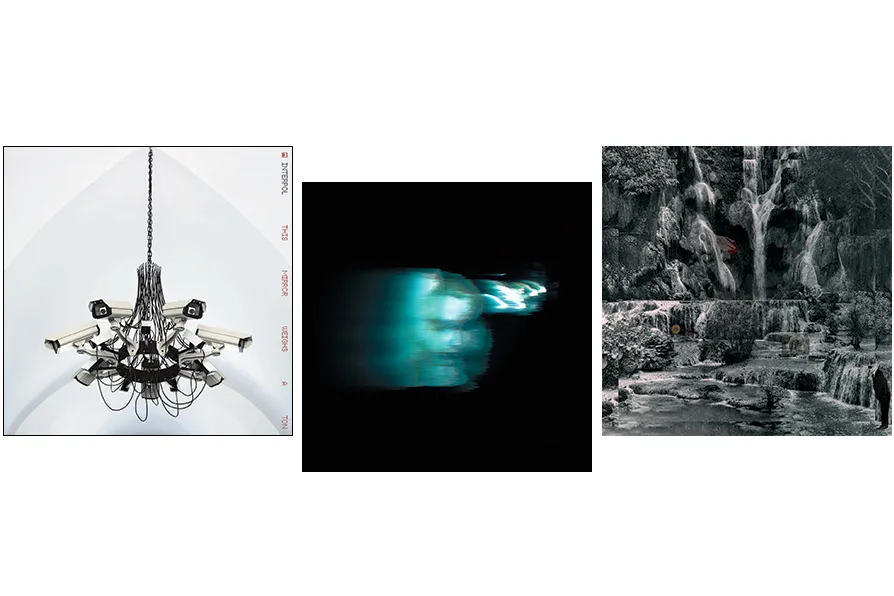
New releases by Interpol, Phoebe Bridgers, Lambchop


 Latest editorial

Artificial Biological Intelligence - friend or foe?
JOHN GREEN welcomes a vital contribution to the debates around genetic manipulation
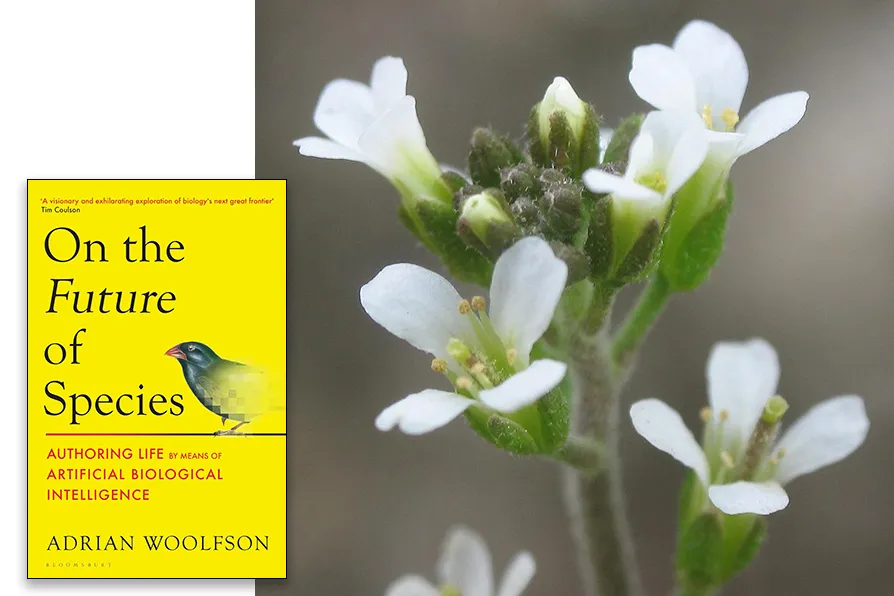 Arabidopsis thaliana (generally considered a weed) was the first plant genome to be sequenced, in 1986 [Pic: Public Domain]
ANGUS REID urges us to understand the persecution of Jason Arday from a political and historical perspective, and to see the victim in human terms
Re-releases of the classics Gypsy Rhumba and Buena Vista Social Club, and a stunning album by Palestinian artist Faris Ishaq
Nothing, says ANDY HEDGECOCK, can rescue this undistinguished amalgam of ponderous melodrama and shallow philosophical speculation
JAMIE BRITTON invites readers to visit 3,500 locals as part of a marathon artistic pub crawl
JOHN GREEN welcomes a valuable and incisive analysis of a world become hyperpolitical but without the mass movement institutions to represent it





On the Future of Species – Authoring Life by Means of Artificial Biological Intelligence
Adrian Woolfson, Bloomsbury, £25
WOOLFSON’s book is a vital contribution to the controversial debate around genetic manipulation, that could change humanity as we know it.
Until now, human beings, and indeed all of life, has emerged as the sole result of Darwinian evolution, but this narrative is about to be turned on its head by artificial intelligence (AI). AI will give us the key to reveal the rules of the generative grammar of life, with technologies for constructing the genomes (the genetic templates) of species on demand. Such a breakthrough no longer belongs in the realm of science fiction but is becoming reality. This raises not just technological issues but, more importantly, moral and ethical ones.
We are on the threshold of a new era in which the blind, directionless process of evolution may be augmented or even surpassed by artificial evolution. At present our capabilities are still rudimentary, but eventually, with the agency of a chemical printing press we will be capable of rendering the genome sequences of species as if they were the texts of a book. Our ability to manipulate life’s structures could become virtually limitless.
Life on Earth has come about as the haphazard result of millions of years of evolution. Human beings are the culmination of that process and that is why our genetic make-up is the result of a very inefficient way of constructing a viable organism. Rather like a computer built up from a wooden abacus, this has proceeded by incorporating an increasing number of adaptations, additions and subsidiary elements. That is why we are subject to diseases, organ failure, senescence and cognitive deficiencies. AI has the potential to overcome many if not all of those inbuilt weaknesses. Natural heredity would become marginalised. To implement this will raise profound ethical issues and risk impinging on the fabric of human nature itself.
While utilising AI-informed genome design offers immense opportunities for humanity, it also has the potential to cause catastrophic harm.
As long as we live in a very unequal world in which mass poverty exists alongside the inordinate wealth of a few, and in which AI technology remains in the hands of profit-seeking capitalists, biological AI is a frightening prospect.
The unprecedented power of Artificial Biological Intelligence (ABI) brings with it a burden of great responsibility. It compels us to confront profound questions about humankind’s future and about what kind of world we wish to create and live in. At what point does “human nature” cease to be “natural?” How can we ensure that these technologies will be used safely, ethically and wisely?
Woolfson underlines that any manifesto for ABI implementation must be configured in a manner that “delivers justice, wellbeing and social benefit equitably to all humankind, while preserving the diversity of natural species and safeguarding the essential features of authentic human nature.”
Woolfson, an academic researching molecular biology and CEO of Genyro, a biological research company, takes us on a fascinating historical journey through the development of the biological sciences. He also explains lucidly the implications of ABI, concluding with a clearly argued manifesto for governing and regulating its implementation.
The big question remains, though, can this be achieved in a capitalist world, already experiencing meltdown?
