A California union’s decision to host a meeting about US policy towards Cuba has prompted a congressional probe and renewed attacks on international solidarity, writes CAMERON HARRISON



A two-tier Britain: The human cost of ‘earned settlement’
The government’s new immigration proposal risks creating a society where rights are earned, not guaranteed, warn feminist groups Project Resist and FiLiA in a joint statement
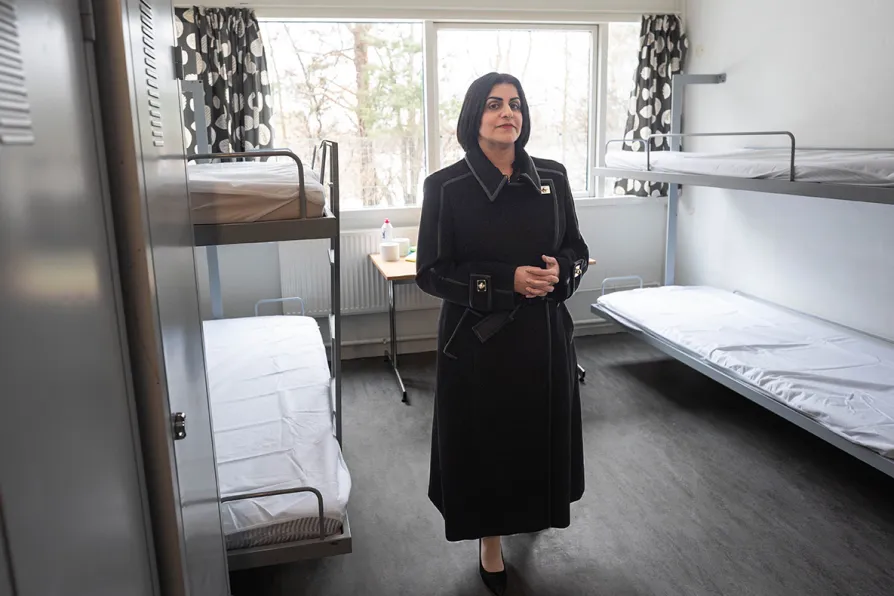
 Home Secretary Shabana Mahmood during a visit to the Centre Sandholm' migrant detention centre in Sandholmgardsvej on the outskirts of Copenhagen, Denmark, February 27, 2026
The Baltic state is set to reverse its constitutional prohibition on nuclear weapons and foreign bases as part of accelerated Nato war preparations, warns TOM UNTERRAINER
Long-term underfunding and state neglect, while simultaneously probation services have been undermined, have intensified the prison crises, argues SOLOMON HUGHES
Holyrood incompetence has cost jobs and put the future of Clydeside’s Ferguson Marine shipyard into jeopardy. Its future should have been assured, argues KENNY MACASKILL
With the agitated debate now raging in the media about the early release schemes, Prison Officers Association general secretary STEVE GILLAN gives the view of those who work in the sector
The hounding of the late Jason Arday is an all too familiar experience for many black people. ROGER McKENZIE calls for collective action to combat what can feel like personal isolation





THE government is currently proposing to bring in a new immigration model for settlement — the “earned settlement” scheme — which will make the granting of permanent residence dependent on financial contributions and high levels of integration and compliance rather than length of residence.
If enacted, it will have a terrifying impact on the poorest and most vulnerable migrants, particularly women. It will create a hierarchical, two-tiered society made up of British citizens and non-citizens, with far-reaching consequences not just for migrants but for British society as a whole.
We need to resist this proposal before it is too late. As organisations working for women’s rights and migrant justice, we have been shocked by the brutality of Ice, the US immigration and border patrol force, and its use of violence to terrorise migrants and the US citizens who support them. We should not think Britain is immune from such state-orchestrated cruelty. The enactment of “hostile environment” immigration policies by successive governments has, over the years, created fear and uncertainty for many migrants. It has led to unprecedented levels of immigration raids and enabled widespread public displays of anti-immigration racism and violence. The political direction of travel could not be clearer. This is the time to join together in resistance.
‘Earned settlement’
The proposed model is widely acknowledged to represent the most significant shake-up of the immigration system since the Immigration Act 1971.
It will put settlement out of reach for most new migrants and also most of those who have built their lives here. Only high earners or those on priority routes will have access to an accelerated (three- to five-year) route to settlement. The majority will have to wait for up to 10 or 15 years, or even more, before gaining residence rights, which is up from the current five years. This includes children and those who work in transport, the care sector and other front-line public services.
Small discounts to the residence timeline may be applied if migrants can show higher levels of “integration,” A-level fluency in English and “good character and conduct.” Those who are ill or disabled or have dependent partners or children or who have relied on public funds, or those who have arrived in the UK illegally, entered on a visitor visa or overstayed their visas, may have to wait for up to 20 years. Even those who are fleeing persecution are likely to have to wait 20 years or more for settlement rights. This will make the UK’s asylum laws some of the toughest in Europe.
The rationale used to justify the settlement proposals is ostensibly to facilitate “integration.” But there is growing consensus that they will cause immense poverty, hardship and division, and make integration even more difficult to achieve for many migrants.
Impact on women
The proposals are not only profoundly racist and classist, but also sexist. We are deeply concerned about the impact of the proposals on vulnerable migrants, including women, and we urge the government to share the Equality Impact Assessment it says it has carried out in relation to this proposal. Women will be disproportionately affected. They are more likely to be dependants of male earners, to work part-time or in informal or low-paid sectors, to have childcare and other domestic responsibilities and to rely on welfare benefits.
The disadvantages and barriers to integration they already face will be exacerbated by their effective exclusion from early routes to settlement.
Women who have experienced domestic abuse, coercive control, trafficking and exploitation have often overstayed their visas or entered the UK illegally — through no fault of their own. Most depend on the welfare safety net to exit abuse and overcome trauma, but under the proposals they will be penalised and made to face long qualifying periods.
In addition, those who try to defend themselves against violence or have been criminalised as a result of counter-allegations made by abusers, who increasingly use such tactics as part of their coercive control, will also be denied early settlement. Immigration rules such as the “no recourse to public funds” (NRPF) condition already force many women into economic dependency, placing them at serious risk of abuse and harm for long periods.
Under the new proposals, their economic dependency on abusive and exploitative men will be further heightened and they will remain trapped in destitution and precarious situations for even longer.
Settlement is a right, not a privilege
Far from encouraging integration, the proposals are likely to add to a growing migrant underclass subject to punitive state responses, anti-immigration racism, sexism, exploitation and degradation. If enacted, they will contravene the government’s legal and moral obligations to provide humanitarian care and human rights protection.
Our concern is that the government knows this but is deliberately choosing to be driven by anti-immigration politics.
We deplore this latest unconscionable move to placate the far right. We call on the government to reconsider the earned settlement model in its entirety. It will cause untold distress and hardship within migrant families as members, including children, are forced along different and arbitrary paths to settlement and citizenship. It will also create divisions between British citizens and migrants and further institutionalise hatred, intolerance and exclusion.
The government contends that settlement is a privilege, not a right, however we assert that settlement and citizenship rights should no longer be rooted in the country’s colonial legacy, but must be forged in the values of democracy and our shared humanity.
If you would like to sign this statement in solidarity, please email comms@projectresist.org.uk.
This statement is also presented on Project Resist’s website, where the signatories will be shared. FiLiA also submitted a formal response to the government’s consultation on earned settlement, developed with input from FiLiA Women’s Assembly, LISG and Project Resist.

Similar stories
The pioneering activist understood that freedom could only be won through solidarity across communities. Her legacy offers vital lessons at a time when progressive politics risks losing that shared purpose
The Morning Star republishes PRAGNA PATEL’s speech at the annual commemoration of Claudia Jones on February 22 2026

ANNA FISHER explores what would it mean for women’s equality and public safety if Britain embraces full commercialisation of the sex trade

Legal frameworks designed to safeguard women are too often weaponised against them, reinforcing male power and entrenching injustice. The FiLiA Ending MVAWG Team highlight some of the issues
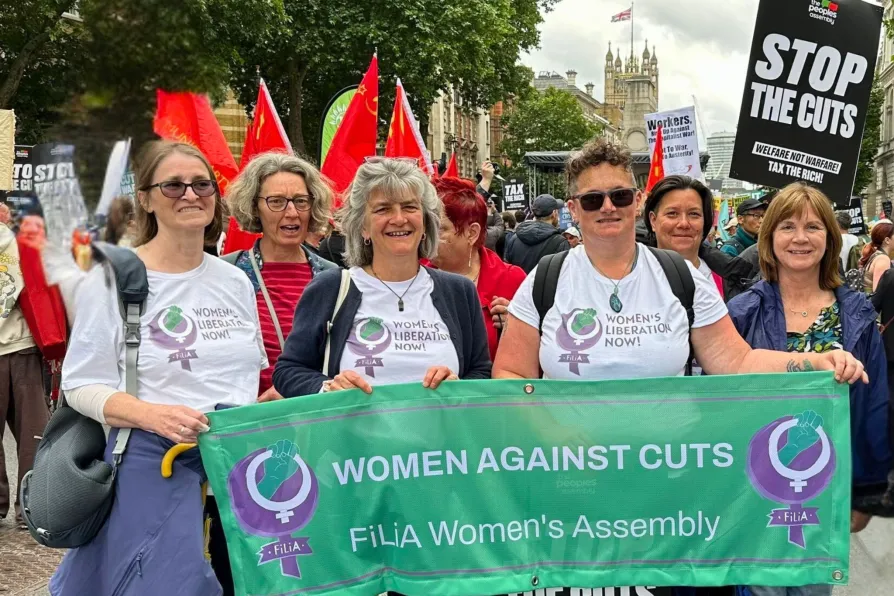
Women are a vital part of the labour movement and have much to contribute, but there’s far more to be done to make sure that our sisters’ voices are truly heard, says PHILIPA HARVEY