DOUG NICHOLLS says the parasitic finance markets must be challenged or another British government could be toppled


 Latest editorial

What does feminism mean in 2026?
Professor MARY DAVIS argues that feminism has been hollowed out by liberal co-option – and only a revival of socialist, class-based politics can restore International Working Women’s Day’s original, radical purpose
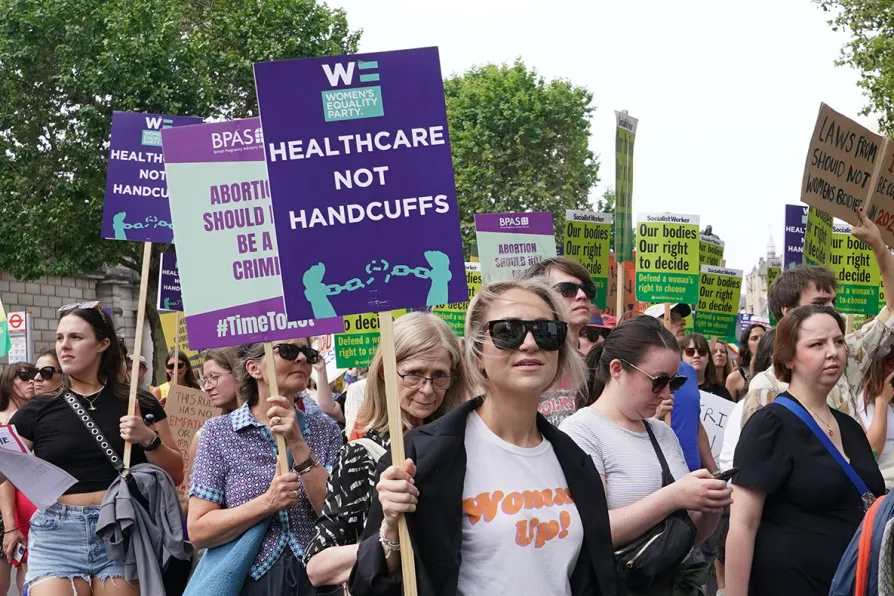 Women's rights campaigners in Westminster, London after taking part in a march from the Royal Courts of Justice calling for decriminalisation of abortion, June 17, 2023

The late country singer’s Imagination Library has put hundreds of millions of books into children’s hands. We should build on that legacy by defending the libraries at the heart of our communities, says BRENDA AITCHISON
Deprivation is a fundamental factor in criminal behaviour that must be addressed but, KENNY MacASKILL argues, there needs to a major rethink in sentencing to tackle overcrowding
MML director MEIRIAN JUMP outlines the recently refreshed library’s busy autumn schedule that ranges from book sales, archival exploration, community work with online education and the ever popular site tours
Some thinkers and authors on the right are openly discussing the possibility that the historically successful party of the British ruling class may be exhausted
Class struggle is the motor of history but the direction and detail of change at any time and place is the outcome of many factors, suggests the Marx Memorial Library and Workers’ School
TONY BURKE surveys the shifting political landscape and the challenges Labour needs to address if it is to prevail in the 2028 federal elections





THE ridiculous “official” theme for International Women’s Day 2026 is “Give to Gain.”
What does this even mean?
And what corporate entity is behind the faceless and anonymous organisation that dares to tell us how to celebrate OUR day each year?
It’s our day because it was established by socialist feminists on the initiative of Clara Zetkin in 1910 precisely to combat the kind of bourgeois feminism rampant then and still existing, albeit in an altered form, in 2026.
A hundred years ago women were fighting for basic economic and social rights including the right to vote.
Zetkin saw this struggle as being based on middle-class women’s desire for equality with men in the fields of education and employment, and for personal fulfilment and achievement. While the battle for equality was of relevance to all women, the demands of working-class women were much greater than the struggle for equal rights.
Working-class women’s oppression was, she said, created by capitalism’s need for exploitable labour and hence women’s double burden — the conflict between their role as super-exploited workers and their role in domestic reproduction. Therefore, the solution for working women lay ultimately in the overthrow of capitalism and the achievement of socialism.
This is not the case for bourgeois women. Their struggle for equality, important though this has been historically, can, Zetkin said, be accommodated within the capitalist system. She exposed the limitations of bourgeois feminism, characterising it as reformist in that it sought to improve women’s status in “statutory legislation made by men” (Gleichheit, December 1891) rather than seeking to overturn capitalist property relations — an irrelevant issue for women who now had the right to own their own property before and after marriage. Thus, the commonality of women’s concerns cannot and does not transcend their social and economic class.
Zetkin’s insight is relevant today because we still live in a class-divided capitalist society and although women are not a class, we are still divided along class lines. Compared to previous centuries when women were the property of men and had no rights at all, it is clear that women’s status in many countries has improved juridically and politically. We’ve even had four women leaders of the Tory Party — three of them were prime ministers!
So, by such yardsticks feminism has triumphed — everyone can call themselves a feminist now and embrace innocuous IWD corporate slogans. Clearly feminism for the bourgeoisie means removing barriers to individual self-advancement.
Thus, equality for women as it now exists is based, by an unseen process of co-option, on the successes of a favoured few, but for working-class women little has altered. Despite the fact that women now account for over half the workforce, job segregation, precarious work and the gender pay gap persist, underpinned by the myth of the “family wage” and compounded by the lack of affordable childcare.
Austerity politics, having undermined public services, has led to the feminisation of poverty. In short, women’s oppression is palpable and persistent.
Socialist feminism — real feminism — means understanding and challenging the root cause of women’s oppression, namely, class exploitation.
However, while it is axiomatic that not all feminists are socialists, it is increasingly apparent that not all socialists are feminists.
This is evidenced by the uncritical adoption of an anti-feminist ideology by the left which regards gender identity as more important than biological sex.
The result of the adoption of this anti-materialist dogma explains the widespread opposition of the labour movement to the April 2025 Supreme Court judgment which ruled that “sex” in the Equality Act 2010 refers to biological sex and that a person’s legal sex is determined at birth and is not changed by holding a gender recognition certificate (GRC) for the purposes of the Act.
Women constitute 57 per cent of British trade union membership, and yet many women members have been silenced and intimidated for expressing support for this legal ruling.
The ruling merely confirms what women have always known to be true — that sex is determined by biology, not by opinion.
Women are also angered by the fact that policy capture in trade unions has given preferential treatment to gender identity over women’s sex-based rights and thus the fight to defend and extend our rights has been significantly weakened.
Bad theory leads to bad practice — in this case it leads to the abandonment of working-class women who have most to lose by the movement’s neglect of the multitude of issues outlined above — failure to campaign on them serves to confirm and perpetuate working women’s super-exploited status economically and socially.
Thus it is that much of the left and the labour movement in general have allowed the feminist cause in 2026 to be usurped by the liberal bourgeoisie with the consequence that feminism has been denuded of meaningful content beyond ritual expressions of abhorrence of violence against women and girls.
However, there is hope on the horizon with the emergence of a socialist feminist movement in the form of two new organisations — the FiLiA Trade Union Women’s Network and the Women’s Liberation Alliance (WLA).
The FiLiA Trade Union Women’s network fights for women’s power in the workplace and in unions with the aim of building solidarity across sectors to hold leadership to account, and to put women’s voices at the heart of the labour movement.
The founding statement of the Women’s Liberation Alliance (WLA) encapsulates the socialist feminist perspective initiated 100 years ago. Its founding principle is that the abolition of class exploitation, sex-based oppression and racism is the precondition for women’s liberation.
The WLA thus challenges women’s oppression in society and women’s super-exploitation as workers national and globally. (This is spelled out more fully on the WLA website www.womensliberationalliance.org.uk).
Such a perspective embraces the true meaning of International Working Women’s Day and encapsulates the real essence of women’s struggle going forward. With this we deconstruct the official theme “to give to gain” — we “give” our Marxist feminist analysis to “gain” a socialist society and hence the end of women’s oppression and super-exploitation.

Similar stories
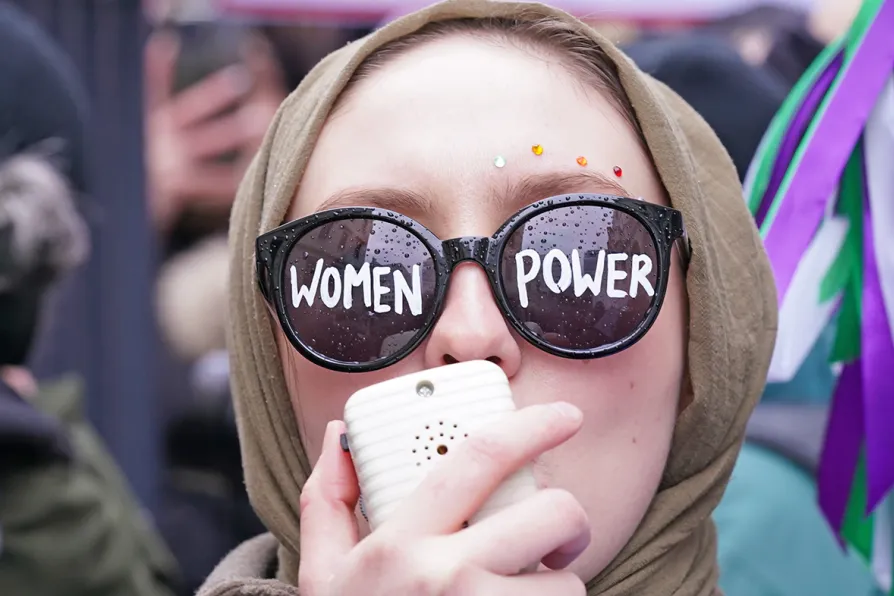
Our priority must be to defend hard-won protections while linking equality law to trade union power and wider social transformation, says MARY DAVIS, on behalf of the Women’s Liberation Alliance
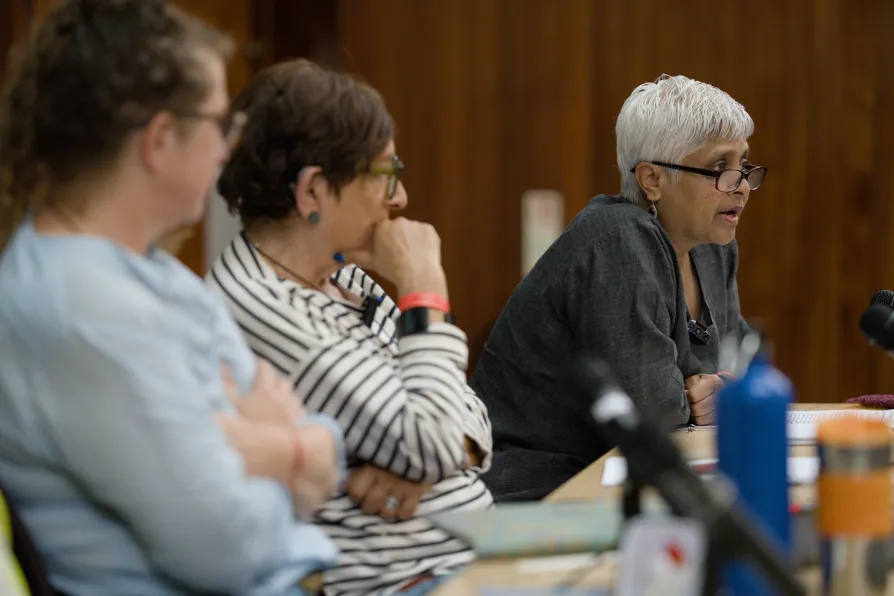
Socialists, feminists and trade unionists gathered in Manchester to launch a network committed to evidence-based activism with a renewed emphasis on class and collective struggle. ANNA BARRETT reports
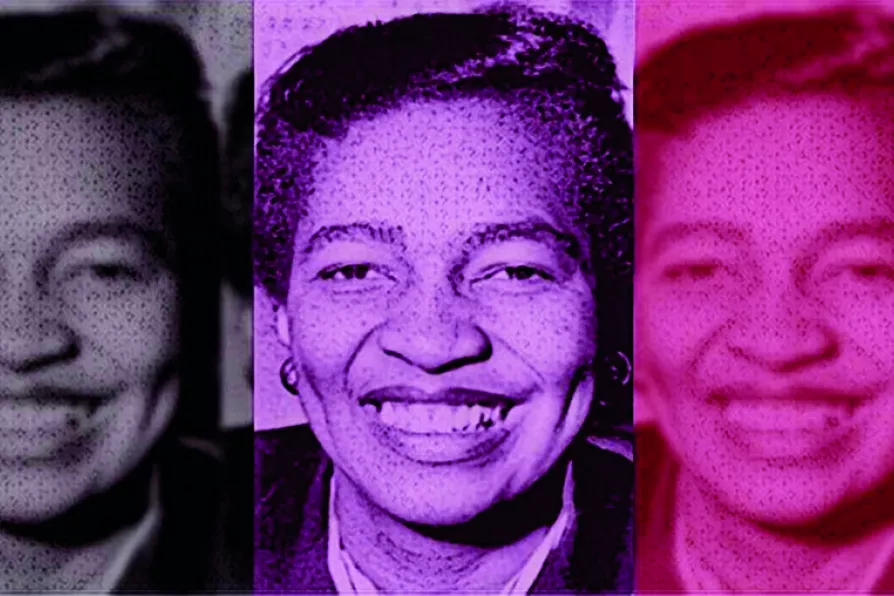
The pioneering activist understood that freedom could only be won through solidarity across communities. Her legacy offers vital lessons at a time when progressive politics risks losing that shared purpose
The Morning Star republishes PRAGNA PATEL’s speech at the annual commemoration of Claudia Jones on February 22 2026
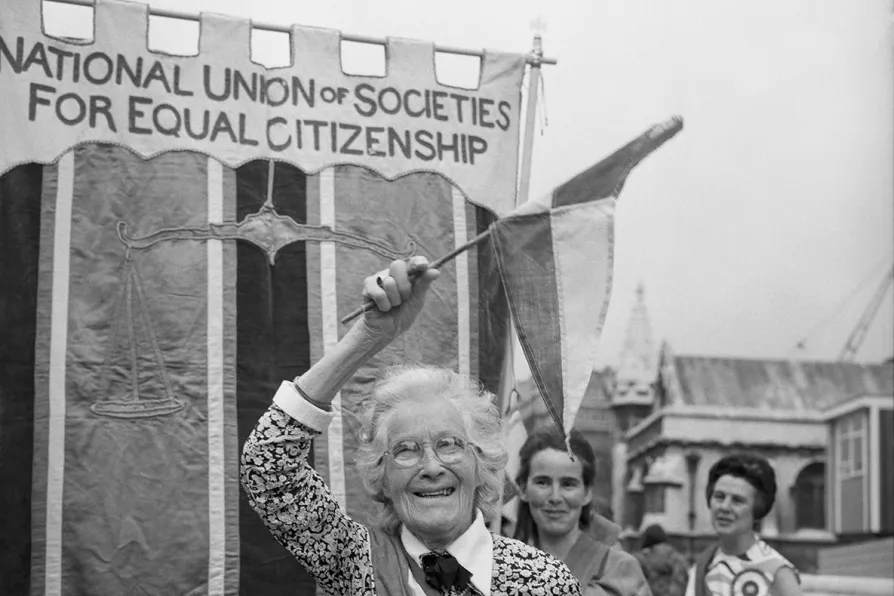
Half a century after transformative laws reshaped Britain, women’s rights are again contested. This International Women’s Day is a call to remember how change was won, and to organise to defend it, says KATE RAMSDEN