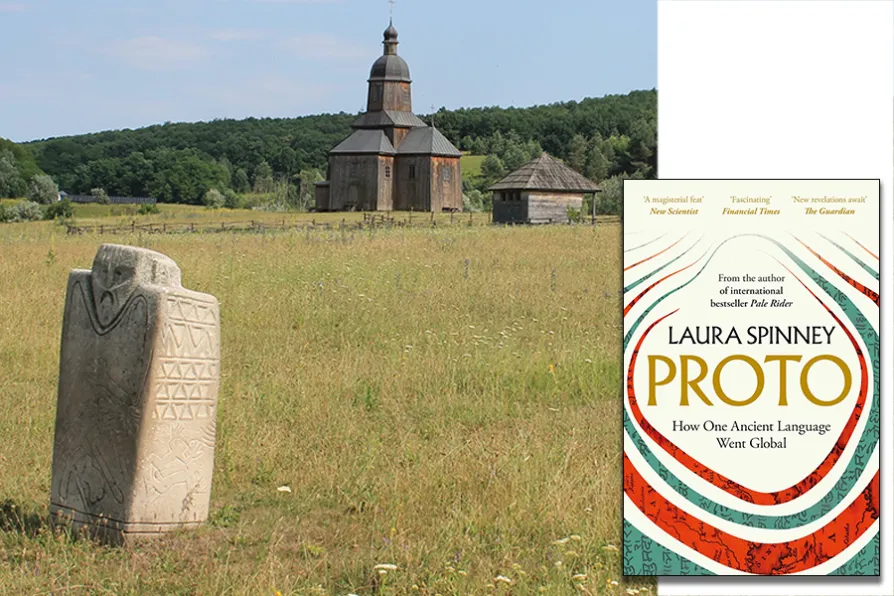
KEN COCKBURN traces the one original language – that of the Yamnaya pastoral nomads – from which all European and Indian languages derive


 Latest editorial
The precursor to modern feminism
MARY CONWAY relishes the period detail but misses the drama in this unsatisfactory dramatisation of the subjugated life of George Eliot
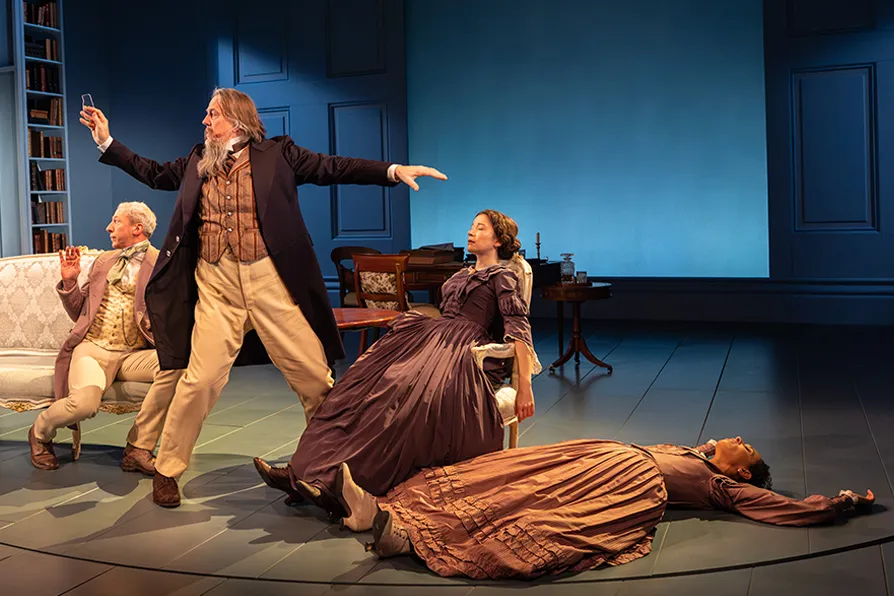 AN ATTACK OF THE VAPOURS: The company in Bird Grove [Pic: Johan Persson]
PAUL DONOVAN is fascinated by the debunking of the iconic British war hero
ALEX HALL recommends a searing panorama of our global predicament
Comics are not just superheroes and spandex – it can be public art, telling public stories, suggests HARRIET EARLE
ALEXEI SAYLE speaks to Angus Reid about a lifetime of protest, how to hone political art – and what to do now
The bard serenades the Diggers of Wigan and their festive followers





Bird Grove
Hampstead Theatre
★★★☆☆
HAMPSTEAD THEATRE’s latest offering and calculated crowd-puller is entitled Bird Grove, after the house in Coventry inhabited by one Mary Ann Evans and her father in the mid-19th century.
Mary Ann Evan, of course, went on to become the supreme novelist George Eliot: a fact which seems almost incidental to this gentle, if highly articulate, exploration of a woman’s place in the world.
The play focuses on the years when Eliot was in her 20s and living as her father’s housekeeper, following the death of her mother. It presents her as a young person of passionate intellect, with a craving for new and radical ideas. Assigned along with all her sex, however, to the submissive role demanded of a woman, she is so beleaguered by exhortations to conform that just being her natural self becomes a mighty struggle.
And it is this insight into the centuries-old subjugation of women that sends shivers down the spine of all of us steeped in modern feminism.
Period detail defines Anna Ledwich’s production: Sarah Beaton’s airy, spacious, cool blue set capturing the elegance of the era, with the characters presenting almost as though straight from an Eliot novel.
Elizabeth Dulau beautifully captures the heart and soul of Mary Ann, even if she is rather too pretty for the woman we know her to have been, and writer Alexi Kaye Campbell delivers Mary Ann’s arguments in fluent and immaculate prose.
But – while there’s a lot to think about, with much fascinating historical detail and hints of the serious feminist rebellion to come – real drama is promised rather than delivered, and the irony that this is George Eliot relies on our existing knowledge.
Much of the play explores exchanges between Mary Ann and her father. But, while Mary Ann lives and breathes for us though Dulau’s performance, as well as through the author’s passionate words, Owen Teale’s father is strangely imprecise and hard to fathom.
Similarly, Mary Ann’s two friends, Charles and Cara Bray, are given little to work with and seem like cyphers, never getting the chance to show their true colours or upset any applecart, even though they are introduced as political and intellectual radicals who scandalise the community.
Fortunately, the superb Sarah Woodward simply raises the game as Mary Ann’s endearing and empathetic former tutor and model of propriety, while Jonny Broadbent’s Dickens-inspired comic turn, as Mary Ann’s would-be suitor, adds colour to Scene One.
The end of the play, unwittingly, exposes a problem with the whole, when we are given a rather garbled and unlikely catch-up on the subsequent destiny of Mary Ann Evans aka George Eliot. We then realise that, while we’ve spent two hours and 40 minutes on the background and build-up, the real dramatic climax we should have seen has been briefly dispensed with in a single minute. It’s as if Campbell has shared with us all his background reading, but forgotten, in the end, to write the play.
Fascinating for Eliot lovers though, and a memorable central performance.
Runs until March 21. Box office: 020 7722 9301, www.hampsteadtheatre.com
