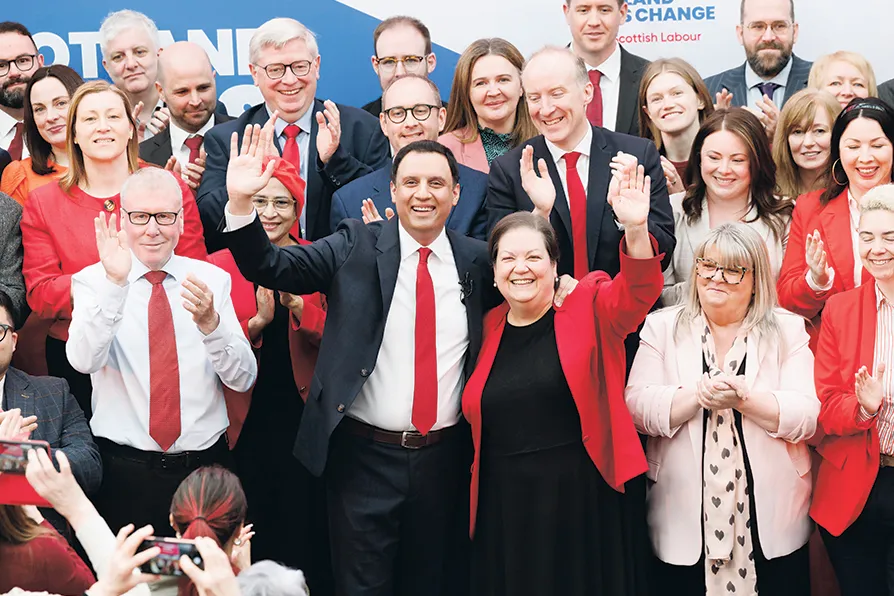
While riding the No 3 bus in Glasgow MATT KERR has ample time to dissect the moribund Scottish Labour decline into near oblivion and watch intriguing bus passenger dynamics


 Latest editorial

Standing at the crossroads of institutional authority and working-class political memory
TOM GALLAHUE argues that asking what role Irish diaspora educators can play in shaping Irish unity is to ask a deeper question about democracy itself
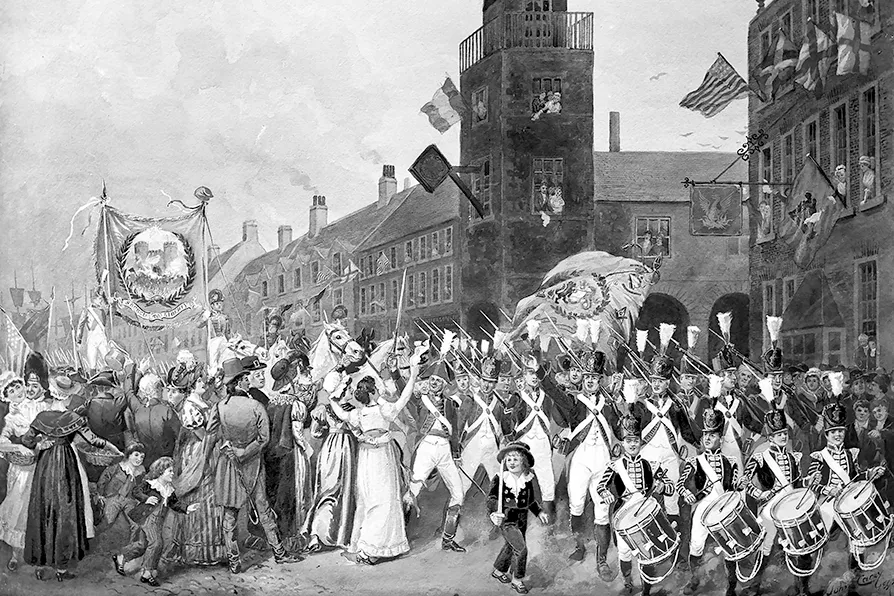 Print depicting the 1791 Bastille Day celebration in Belfast, discussed in the entry for Society of United Irishmen Pic: John Carey/CC
The best wildfire service may begin with the community, argues KOMAL RAJ ARYAL
Dignity is important to all humans, argues the Marx Memorial Library and Workers’ School, but it does not come about automatically. In a less than perfect world, dignity can accompany suffering, but the collective dignity of working people is achieved through acting together to change the world.
The US aim to reshape the existing order in the Middle East needs to be resolutely resisted, argues PAYAM SOLHTALAB
Concessions to Washington by the post-Maduro leadership in Caracas are designed to preserve the core of the Bolivarian Revolution not betray it, argue Roger D Harris, Francisco Dominguez and Mara Paez Victor. How the solidarity movement responds is critical
ALMA EGAN suggests four days out that bring the region’s history of protest to life





IMAGINE for a moment your 14-year-old self. What were you like? I, for one, was very much into drawing and TV. I have happy memories of lying in front of the living room television, with the fire roaring, watching the A-Team or some other such programme, and drawing away to my heart’s content.
This, for many of us, would be a normal, some might say boring, memory from our childhood. But for the generation that came before us, it’s almost unrecognisable.
My parents left their homes in Ireland at the age of 14 and 15, travelled alone to relatives in London and were immediately put to work.
My mother, at 14 years old, went to work in the Bush Radio factory in Chiswick, West London, with her aunt. My father (who lodged across the road from my mother’s family) found work with his cousin as a labourer on building sites at the age of 15.
My parents’ story is not remarkable. It’s a story that is repeated in Irish homes wherever the Irish diaspora settled. What separated my childhood from my parents’ was a political settlement in 1921 that not only normalised migration as a necessity, but ensured generations would leave home because childhood, education, and security were not equally available to them.
The Anglo-Irish Treaty, signed just over five miles away from where my parents would eventually settle in the ’60s, is often talked about in terms of land borders, the political institutions it spawned and competing sovereignties. It is rarely discussed in terms of the impact it had on childhood and their education.
Yet, for many families throughout both the north and south of Ireland, partition marked the beginning of another wave of migration not seen since Gorta Mór/The Great Famine, in which young lives were shaped and dictated not by choice but by necessity.
Migration was normalised in this context, not as an opportunity or an adventure, but as an expectation. Leaving was the responsible thing to do, and was often the only way working-class families could survive.
For those individuals, often facing racism (“no blacks, no dogs, no Irish”) and classed as the working poor, Britain helped to function as a release valve in Ireland, helping to ease both social and economic pressures.
The young people who left in search of work did so to send money home to their families and to survive. In doing so, they not only carried the political burdens of propping up the new states financially (it’s often noted that the new Irish Free State only survived financially due to the money being sent home to families from across the sea) but also, by extension, became fragmented from their families.
For those who are living outside of the island of Ireland, history matters. It’s often the piece that is missing from the present. This is also true in the context of debates on Irish unity.
The partition of Ireland didn’t simply divide one administration from another; it created the conditions that guaranteed generations of Irish children’s education was cut short to prioritise labour over learning.
These lived experiences were not left on the docks in Ireland; they were exported into the dance halls, factories and building sites throughout Britain. These experiences often helped to shape the Irish identity and saw it passed on to the following generations.
Unfortunately, when it comes to the debates around Irish unity, these voices and experiences are forgotten or, worse, dismissed.
The diaspora’s experience is reduced to cultural curiosity seen in music, sport and popular culture, and is often absent from the discussion of unity and the future.
It’s in this vacuum that education becomes vital. For generations of Irish growing up in Britain the home often became the first place where those histories and experiences were shared and encountered. These were living histories shaped by work, migration and an understanding that life chances were never evenly distributed.
This type of curriculum was informal, uneven and often emotionally charged, but it was always deeply political. As Connolly argued, “Ireland without her people is nothing for me.”
For many in the diaspora, it was precisely these informal spaces that ensured Irish history and politics survived where formal institutions failed.
From this tradition and context, a distinct group emerges: diaspora educators. They are the children and grandchildren of migration, shaped by the working-class experience and inherited memories, who have gone on to work within the formal education system across Britain.
Diaspora educators stand at the crossroads of institutional authority and working-class political memory.
While formally trained within the British educational framework, they often carry a more complex understanding of the Irish experience than those same frameworks will allow.
These educators are not external spectators on Irish unity. They are embedded within the very processes through which political awareness is formed.
Despite this, though, these English, Scottish and Welsh accents have been largely absent from the discussions of unity.
To ask what role diaspora educators can play in shaping Irish unity is therefore to ask a deeper question about democracy itself.
If a new Ireland is to mean more than a rearrangement of institutions, it must engage with the educational realities of those whose lives were shaped by partition beyond the border.
Tom Gallahue is joint district secretary for Hounslow NEU and on the steering committee for EFUI. This is a cross-community collective of educators from Britain and the island of Ireland. You can find out more here: linktr.ee/educatorsforaunitedireland.

Similar stories
AARON SMITH discusses why the Protestant diaspora are still part of Yeats’s ‘Indomitable Irishry’, and an integral part of any future united Ireland.
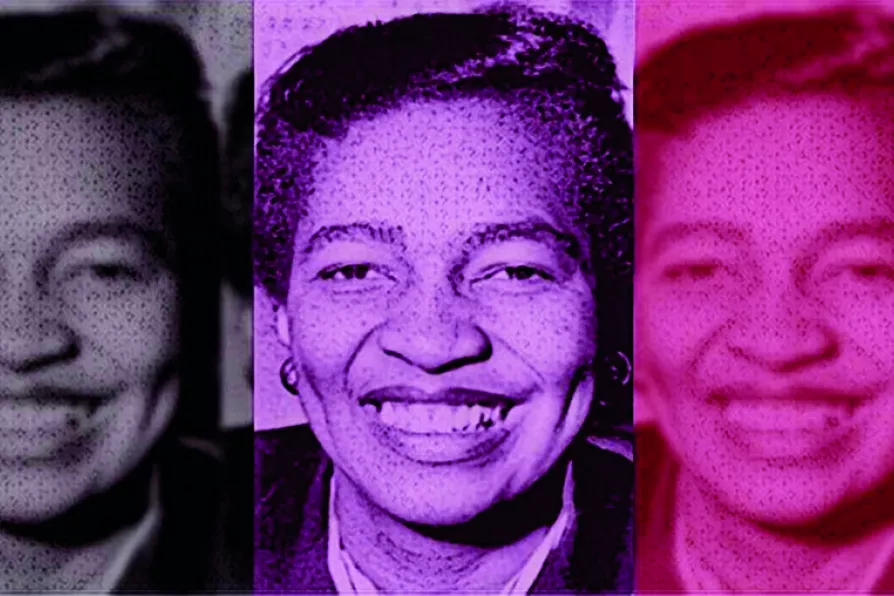
The pioneering activist understood that freedom could only be won through solidarity across communities. Her legacy offers vital lessons at a time when progressive politics risks losing that shared purpose
The Morning Star republishes PRAGNA PATEL’s speech at the annual commemoration of Claudia Jones on February 22 2026
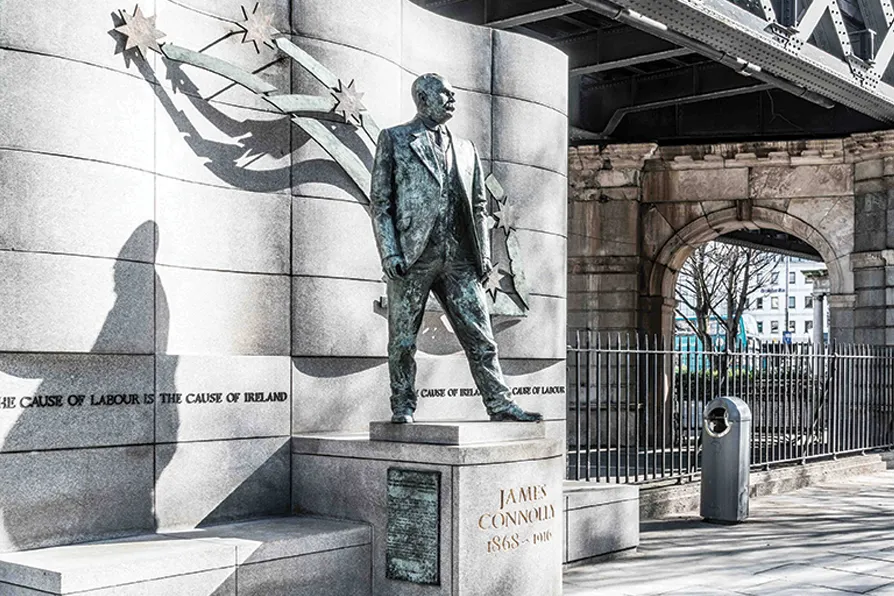
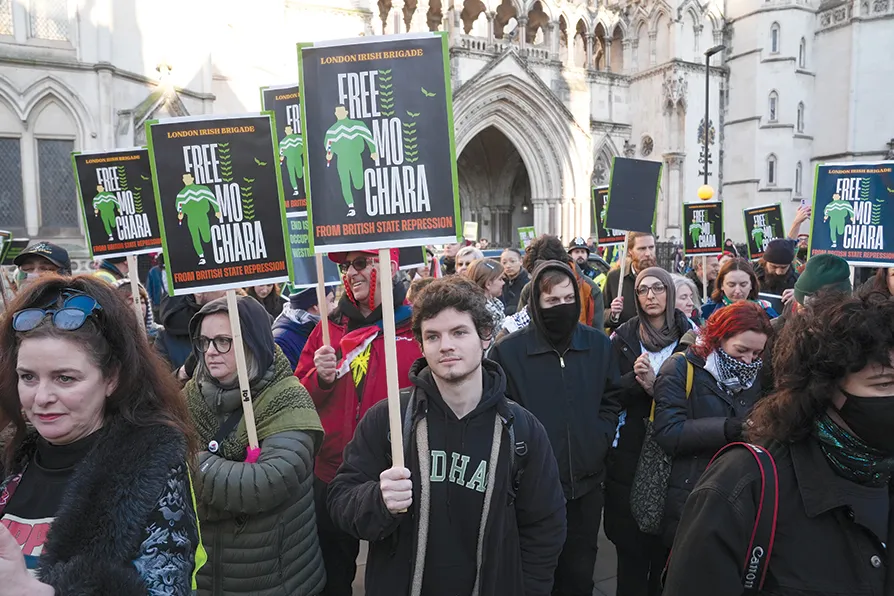
A new group within the NEU is preparing the labour movement for a conversation on Irish unity by arguing that true liberation must be rooted in working-class solidarity and anti-sectarianism, writes ROBERT POOLE
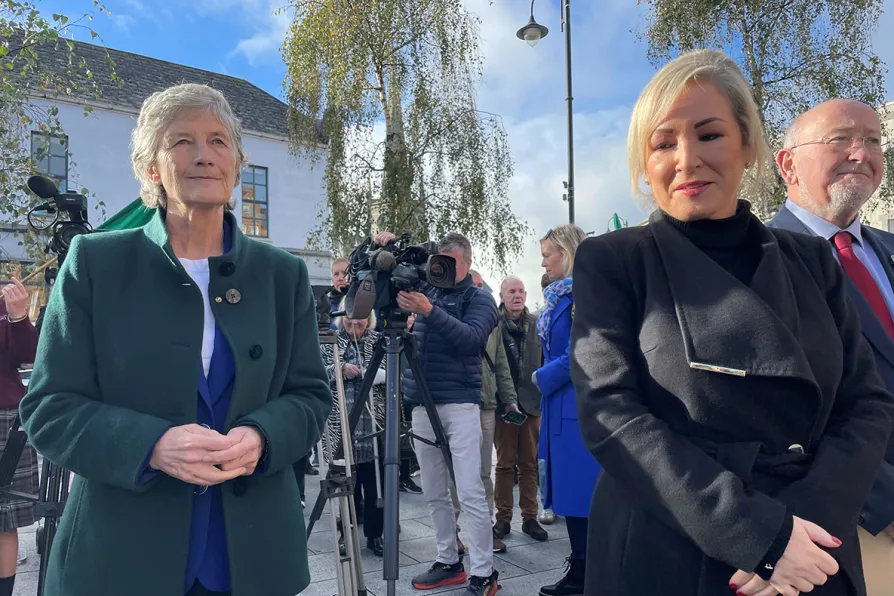
The independent TD’s campaign has put important issues like Irish reunification and military neutrality at the heart of the political conversation, argues SEAN MacBRADAIGH