A California union’s decision to host a meeting about US policy towards Cuba has prompted a congressional probe and renewed attacks on international solidarity, writes CAMERON HARRISON



Austerity by another name: the Spring Statement and the politics of managed decline
As unemployment rises and living standards fall, May’s economic announcement risks locking Britain into further decline rather than charting a new course, warns JON TRICKETT MP
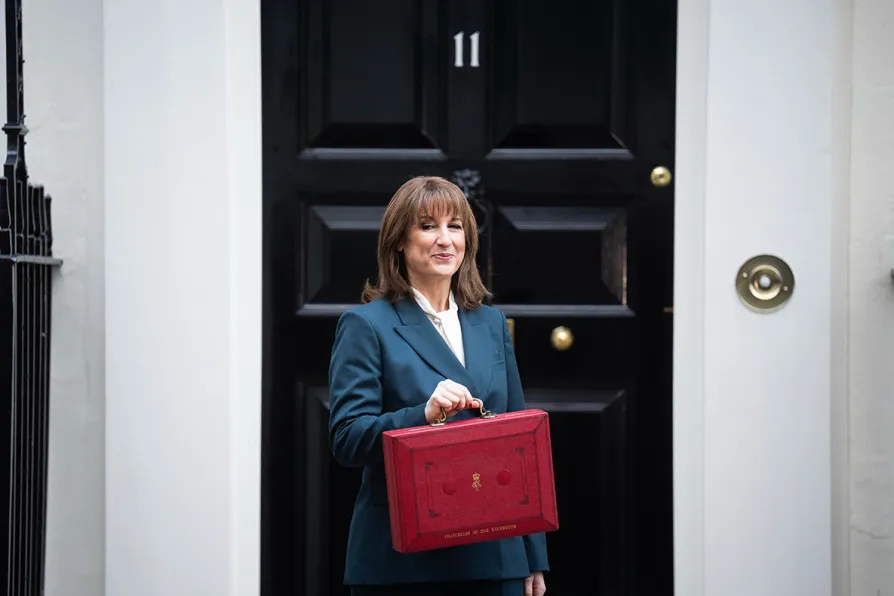
 Chancellor of the Exchequer Rachel Reeves poses outside 11 Downing Street, London, with her ministerial red box, before delivering her Budget in the House of Commons, November 26, 2025

The Baltic state is set to reverse its constitutional prohibition on nuclear weapons and foreign bases as part of accelerated Nato war preparations, warns TOM UNTERRAINER
Long-term underfunding and state neglect, while simultaneously probation services have been undermined, have intensified the prison crises, argues SOLOMON HUGHES
Holyrood incompetence has cost jobs and put the future of Clydeside’s Ferguson Marine shipyard into jeopardy. Its future should have been assured, argues KENNY MACASKILL
With the agitated debate now raging in the media about the early release schemes, Prison Officers Association general secretary STEVE GILLAN gives the view of those who work in the sector
The hounding of the late Jason Arday is an all too familiar experience for many black people. ROGER McKENZIE calls for collective action to combat what can feel like personal isolation





OMINOUSLY, the May elections, widely predicted to be a turning point for the government, will be preceded by the Chancellor’s Spring Statement on March 3.
This will not be a dry exercise in econometrics, understood only by a few policy geeks. It will be a political moment when the government makes choices that directly shape the daily lives of millions — and it will be read in the shadow of the coming elections. The way in which the government has chosen to manage the economy is seriously flawed and this lies at the root of its polling problems.
We are therefore entitled to compare how the government presents this statement with the actual needs of the British working class.
After years of crisis, with millions in poverty or struggling through a cost‑of‑living emergency, the Treasury has labelled it an opportunity to provide “stability and certainty.”
It is hard to read “stability” as anything other than a synonym for “continuity.” But continuity is exactly what we cannot afford. The UK economy shrank by 0.1 per cent in October, after a similar fall in September.
Unemployment has crept up every month since Labour took office, with around one million young people out of work, education or training. Vacancies are drying up. In my own Yorkshire coalfield constituency, more than 20 people were chasing every single job advertised. And while headline inflation has dipped, food prices have continued to rise at roughly the same pace as wages — leaving working‑class living standards under relentless pressure.
The commentariat — the spokespeople of the British Establishment — routinely describe these figures as “disappointing.” But disappointment repeated month after month, year after year, is not bad luck; it is a system failure. These are not unfortunate blips but the predictable result of a failed economic model.
The economy does not need more of the same; it needs deep structural change.
This government is on the wrong track. Rhetoric about “growth” and “fairness” cannot disguise the reality of managed decline. Tinkering at the edges of an unequal, low‑wage, low‑investment economy while clinging to a restrictive fiscal framework is a recipe for stagnation, not renewal.
Recent Budgets and the Chancellor’s fiscal stance have taken money out of the economy, choking off the very growth the government claims to want.
Tax rises combined with punitive welfare reforms, with no substantial programme of public investment, mean that household incomes will barely rise and productivity — the engine of sustainable growth — remains sluggish at best.
In opposition, Labour’s leadership promised a strategy for growth based on public investment and industrial policy. They were right in principle: only an active state can expand output, fund public services, raise pay and break the doom loop left by 14 years of Conservative austerity. But in government, words without major investment are little more than empty rhetoric.
Instead, we are being offered continuity with austerity, rebranded as “fiscal responsibility.” There are three main elements to this ongoing squeeze. The first lies in the fiscal constraints imposed by state institutions. Both the Treasury and the Office for Budget Responsibility (OBR) have been colonised by a failed orthodoxy.
The OBR has repeatedly mis-forecast the economy, yet the Chancellor has chosen to base the Spring Statement on its outlook.
Its models systematically understate the positive impact public investment can have on growth, thereby “proving” the case for austerity. This is not accidental: the OBR was created by George Osborne to provide “independent” cover for shrinking the state.
In setting up the OBR, Osborne stripped key analytical functions out of the Treasury — weakening democratic accountability. Previously, Treasury advice informed the Chancellor’s judgement and could be directly challenged in Parliament. Now the Chancellor can point to an outsourced body whose institutional DNA is steeped in austerity assumptions.
The second problematic institution is the Bank of England. It misread the drivers of inflation, then responded with a brutal squeeze: aggressively hiking interest rates and pursuing quantitative tightening. Acting on the dogma that inflation is driven primarily by wage growth, it set out to “weaken” the labour market — in plain English, to halt wage rises by pushing up unemployment.
In reality, powerful corporations drove prices up to protect and expand profit margins. The bank’s response took money out of the economy and undermined the very growth the government promised.
The third part of the story lies in the structure of our economy itself — above all, the dominance of the finance sector. In a rational economy, finance would function as a public utility, directing investment into productive sectors and into the nations and regions that need it.
In Britain, however, the City of London operates more like a global casino. Its primary domestic role has been to extract wealth, not create it. For decades, the finance sector has channelled money into speculative activity, property bubbles and short‑term trading, while investment in productive industry, green infrastructure, social housing and public services has been starved.
The 2008 crash exposed this model: reckless risk‑taking led to enormous losses, which were socialised through state bailouts, while profits remained privatised.
This financialisation has entrenched inequality. High pay, bonuses and asset‑based wealth at the top stand in stark contrast to stagnating wages and insecure work for the majority. Yet the Chancellor has chosen to lift caps on bankers’ remuneration.
An economy built around the City inevitably prioritises creditors over debtors, investors over tenants, and balance sheets over human need. It also deepens regional inequality, sucking investment into London and south-east England, while deindustrialised regions are left to languish.
At the same time, public spending is still trapped within narrow, arbitrary fiscal rules. Social security and public services are squeezed. Welfare “reforms” — tighter eligibility, cuts to disability support, harsher conditionality — are spun as “fair but necessary,” but in practice they drive the most vulnerable deeper into hardship.
The Trades Union Congress and others are right to criticise a fiscal framework, and watchdogs like the OBR, that prioritise neat spreadsheets over investment in people and communities. We are locking in crumbling services, underpaid public‑sector workers and threadbare local government.
Britain’s governing class has effectively abdicated responsibility. They have subcontracted core economic functions to unaccountable institutions — the Bank of England, the OBR and a bloated finance sector — and then claimed their hands are tied. A government with real ambition would use the state’s fiscal power to drive down inequality, rebuild the social safety net, and invest at scale in housing, green industry, transport, care and education.
Instead, we get a politics that worships debt‑to‑GDP ratios while ignoring whether people can heat their homes, see a doctor or afford the weekly shop.
On tax and growth, too, the priorities are upside down. The government is desperate to reassure “the markets,” but unwilling to embrace redistribution as a central tool for rebuilding the economy.
Small moves on dividends and capital gains do not amount to a transformative shift from taxing income to taxing wealth. This is not economic inevitability; it is political choice. It reflects a refusal to confront the power of finance, big landlords and major shareholders — the very interests that have profited from asset booms while wages have stagnated.
Instead, working people and public services are told to tighten their belts to protect investor confidence and satisfy arbitrary fiscal targets.
A genuinely left‑wing economic strategy would turn this logic on its head: prioritising full employment, decent wages, strong unions, universal public services and a massive programme of green and social investment.
It would treat the Chancellor’s Spring Statement not as a chance to calm the City, but as a moment to break with a failing model and put people, not profit, at the heart of our economy.
Jon Trickett is Labour MP for Normanton and Hemsworth.
