
The US administration is endangering lives by reversing environmental protection laws, CHAUNCEY K ROBINSON argues

Black Winter in Sokoto: When ‘counterterrorism’ comes with a press release and a cruise missile
A US air strike in north-west Nigeria, publicly framed as a Christmas act of counterterrorism, reveals a deeper shift in how power is exercised in Africa, argues RAIS NEZA BONEZA
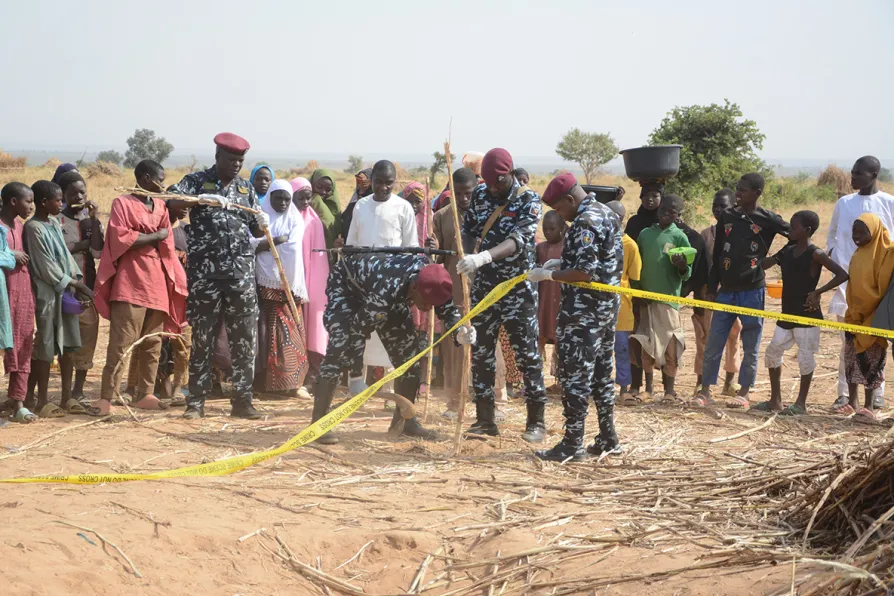
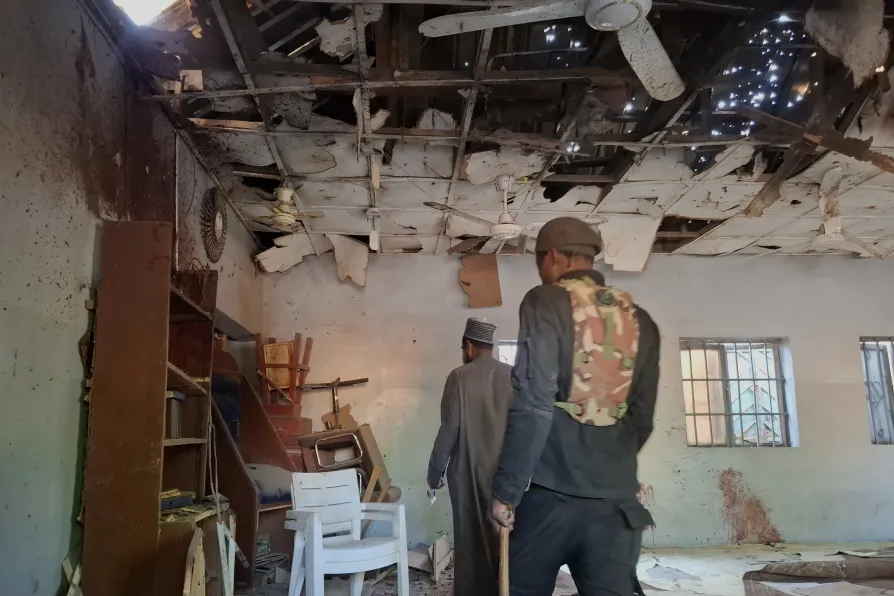
 Nigeria police, Anti-Bomb squad, secure the scene of a US air strike in Northwest, Jabo, Nigeria, December 26, 2025
It’s time to stop retreating and go on the offensive to promote working-class interests, argues DOUG NICHOLLS
Marco Rubio wants to defeat socialism in Nicaragua, not restore ‘democracy,’ writes JOHN PERRY
Believe it or not, there was a time when the US government built beautiful homes for working‑class Americans to deal with a housing shortage, writes ERAN BEN-JOSEPH
DIANE ABBOTT provides an analysis of the reasons for EU and British voters’ dramatic swing to the right
Train drivers’ union Aslef general secretary DAVE CALFE speaks to Ben Chacko about his hopes that Burnham’s devolution agenda will include the importance of the railway





IF YOU were wondering what seasonal goodwill looks like in 2025 geopolitics, apparently, it’s a long-range strike package launched from the Gulf of Guinea — wrapped in a Truth Social post, tied with a religious headline, and delivered to north-west Nigeria like a “perfect” Christmas gift nobody asked to receive in public.
On December 25, the US conducted strikes in Sokoto state targeting Isis-linked camps, according to US Africa Command and multiple media reports. Nigeria’s government confirmed co-operation and framed it as counterterrorism support. And yet the entire episode reads less like a surgical security intervention and more like a new genre of foreign policy: spectacle deterrence — where the message matters at least as much as the munitions.
Washington’s public framing leaned hard into a single religious narrative — protecting Christians — while Nigerian officials and analysts stressed the reality is uglier and broader: extremist violence in Nigeria hits Muslims and Christians, alongside criminal banditry, kidnappings-for-ransom, land and water disputes, and overlapping insurgencies.
That gap matters. Because once you define Nigeria’s security crisis as a clean religious fable, you don’t just simplify — you internationalise. You turn local fractures into global recruiting posters. You hand every armed group a ready-made propaganda caption: Look, the crusaders are here. And you corner Abuja into a defensive dance: taking the help while denying the storyline. It’s the kind of “assistance” that arrives with an invoice payable in sovereignty.
‘19 minutes’: sovereignty on express delivery
Here’s the detail that should haunt every parliamentarian in Africa: Nigeria’s top diplomat reportedly described calls with Washington — a 19-minute discussion before the strike, then another brief call right before it began.
Now, maybe that’s normal in the age of fast wars and faster social media. Or maybe it’s the perfect summary of the relationship: a 200-plus million-person country briefed like a neighbour borrowing sugar — except the neighbour is borrowing airspace.
To be fair, Reuters reports the strike was authorised by President Bola Tinubu and conducted in co-ordination, with Nigeria saying it requested US support. That’s the official story. But even inside “co-ordination,” there’s a spectrum: from equal partners to diplomatic pressure with a handshake.
And the question isn’t just Did Abuja agree?
It is: what does “agreement” mean when the world’s most powerful military is also narrating your crisis for you — loudly, religiously and at Christmas?
The Sahel subtext: ‘corridors,’ ‘spillover,’ and the convenience of an expandable target list
Several reports note the strikes were justified partly through a cross-border logic: fighters “infiltrating from the Sahel,” the familiar corridor narrative that effectively draws a dotted line from Sokoto toward Mali, Burkina Faso and Niger. This is where counterterrorism becomes geopolitics with a flexible map.
Because once you establish the principle — we can strike here because the threat came from there — you’ve built the rhetorical runway for “hot pursuit” in a region already boiling with coups, sanctions, proxy influence and collapsing trust. Whether or not that’s the intent, it’s the effect: a precedent that can travel. And precedents are the West’s favourite renewable resource.
The ‘Black Winter’ warning: a metaphor that landed like a forecast
Just days earlier in Bamako, Burkina Faso’s Ibrahim Traore warned of an hiver noir (black winter) —a cold, bloody season of destabilisation and manipulation in west Africa — urging unity against external pressures and internal division.
You don’t have to agree with all the politics around the Alliance of Sahel States project to recognise the timing: a highly public US strike in Nigeria, followed by messaging that hints more could come.
Even if you think “recolonisation” is too neat a label, the pattern many Africans read is not irrational: security partnerships that expand, narratives that harden and sovereignty that slowly becomes a ceremonial word said before the real meeting starts.
So, what is this really about — terrorism, influence or resources?
The loudest claim around the region is that this is about resources and reasserting control after Western setbacks in the Sahel.
The publicly verifiable reporting centres on counterterrorism aims — Isis-linked camps, cross-border infiltration risks and operational co-operation with Nigeria. But geopolitics doesn’t require a villain monologue to be real. A strike can be both a counterterrorism action and a strategic signal: to rivals, to regional governments, to domestic constituencies, and to anyone renegotiating influence in west Africa.
And that’s the core analytic point: When a superpower bombs, it is never only bombing. It is also writing. Writing the rules, the hierarchy and the future permissions.
What African publics should demand (before the next ‘perfect strike’)
If this episode becomes a template, here are the minimum democratic and sovereignty guardrails — especially for states facing real insurgent threats: first, parliamentary notification and oversight for any foreign kinetic operation — before, not after. Second, transparent legal basis: what agreements authorise what actions, and under which limits? Third, clear narrative discipline: refuse imported “religious war” framing when the reality is multi-causal and multi-victim. Fourth, regional security architecture that reduces dependence on “saviour strikes,” because dependency is how sovereignty gets quietly repossessed. And last, public casualty accounting and independent verification — because secrecy is where impunity breeds.
The most dangerous part isn’t the missile type — reports vary between Tomahawk-style cruise missile framing and other precision munitions. The most dangerous part is the habit being formed of Africa as a theatre where foreign powers can “do security,” then do the storytelling, then do the escalation logic — while local governments scramble to look like co-authors of a script they didn’t write.
Today it’s Sokoto, wrapped in Christmas language. Tomorrow it’s “corridors,” “spillover,” and “just one more strike,” delivered in under 20 minutes — because apparently that’s how long sovereignty takes when it’s on express shipping.
Rais Neza Boneza is the author of fiction as well as non-fiction, poetry books and articles. He was born in the Katanga province of the Democratic Republic of Congo (former Zaire). He is also an activist and peace practitioner. Rais is a member of the Transcend Media Service editorial committee and a convener of the Transcend Network for Peace Development Environment for Central and African Great Lakes.
This article was produced by Globetrotter.

Similar stories
As the world marks International Women’s Day, African women warn that wars, mineral grabs and militarism are drowning out promises of peace. Human rights defender MARIE-CLAIRE FARAY explains
NICHOLAS MWANGI highlights a historic turning point in Sahelian sovereignty, as Burkina Faso, Mali and Niger bolstered their regional security through a unified military force
Nigeria’s presidential spokesman grovels to the West in response to Washington intimidation, writes PAVAN KULKARNI