Cuban trade union federation CTC leader OSNAY MIGUEL COLINA speaks to Ben Chacko about life and work under a crippling US siege


 Latest editorial
Chen Chih-han – the Taiwanese influencer promoting peaceful reunification
RUBEN BRETT introduces a charismatic martial artist and ‘ambassador of peace’ making waves among the youth of Taiwan
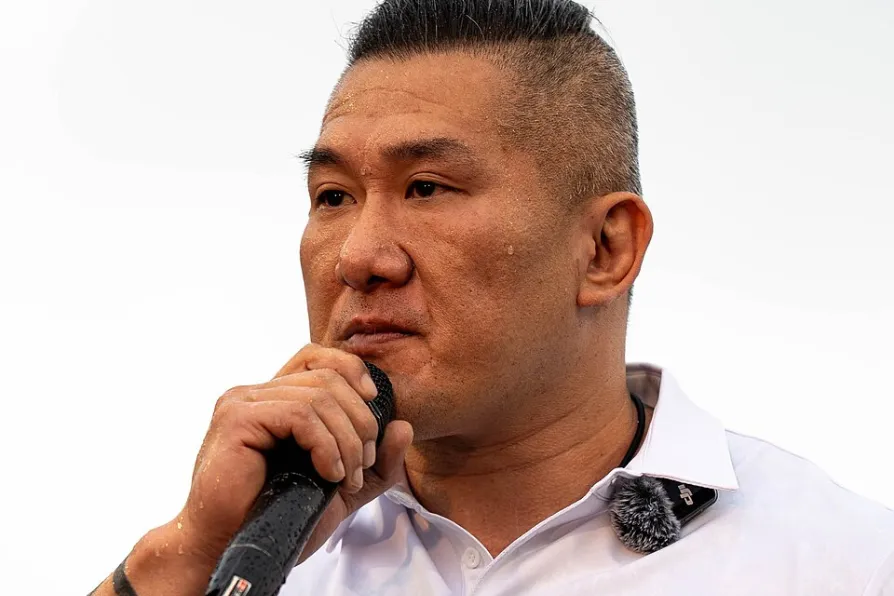 Chen Chih-han. Photo: Kokuyo/Creative Commons
A part of the British empire’s network of slavery, today the Caribbean island of Nevis faces a new form of exploitation in the form of crypto-colonialism, CLAUDIA WEBBE writes
A new book by Victoria Holmes illuminates the many hidden histories of the oppression experienced by Gypsy/Roma/Traveller community, writes ROGER McKENZIE
Even the oligarchs of the artificial intelligence industries are warning that their creations have the capacity for the ultimate destruction of the planet and its population. ANDREW MURRAY suggests that there might just be other solutions
The Labour government must deliver on its commitment to bring back privatised services into the public sector. This not only saves money but also creates accountability and generates wider social benefits, argues ANDY MCDONALD MP
Public ownership of Great British Railways has enormous potential to improve our railway network, but that can’t happen unless jobs, employee rights and union recognition is at the heart of the transition, argues MARYAM ESLAMDOUST
Challenges from the unscrupulous misuse of AI to steal actors’ voice and physical likenesses is being met with a firm union response, writes LYNDA ROOKE





THIS year, Taiwanese martial artist, fitness influencer, entrepreneur and self-described ambassador of peace Chen Chih-han has made waves with a series of livestreamed trips to mainland China combining business, leisure and politics.
He makes a point of meeting ordinary people: “Come and find me,” he told mainland viewers before his first visit in June.
“No-one can pay me, no officials can push me, the whole process will be clear and open… I just want to go and see.” Livestreaming daily activities, Chen debunked efforts by Taiwan’s ruling Democratic Progressive Party to present the mainland as backwards — for example the incredible lie that seats on mainland high-speed trains have no backs — and expressed wonder at Shanghai’s urban planning.
In June the total views on his streams exceeded 16 million, with a peak audience size of 430,000 — the highest ever for a Taiwanese YouTuber.
Visiting Shenzhen in August, Chen told broadcaster TVBS he had been threatened with three years’ imprisonment and told not to return — in today’s Taiwan, he said, “if you dare to call yourself Chinese you may be beaten on the street.”
Chen’s political journey shows the fluid nature of national and cultural identity: now an unapologetic Chinese patriot, he once led demonstrations as a prominent “green camp” pro-independence liberal before shifting towards the “white camp” of the centre-left People’s Party which is moderate on the question of unification vs independence. Along the way he has never been shy to speak his mind.
In September Chen hosted Cheng Li-wun — since elected leader of the Kuomintang, largest party in the legislature and in the Chinese nationalist “blue camp” — on his podcast to discuss hopes for her party but also fears of escalation to war under the DPP: “You won’t only flatline the whole economy, the people will be gone, a generation of youth will be gone, Taiwan will become a wasteland… but this is not what the Communists want. After all, they see [us] as their own people.” The two commented on their similar trajectories; Cheng was once a DPP member.
A major controversy in island politics surrounds the DPP’s plan to spend $1.25 trillion TWD (£30 billion) on weaponry from the US, to become a defensive “porcupine” — money Chen has pointed out “should all be kept for the people of Taiwan” and “used to look after our own future, to look after our children, to look after our parents.” With payment blocked by Kuomintang legislators, the DPP initiated recall ballots this summer targeting opponents but failed in almost all seats.
In an island province of 23 million, Chen’s following of over 2 million across Facebook, Instagram and Threads, plus 1.35 million subscribers on YouTube, is significant. Seen as straight-talking, practical, compassionate and “real,” his popularity and image have hardly been dented by attempts — including by agents of Washington at Radio Free Asia — to frame him as a paid agent of Beijing.
Family is a recurring theme. “Look at the DPP, then look at China… Who treats you as family? Who truly treats you as their people?” Chen often encourages Taiwanese viewers to “find their roots” and experience mainland life themselves.
Vox-pops by Deutsche Welle in November demonstrate Taiwanese youth’s open-minded attitude towards Chen’s mainland content: “to learn is not bad.” Online comments are similar.
This highlights wider disillusionment with the DPP’s neoliberal, militarist and pro-imperialist policies, while their “green terror” — combining lawfare, media manipulation and social pressure to restrict opposition — loses effectiveness.
A one-year ban on mainland social media platform Rednote, citing concerns over scam activity, has seen many young Taiwanese women discuss using VPNs for the first time; users point out that other apps commonly used on the island — Japanese-owned LINE and those of US monopoly Meta — host “thousands of times more scammers” with no restriction.
In late September Chen travelled to the Inner Mongolia autonomous region where he praised local food, tried archery and horseriding and modelled traditional Mongol dress — the Taichung gym complex he opened in 2014 is named for Genghis Khan.
Offline, he is believed to have held business meetings with dairy giant Yili Group with a view to partnering on fitness supplements. At home, DPP-aligned media claimed Chen had “taken red money” (ie from the Communist Party) and “defected;” he hit back calling commentators narrow-minded and joked that fans on the mainland would launch DF-5 missiles against them.
On October 25, Chen flew into Beijing to commemorate the 80th anniversary of the end of Japanese colonial rule over Taiwan, before travelling to Shenyang and Dandong in the north-east, back to Beijing and then on to Xiamen where he spent a week — just across the strait from his home island.
Returning to Taichung international airport on November 5, Chen addressed a welcome party of fans: “You should all visit the mainland, see what it’s really like, see how people treat you, taste the food, and see that the DPP are liars!”
After the deadly Hong Kong fire, Chen donated $100,000 HKD (£9,600) representing “the love of all Chinese people” for those in need; he previously gave $3 million TWD (£72,000) for relief after Typhoon Ragasa devastated eastern Taiwan’s Hualien County in September. He stresses “this is everyone’s money” noting his cross-strait success relies on public trust.
Recalling his visit to north-east China, Chen has highlighted Japan’s historical war crimes — not well known in Taiwan, despite the island suffering 50 years of brutal colonisation — in relation to controversial recent US-Japan naval exercises.
“The Japanese should shut up about Chinese affairs,” he affirmed, advising viewers to study “the Mukden Incident, the war of resistance” and how “Japan killed 35 million of our Chinese people” between 1937 and 1945. Against the US, he claims inspiration from the People’s Volunteers who fought for Korea in the 1950s.
Chen has supported new Kuomintang leader Ms Cheng’s anti-militarist stance and renewed efforts towards a blue-white electoral pact, which had been promised but failed to materialise for the 2024 elections allowing the DPP to limp back into office with a minority of votes.
But in a livestream on December 4, highlighting cross-party legislators’ support for the weapons deal, Chen declared: “I’ve stepped outside the three camps. I’m not blue, not white, especially not green, but for the people.”
This anti-establishment message resonates with many, echoing the early rise of both the DPP and People’s Party as alternatives.
Elections are due in 2028 — can Cheng’s Kuomintang win the confidence of the disillusioned and revitalise the cause of peaceful unification?
