DOUG NICHOLLS says the parasitic finance markets must be challenged or another British government could be toppled


 Latest editorial

Britain’s biggest hunger strike in decades – and the media won’t touch it
As Palestine Action prisoners go weeks without food, alleging dangerous neglect and detention without trial, campaigners warn that a near-total media blackout is hiding a crisis that could turn fatal – and fuel a growing wave of public anger. ELIZABETH SHORT reports
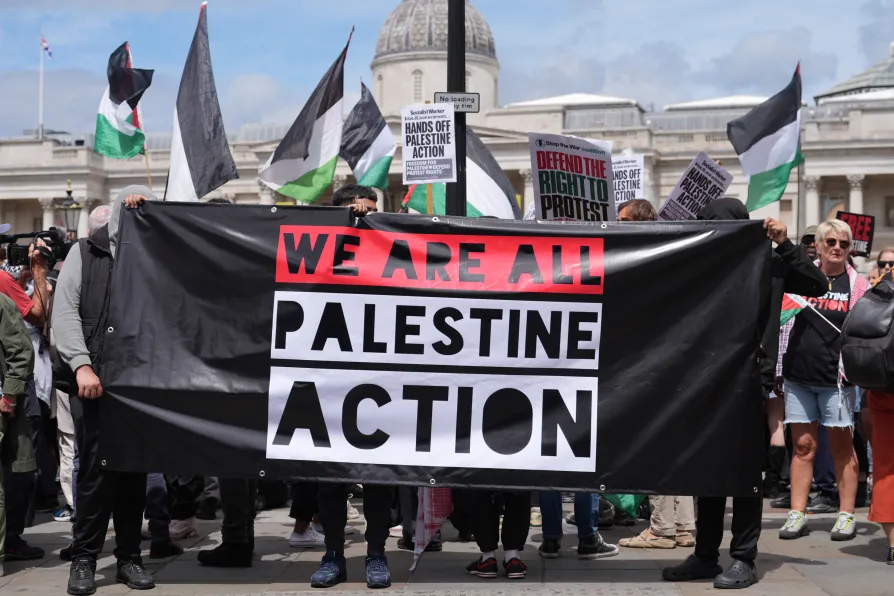 CLAMPDOWN: People take part in a demonstration at Parliament Square

The late country singer’s Imagination Library has put hundreds of millions of books into children’s hands. We should build on that legacy by defending the libraries at the heart of our communities, says BRENDA AITCHISON
Deprivation is a fundamental factor in criminal behaviour that must be addressed but, KENNY MacASKILL argues, there needs to a major rethink in sentencing to tackle overcrowding
MML director MEIRIAN JUMP outlines the recently refreshed library’s busy autumn schedule that ranges from book sales, archival exploration, community work with online education and the ever popular site tours
Some thinkers and authors on the right are openly discussing the possibility that the historically successful party of the British ruling class may be exhausted
Class struggle is the motor of history but the direction and detail of change at any time and place is the outcome of many factors, suggests the Marx Memorial Library and Workers’ School
TONY BURKE surveys the shifting political landscape and the challenges Labour needs to address if it is to prevail in the 2028 federal elections





THE Palestine Action hunger strike is on track to become the largest since the 1981 Irish republican protest led by Bobby Sands, yet campaigners say it has faced a “mainstream media blackout.”
So far, seven prisoners have refused food — some for as long as four weeks — with more expected to join.
They are among 33 prisoners who are locked away without trial, over alleged involvement in non-violent actions aimed at blockading arms supply to Israel.
The hunger strikers’ demands are clear. They want Israel’s largest weapons company, Elbit Systems, to cease operating in Britain for good.
They want the ban on Palestine Action, currently designated a terror group, to be lifted. And they are demanding immediate bail and a fair trial — basic democratic rights that should already be guaranteed.
Francesca Nadin, a spokesperson for Prisoners for Palestine, spoke to the Morning Star about their struggle.
Nadin herself was in prison on remand last year, over actions at a Teledyne weapons factory and a Barclays branch in Leeds.
“The fact is that for the charges that they have, which is property damage, people are never usually kept on remand,” she says.
“It’s clear to me that the process is the punishment.”
Four of the strikers — Qesser Zuhrah, Heba Muraisi, Teuta Hoxha and Kamran Ahmed — have been held on remand since last November, far exceeding the six-month pre-trial custody limit.
They are part of the “Filton 24” — inmates held in connection to an action in which activists reportedly drove a repurposed prison van into an Elbit manufacturing hub and dismantled equipment inside.
Qesser, who hasn’t eaten for over four weeks, now feels close to collapse, campaigners report, while Heba, who has also gone more than a month without food is severely fatigued and is finding it increasingly difficult to hold water down.
Teuta and Kamran, who haven’t eaten for 26 and 25 days, were both recently hospitalised.
“As you can imagine now, they’re all very weak”, Nadin says.
“It’s getting to the point of serious deterioration. We are just prepared for something very serious to happen any moment now.”
Amu Gib, who is accused of breaking into RAF Brize Norton and targeting two fighter jets, hasn’t eaten for a month and has lost over 10kg.
They are joined by Jon Cink, also accused of involvement in the action, who hasn’t eaten for 29 days, and Lewie Chiaramello, likewise accused, who is taking significant risks as a diabetic, fasting every two days.
Prisoners for Palestine says it has documented repeated cases of inmates being deprived of proper medical care.
Nadin says there are incidents of patients being denied access to test results and of nurses being “manipulative” and “dismissive.”
“They’ll say ‘it’s your own fault, all you have to do is eat,’ or even accuse them of eating secretly.”
In one incident, Kamran collapsed at HMP Pentonville as a result of dangerously low blood sugar levels, indicating hypoglycaemia, campaigners report.
But when paramedics were called from the local hospital, they said they would not take him because he was refusing glucose, and there was nothing they could do for him.
“It is just a blatant abandoning of their duty of care and the Hippocratic oath,” Nadin says. Eventually Kamran was transferred.
Activists report differences between treatment in private and public prisons. “For example in Bronzefield, which is a private prison run by Sodexo.
“What they often do is refuse to give any kind of medical check-ups, and do everything they can to avoid taking people to the hospital, which has not been the case for the public-run prisons.”
A Prison Service spokesperson said: “Any prisoner assessed by a medical professional as needing hospital treatment is taken to hospital.”
Nadin says that when prisoners are taken to hospital, there have been cases where contact with family has been completely blocked.
“They were even told in Kamran’s case, that the medical staff weren’t allowed to give the solicitor updates.”
“They were just asking to get updates because obviously he’s seriously ill.
“He was put in an escape suit. He was handcuffed to the bed 24/7.”
Across the media, coverage about the hunger strikers has been thin.
“We suspect actually that there’s been a D-notice put on this story,” Nadin says. “Because there’s been just a complete mainstream media blackout.
“There’s a pattern now of various mainstream outlets saying to us, OK, we’re gonna do this story, and then their lawyers block it with some ridiculous excuse about contempt of court, which obviously, doesn’t even make sense.”
She argues this is because the story would attract strong support from the public.
“How could they not? Everything they’re asking for is completely reasonable.”
The hunger strikers have so far been met with silence by the government.
At the time of writing, Labour MP John McDonnell was due to meet with MPs to discuss their demands alongside prisoners’ family members.
Meanwhile the action has received messages of support from around the world, and three prisoners in the US, Greece and Italy have declared solidarity strikes.
“It really gives them strength to continue because that emotion translates into their physical state and how they feel,” Nadin says.
Earlier this week, a judicial review on Palestine Action’s proscription came to a close, although a judgement is to be released at a later date.
“Even if this legal case isn’t successful, that’s not going to stop people from taking action,” Nadin says. “If anything, people are more angry than ever.”
Referencing those who have been out in droves protesting the ban by holding signs supporting Palestine Action, she said: “These are people that would never normally consider getting arrested.
“People are being radicalised because of this.”

Similar stories

GEORGE FOGARTY is thrilled by the political clarity on show at the most independent, sustainable and worker-owned festival in the UK
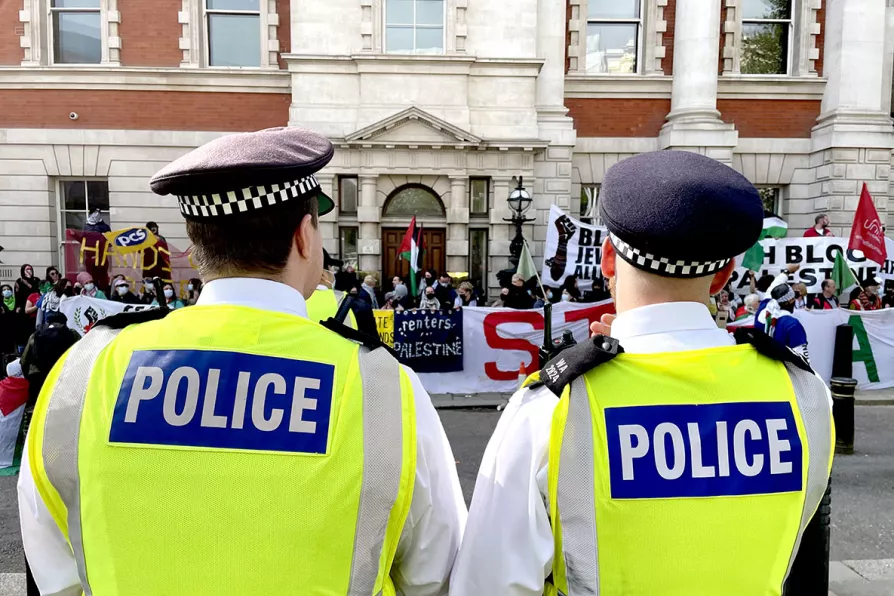
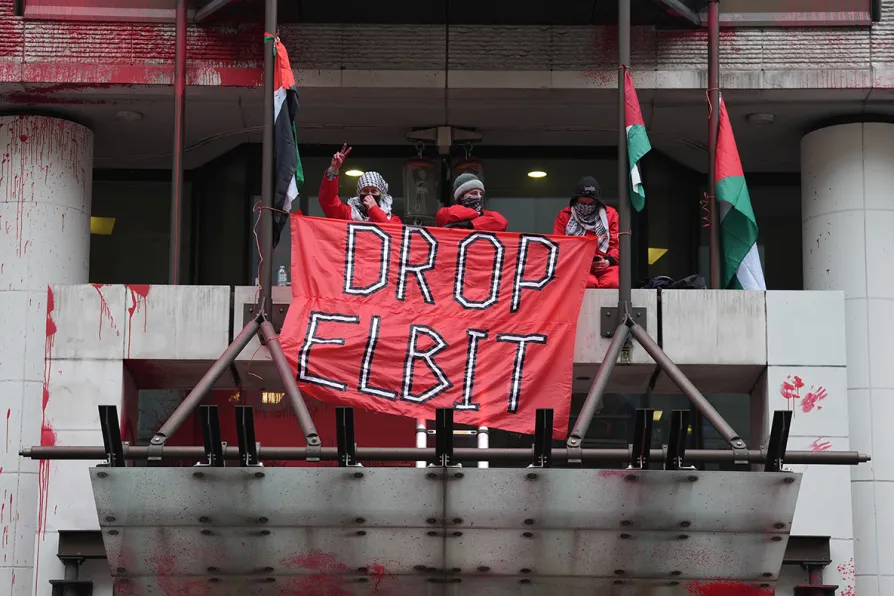
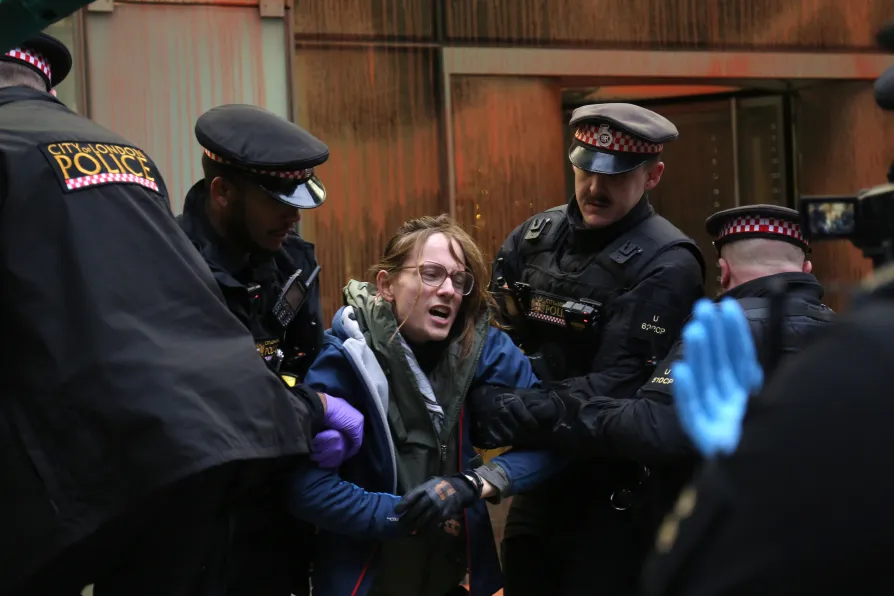
CHRISTMAS 2025 is celebrated under the shadow of the hunger strikers imprisoned in British jails because of their solidarity with the Palestinian people.