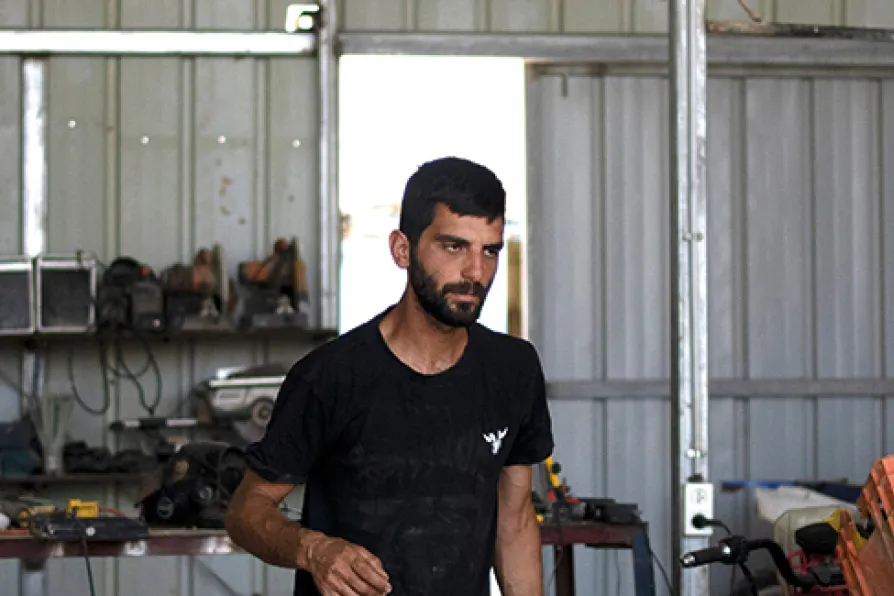
Working people across Britain are fighting back against austerity, war, repression and exploitation. The challenge now is to unite those struggles, says Communist Party of Britain assistant general secretary JOHNNIE HUNTER

‘Yanoun is empty’: the erasure of a West Bank village
For those who lived in Yanoun, its disappearance is not just a local tragedy, but a stark symbol of escalating violence, displacement and impunity across the occupied West Bank, says JANE HARRIES
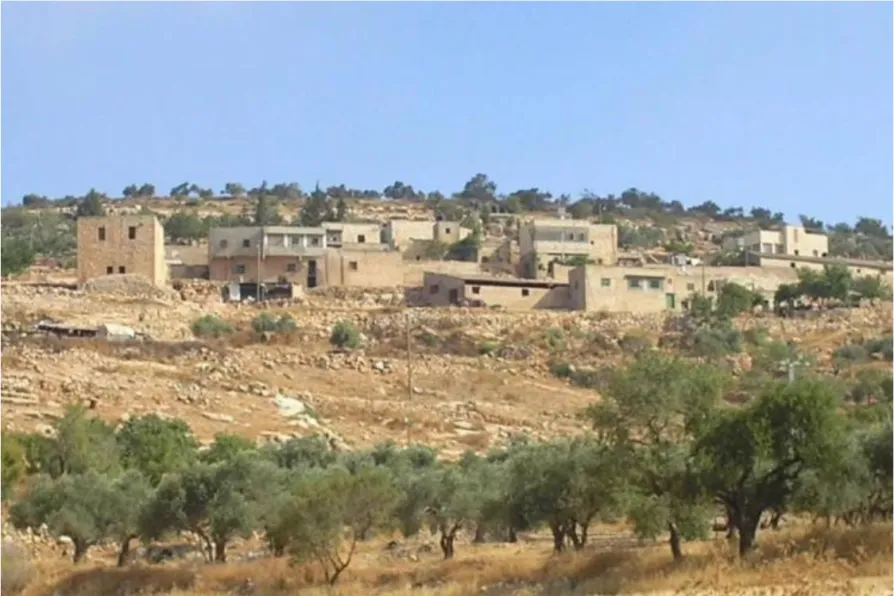
 A view of the village
Train drivers’ union Aslef general secretary DAVE CALFE speaks to Ben Chacko about his hopes that Burnham’s devolution agenda will include the importance of the railway
DIANE ABBOTT provides an analysis of the reasons for EU and British voters’ dramatic swing to the right
Some of the review’s proposals could make the benefits system less cruel and dehumanising. But its vague plans for services and non-cash support revive the threat that disabled people will lose control over the money we need to survive, writes DYLAN MURPHY
Believe it or not, there was a time when the US government built beautiful homes for working‑class Americans to deal with a housing shortage, writes ERAN BEN-JOSEPH
MAT COWARD has heaps of good advice on recycling garden and household waste over the winter





JUST after 2pm on Sunday December 28 2025 I received a heartbreaking message: “Yanoun is empty.”
To most people Yanoun won’t mean anything. It is (or was) a tiny village near Nablus on the north of the West Bank or Occupied Palestinian Territories. In 2012 I travelled from my home in Wales to spend three months there as part of an international team of ecumenical accompaniers (human rights observers)
Our job was to be in the village as a protective presence, living alongside the Palestinian villagers who were under constant threat from illegal Israeli settlers living on the hilltops, and from the Israeli occupation forces.
From our base in the village we were called out to incidents in the surrounding area, but at least one person always had to stay in the village. During our time there we worked with a range of humanitarian and peace organisations, including Rabbis for Human Rights and UNRWA.
We recorded and reported all the incidents we witnessed. These weren’t the kind of events that reach the headlines in international news. They were mostly ongoing instances of violence and harassment calculated to make life difficult for the local population: olive trees being set alight, farmers being harassed or injured, land being trespassed on or taken over.
The first incident we were called to in the Jordan Valley involved a community’s water tanks being confiscated by the Israeli military because they were deemed to be “illegal structures.” This left people without access to water in temperatures of 40 degrees — right next to an illegal settlement where water was freely available.
The worst incident near Yanoun itself involved two local farmers being shot and injured for grazing their sheep in an area the settlers considered to be out of bounds. Here we witnessed the army working with the settlers and to the detriment of the local population: the two injured people were left unattended for hours before receiving proper medical attention. That incident was reported in the Israeli newspaper, Haaretz.
Being in the village was not, of course, just a case of being a protective presence. We got to know the villagers personally, received gifts of food and were invited into their homes. We shared special occasions with them, such as when the British consul came to open their newly refurbished community centre or when “education day” was celebrated in the village. We came to love and admire them for their resilience and their pride in their community. Many of us returned several times, often to cover for EA teams when they were on their half-term break.
Apart from being a huge personal sorrow for those who knew and loved the community and a tragedy for its inhabitants, Yanoun having now disappeared from the map is of wider significance for several reasons.
Firstly, this is not the first time this has happened. The first displacement happened in 2002. Harassment and violence by the settlers towards the villagers reached such a peak at that time that the families left for the nearby town of Aqraba.
This caused an outcry from international and Israeli peace activists, who offered to provide protective presence if the villagers returned.
Some of them did, and life in the village was at least partially restored. Harassment and encroachment by the settlers has, however, remained a constant threat.
Over the years the settlers stole more and more of the villagers’ land, meaning that they were unable to graze their sheep on the mountainsides and became increasingly indebted because of having to buy sheep feed. Since October 2023, the violence has intensified, leading up to this second displacement. The settlers have now placed a gate across the road to Yanoun, and it is feared it is too dangerous for anyone to intervene, including internationals.
Secondly, this is not an isolated incident. Yanoun tends to be a microcosm of what is happening across the West Bank, and this is no exception. The Israeli human rights organisation B’tselem reports that Yanoun is the 45th village to have been evacuated on the West Bank in the last two years. This coincides with reports from Palestinians and human rights organisations of an increase in systematic violence and collaboration between settlers and the army.
Violence towards Palestinians happens with impunity and is in line with the determination of the current Israeli government to do everything in its power to make Palestinian statehood impossible. It is for this reason that B’tselem equates settler with state violence on its website.
This mass evacuation is happening in a context where several governments, including that of Britain, have formally recognised the state of Palestine. The irony is that, in practical terms, the Israeli government’s policy of creating “facts on the ground” means that there is less and less contiguous territory which would make statehood viable.
Faced with this situation it is high time that the international community (including the British government) took decisive action rather than just voicing disapproval. This has nothing to do with anti-semitism but everything to do with respecting and upholding an international order based on universal human rights and international humanitarian law. It’s also about stating clearly that lasting peace in the region cannot be based on occupation, colonisation and violence by one party against the other, but must be built on justice, equality and respect for human rights and the right to self-determination.
The World Council of Churches has shown the way by calling on the European Union to impose sanctions on Israel and an arms embargo.
Let’s hope that 2026 will be the year where real moves towards a lasting peace in Israel and Palestine happen. This can only come about if the international community makes it clear that this cannot be a “solution” based on colonisation and violence. Let’s work together to raise awareness of stories like that of Yanoun and to work with all those — Israelis, Palestinians and internationals — who are working for a sustainable peace built on human rights, justice and equality.
Jane is a Quaker and a member of Cymdeithas y Cymod / Fellowship of Reconciliation in Wales. She currently works as peace education manager at the Welsh Centre for International Affairs (WCIA). She volunteered in peace-making initiatives on the West Bank and Gaza for 11 years, between 2005 and 2016.

Similar stories
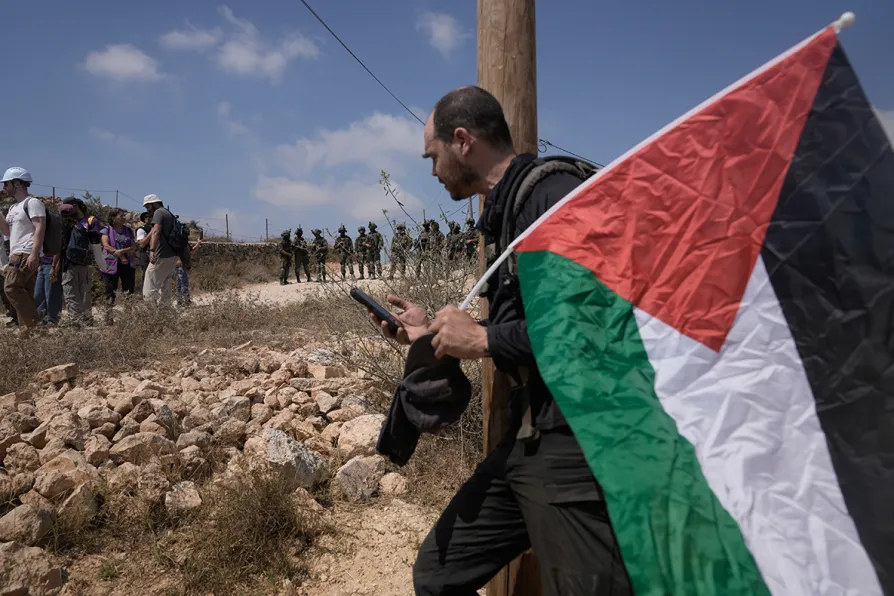
A small Palestinian village is under attack from illegal settlers and the Israeli state to forcibly extend their illegal settlements. It is a template for the future, writes RAMZY BAROUD
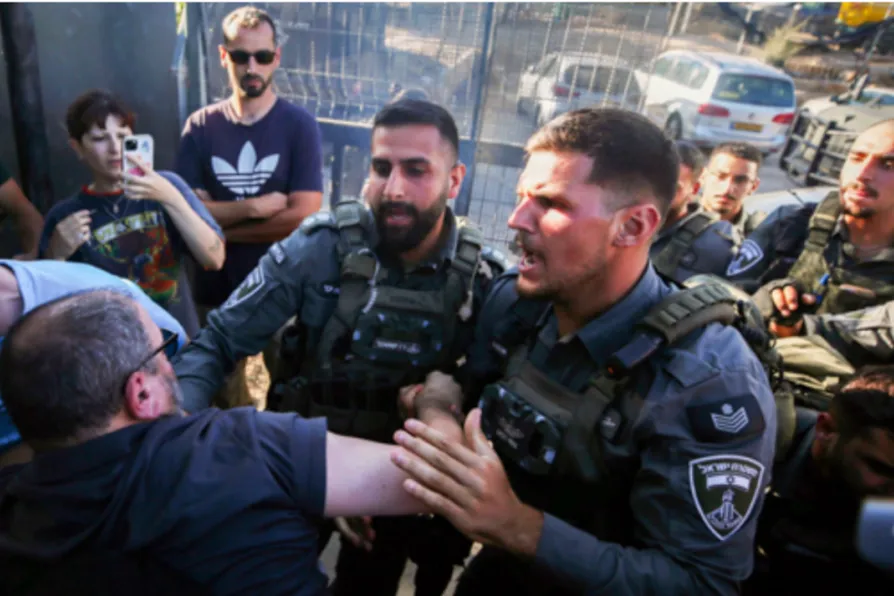
Police crackdowns on Israeli peace demonstrators combined with court rulings and settler organisations are designed to strip Palestinian families of their homes and land. The Israeli state has tried to silence both Israelis and Palestinians who resist, according to Zo HaDerekh (This Is The Way) the Communist Party of Israel’s Hebrew-language weekly
Labour's Emily Thornberry calls on PM to ban goods from Israel-held Palestinian territory