The attacks on black academics are well-funded and relentless, writes DIANE ABBOTT, and they need to be fearlessly resisted by all concerned



Why we’re supporting the Solidarity Fund this May Day
A new Solidarity Fund promises a more accessible way to support strikers, says SARAH WOOLLEY
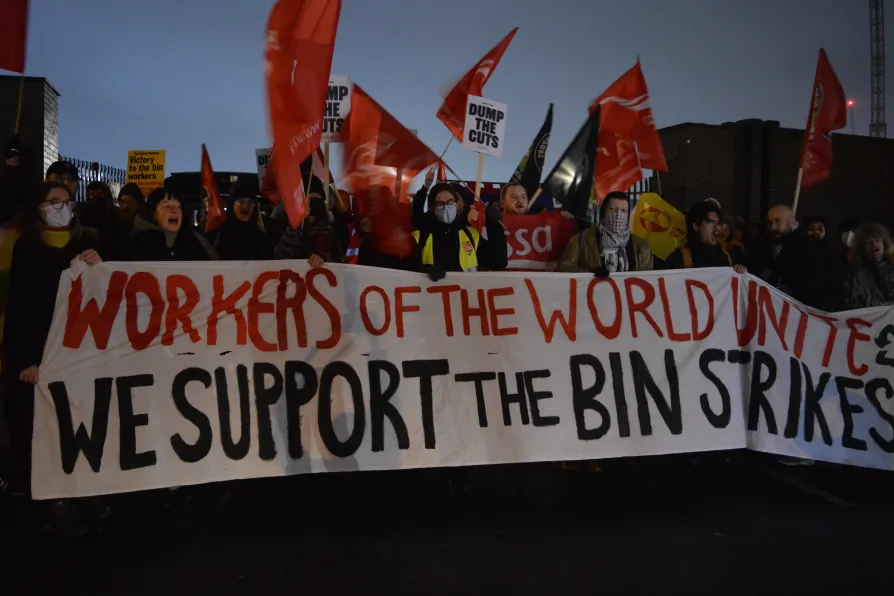
 Photo: Henry Fowler
Extreme hot weather resulting from environmental change needs to be tackled through greater firefighting investment instead of fewer jobs and less resources, writes COLIN BROWN
There are many intricate details about the new Saudi, Turkish and Pakistani alliance we do not yet know, suggests ROGER McKENZIE, but its impact could be considerable
Holyrood incompetence has cost jobs and put the future of Clydeside’s Ferguson Marine shipyard into jeopardy. Its future should have been assured, argues KENNY MACASKILL
Hot and dry conditions are threatening British species unequipped for drought, explains PAUL ASHTON
The Baltic state is set to reverse its constitutional prohibition on nuclear weapons and foreign bases as part of accelerated Nato war preparations, warns TOM UNTERRAINER





OVER the last six years, we have seen a noticeable rise in strike action — and in how it is promoted across digital spaces.
Emailing your MP, and tagging your discontent at the CEO on social media have all become the norm: a suite of digital solidarity actions we can take from the armchair.
But we know these actions are not enough on their own to build real struggle, and they have clear limitations compared to direct action. We’ve seen the power of direct action through the organisation by Strike Map and the wider movement of the Birmingham Megapickets 1, 2, and 3D. At the same time, disputes increasingly require sustained financial support — something that is now more important than ever.
Gloucestershire phlebotomists held out for over 300 days, the Birmingham bin workers were out for more than 15 months, and the National Coal Mining Museum of England dispute passed 230 days. These are some of the longest disputes ever in their respective sectors — certainly the longest this century.
Despite this, longer disputes, driven by a mix of restrictive anti-union laws and employer delaying tactics, have exposed a gap in our movement. We have often fallen short in building consistent, accessible fundraising infrastructure. Even now, there is heavy reliance on bank transfers, which many people are reluctant or unable to use.
At a time when crowdfunding platforms make it simple to donate instantly by card, strike solidarity funds remain fragmented and difficult to access, especially outside strong existing relationships between union branches. If we are serious about sustaining long-running strikes, we need a simpler, more accessible way to provide financial support.
From today, we have one.
Strike Map’s Solidarity Fund makes it easier to support striking workers. You don’t need union bank details or to search for where to send money — you can donate knowing Strike Map will pass funds directly to the workers and disputes they are intended to support.
The Solidarity Fund allows donors to choose a specific dispute to back, or to let Strike Map distribute their contribution across ongoing disputes, directing funds where they are needed most. Everyone who donates will receive a pin badge (almost as good as a Blue Peter badge) to wear proudly — showing their support and helping to build visible solidarity on our streets.
This initiative is not about replacing the incredible fundraising and financial solidarity that already exists across our movement.
Those organic connections between workers and union branches must continue — and grow stronger. The Solidarity Fund will not interfere with branches donating directly to appeals or unions running their own funds. Instead, it provides an additional route for individual workers, union groups, and supporters to contribute.
This latest initiative from Strike Map is proudly supported by Aslef, Bakers, Food and Allied Workers Union (BFAWU), NASUWT, and the Public and Commercial Services Union (PCS), and others. Showing the broad support for this type of initiative across our movement.
Strike Map has become an integral platform for solidarity in the 2020s: helping people find their nearest picket lines, encouraging co-ordination between unions, connecting strikers across disputes, and raising tens of thousands of pounds through badges, T-shirts, and even beer.
We encourage more national unions to get behind this initiative and help build the infrastructure our movement needs to strengthen solidarity even further.
Contribute now to the Solidarity Fund and help support striking workers: bit.ly/StrikeMapSolidarityFund
Sarah Woolley is general secretary of the BFAWU.
