
The US administration is endangering lives by reversing environmental protection laws, CHAUNCEY K ROBINSON argues

We have allowed poverty to be normalised in Britain
Why is welfare in its limited sense attacked when aimed at the poor? asks poignantly PAUL DONOVAN
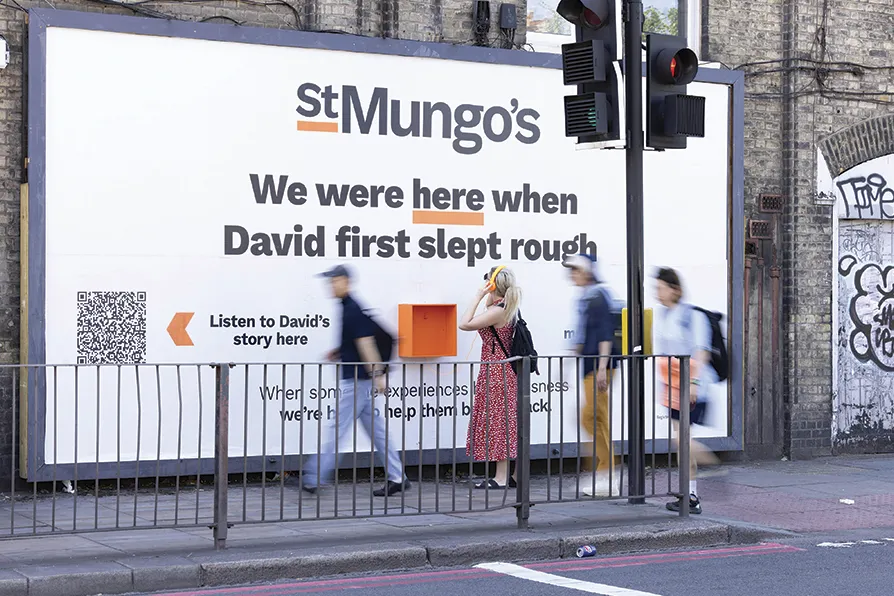
 STICKING A PLASTER INSTEAD OF CURING: One of St Mungo's charity billboards installed across London and fitted with orange 'Herephones', which play the inspiring stories of people who have experienced homelessness, July 2025
It’s time to stop retreating and go on the offensive to promote working-class interests, argues DOUG NICHOLLS
Marco Rubio wants to defeat socialism in Nicaragua, not restore ‘democracy,’ writes JOHN PERRY
Believe it or not, there was a time when the US government built beautiful homes for working‑class Americans to deal with a housing shortage, writes ERAN BEN-JOSEPH
DIANE ABBOTT provides an analysis of the reasons for EU and British voters’ dramatic swing to the right
Train drivers’ union Aslef general secretary DAVE CALFE speaks to Ben Chacko about his hopes that Burnham’s devolution agenda will include the importance of the railway





POVERTY has been normalised. Walking the streets of London, it is impossible not to be struck by the number of homeless people.
Groups around train stations, in doorways, under bridges. People walking past, some engaging, maybe giving money.
The whole thing seems like a scene from Dickensian England, yet the situation seems to have been normalised. Not seen for what it is, which is an affront to a so-called civilised society.
There are teams of people from local authorities and charities, who seek to intervene to help those forced to live this way.
But fundamentally, there is something wrong in such a rich society (with the fifth largest economy in the world) that so many are forced to live in this way.
Homelessness has been normalised in the same way as food banks. Neither should have a place in a society that boasts over 150 billionaires and countless others doing very nicely, thank you. Many no doubt stepping over the homeless in their path.
These problems can be addressed. At the time of the Covid pandemic people were taken off the street and housed. When the pandemic passed they were shoved back onto the street.
Thousands of properties across Britain remain empty (700,000 in England alone, including over 260,000 classified as “long-term” - empty for over six months).
If the political will were there, then poverty in its many forms could be addressed.
At present a vague charitable response seems to be acceptable to most people. So they may give to homelessness charities or put some cans in the food bank container at the supermarket. Something that always strikes me as the height of irony, given the billions made in profit by those same supermarkets.
Not that these actions are not good and virtuous but are they also the price that people are willing to pay in order to put up with homelessness and millions going to food banks in such a rich society.
Why not over the coming year really address the causes of poverty? Set an ambitious goal of providing a roof over everyone’s head, a universal basic income and food to eat, without the need to resort to charity?
Yes, it will cost money. It will likely mean higher taxes but why is that a bad thing?
Why is welfare in its limited sense attacked when aimed at the poor?
The welfare received by the rich in terms of low tax provision for their expensive and often damaging lifestyles don’t seem to attract the same opprobrium.
There needs to be a levelling of society. The gross inequalities that exist at present are what cause many of the problems, not least poverty (according to the Social Metrics Commission nearly 24 per cent (almost one in four) people in the UK were in poverty in late 2024, an 3 per cent increase from pre-2020 levels).
The Labour government has started to address inequality by upping the minimum wage, removing the two-child benefit cap and increasing some taxes. But these are tiny steps.
More is needed, with a reshaping of the economy based on the common good, not always the bottom line. Only then will we start function better as a civilised and grown-up society.
