Washington’s inability to subjugate Iran is an example of how it is trying to preserve a regional order that no longer exists, argues RAMZY BAROUD


Wales needs strong public services, not Reform’s dead end
The election offers a critical chance to shape the future of pay, care and community provision in Wales, says Unison’s JESS TURNER
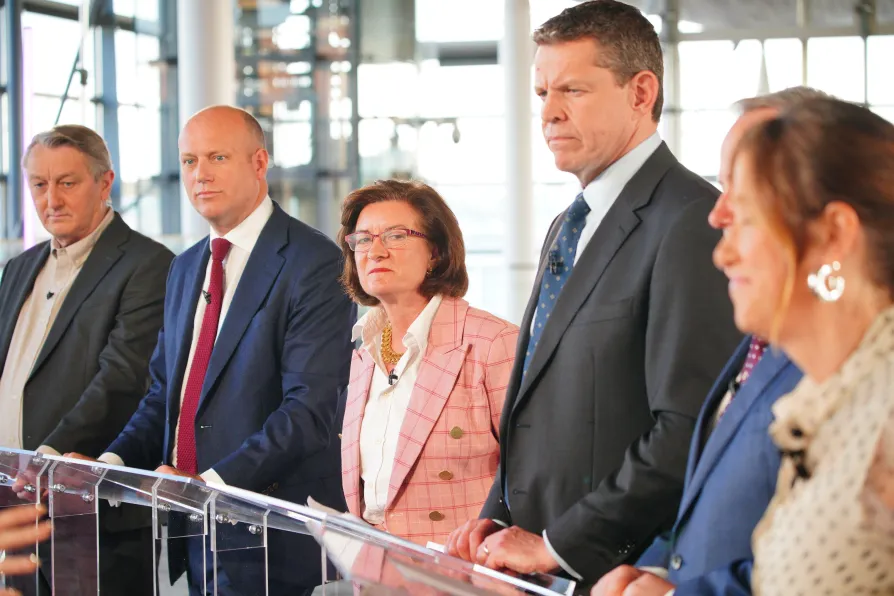
 CRUNCH TIME: (Left to right) Wales Green Party Leader Anthony Slaughter, Reform UK’s Dan Thomas, Welsh Labour Leader and First Minister Eluned Morgan and Plaid Cymru leader Rhun ap Iorwerth

US financial instability is exposing the limits of a dollar-dominated global economy — and giving the Global South a historic chance to build an alternative, says MURAD QURESHI
DOUG NICHOLLS says the parasitic finance markets must be challenged or another British government could be toppled
The late country singer’s Imagination Library has put hundreds of millions of books into children’s hands. We should build on that legacy by defending the libraries at the heart of our communities, says BRENDA AITCHISON
Deprivation is a fundamental factor in criminal behaviour that must be addressed but, KENNY MacASKILL argues, there needs to a major rethink in sentencing to tackle overcrowding
MML director MEIRIAN JUMP outlines the recently refreshed library’s busy autumn schedule that ranges from book sales, archival exploration, community work with online education and the ever popular site tours
TONY BURKE surveys the shifting political landscape and the challenges Labour needs to address if it is to prevail in the 2028 federal elections





TODAY, Wales will vote in the Senedd election. The choice for public service workers is clear: elect a Welsh government that has your back, or one that wants to undermine everything you do.
I’m proud to lead Unison Cymru, the union whose members care for older people, support children in schools, clean wards, run payroll, answer housing calls and hold communities together. After years of austerity and squeezed Welsh budgets, the services they deliver are under enormous strain.
Due to the cost-of-living crisis, many public service workers struggle to provide food for their family and pay all their bills. We hear these stories every day in workplaces the length and breadth of Wales — it’s why workers join and organise together. It’s why they need a voice in this election.
It is also the political ground on which Reform UK is trying to grow. I understand why some workers are giving Reform a hearing. They are exhausted, they have watched wages fall behind prices.
The Tory government in Westminster trashed the economy and starved our public sector, and Labour has been too cautious to undo the damage at pace. When politicians of every colour tell you things are fine, but your pay packet says otherwise, of course you look for something different.
But Reform is not something different. It is the same failed Tory project in a shiny new jacket. The party calls itself the voice of working people, that they’re on your side. But in the detail of their Welsh manifesto lies a different story.
They want to take away the progressive Welsh laws workers have fought for, the Social Partnership and Public Procurement Act and the Well-being of Future Generations Act. These laws give us a say in how public services are run and stop exploitation of workers in outsourced contractors.
They want unfunded tax cuts that will only benefit the richest and lead to more austerity. You cannot strip revenue out of the Welsh budget and pretend services will hold. Something will have to give.
This can only mean vital services are outsourced, fewer support staff in schools, fewer busses on the road, and longer waiting times in our NHS.
Reform would stop investing in jobs in clean, home-grown energy. They want pay freezes and staffing cuts in the already overstretched Welsh Civil Service. They want to turn our locally controlled schools into academies controlled by millionaires. They want their ideology reflected in our classrooms and our museums. They want vulnerable minorities to lose workplace policies and protections developed here in Wales.
Reform’s leaders in England have been clear about why they want power in Wales, and it isn’t to make your working life better. It’s to get the money that comes with seats in our national Parliament so they can boost their chances of winning power in Westminster.
If they do, they’ve said they would repeal the Employment Rights Act, the new legislation that gives workers a contract with regular hours, statutory sick pay from day one, and protection from unfair dismissal after six months rather than two years and the law which promises the social care negotiating body Unison members fought for.
They would scrap the Equality Act, the law that stops an employer sacking a woman for being pregnant or paying her less than a man for the same job. These are the rights our members use every week to stay safe, stay paid and stay in work.
Reform is not a party that will fix broken services. So what do we need instead?
When I launched Unison’s Senedd manifesto in March, I said that we were on a mission to get the voice of low paid women in historically undervalued work heard in this election campaign. Women who live, and work, and vote, in every community in Wales.
It sets out a strong case for fully funded fair pay agreements in social care, delivering a minimum of £15 an hour for workers, and a Wales School Support Staff Negotiating Body that ends the scandal of term-time only pay that traps thousands of women in in-work poverty.
It calls for a fair deal for NHS staff. Welsh health workers want at least what their colleagues in Scotland already have: better pay and a shorter working week, agreed through direct negotiation in Wales rather than handed down from a review body in London.
Devolution means little if Welsh workers’ pay is still decided somewhere else.
There is a desperate need for a new settlement for care. Wales needs a publicly funded, publicly owned and publicly delivered national care service. Profit has no business in care. Removing it, rewarding care workers, backing migrant staff and building a service that supports the NHS rather than leaving older and disabled people stranded is the foundation of a serious plan for the next Senedd term.
While Wales has been protected from the worst excesses of Tory privatisation, it is still the case that significant levels of profit are extracted from Welsh public services, especially in adult social care. The next Welsh government must get serious about insourcing. Public money belongs in public services, not shareholder dividends. Investment is needed in stronger local government and long-term preventative services that save money by stopping problems before they start.
We also need a strong worker voice. Social partnership should be something members feel in a hospital corridor or a school kitchen. Workers should shape the services they run. None of this will happen by accident. It will happen if public service workers vote, organise and make their demands plain.
Public service workers have built Wales’s public services over generations, holding on to the founding principles of our NHS and rejecting mass outsourcing in local government. The task now is the one trade unionists have always faced: defend what we have built and demand better.
Unison’s Labour link secured manifesto commitments on ending term-time pay for school support staff, extending Unison’s migrant care charter, protecting the Wales Union Learning Fund and delivering on collective bargaining for care workers across Wales.
These policies underline the importance of ensuring the labour movement is represented in the Senedd and why Welsh Labour will have my vote.
Unison’s manifesto represents the common ground upon which a progressive agenda on public services can be built. Whoever gets your vote, it needs to be a party that pledges to protect and invest in public services.
Reform has nothing to say on any of these issues. Wales needs a government prepared to back workers, invest in services and govern in the interests of our communities. On May 7, your vote is your power. Use it.
Jess Turner is Unison Cymru/Wales regional secretary.

Similar stories

To govern again, we must first earn back the confidence of the people who founded our movement