
The US administration is endangering lives by reversing environmental protection laws, CHAUNCEY K ROBINSON argues

Teaching as an act of love and revolution in Cuba
A teaching delegation to Cuba offered IAN DUCKETT a powerful glimpse into a schooling system defined by care, creativity and the legacy of the island’s remarkable 1961 literacy campaign
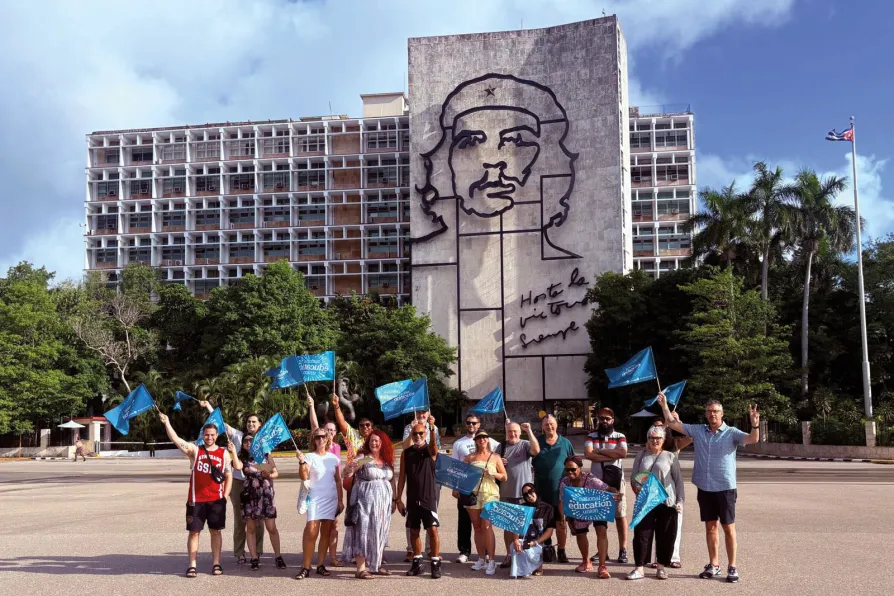
 Photo: Author supplied
It’s time to stop retreating and go on the offensive to promote working-class interests, argues DOUG NICHOLLS
Marco Rubio wants to defeat socialism in Nicaragua, not restore ‘democracy,’ writes JOHN PERRY
Believe it or not, there was a time when the US government built beautiful homes for working‑class Americans to deal with a housing shortage, writes ERAN BEN-JOSEPH
DIANE ABBOTT provides an analysis of the reasons for EU and British voters’ dramatic swing to the right
Train drivers’ union Aslef general secretary DAVE CALFE speaks to Ben Chacko about his hopes that Burnham’s devolution agenda will include the importance of the railway





IN October I was lucky enough to be part of the NEU delegation of teachers to Cuba, representing Norfolk District. The delegation flew from Gatwick to Jose Marti airport in Havana, via Madrid as there are currently no direct flights from Britain to Cuba on account of the US blockade of the island.
As well as a wide range of educational materials, including musical equipment the delegation took 18 Braille machines for schools for blind pupils in Cuba.
Schools in Cuba
The delegation visited a range of schools and other providers in Havana, Pinar del Rio and Vinales. These visits included a visit to Antonio de Guitterez Secondary School in Vinales, which was typical of our experience.
The visit began with a tour of the school, showcasing learners’ work, including images and models of the prehistoric aspects of the Vinales Valley.
The school has a roll of 450 pupils across years 7, 8 and 9. There are no teacher shortages at Antonio de Guitterez and the curriculum comprises Spanish, history, citizenship, sciences, geography, art and music as well as employability and careers education. Delegates were given the opportunity to observe a range of classes, including citizenship (Y8), Spanish (Y7) and science (Y9).
Literacy Museum and campaign
The whole experience was a wonderful and humbling experience for me, but if I had to choose one highlight it would be the visit to the museum commemorating the literacy brigades and 1961 campaign eradicating illiteracy. As well as a memorial to the 42 teachers who lost their lives in the brigades, the museum is a living celebration of Cuba’s pedagogy of tenderness in documenting the revolution’s literacy campaign, how the literacy rate established within a year of the revolution had been maintained at the level of 99.7 per cent.
The story of the 1961 national literacy campaign, an effort that mobilised more than a quarter of a million Cubans — over 100,000 of them teenagers — to teach reading and writing to their fellow citizens across the island stands as testament to that pedagogy of tenderness, which is such a far cry from the often heartless soulless system so familiar to too many of us in the us in Britain.
It was the largest and most intense pedagogical mobilisations of the 20th century. The campaign unfolded in the early years of the Cuban Revolution, at a moment when the new government was defining itself not only politically but ethically.
Fidel Castro had declared that the first great battle the revolution must win was the battle against ignorance. Within this framework, literacy was not just a tool for personal advancement; it was an engine of empowerment, a social equaliser, and, importantly, a form of love directed toward the most marginalised. In short, educating people is nothing less than human liberation.
It is also at the heart of what I’ve always thought that what makes the Cuban Revolution stand apart from the other revolutions in modern history and equally what has enabled its survival is that the military aspect was only one strand and that developments like the literacy campaign were and remain at least as important.
Most of all the experience put me, and other delegates, in mind of why teaching was a vocation for them.
As a young teacher reading Pedagogy of the Oppressed by Paolo Freire as a crusade for humanity it made me see dehumanisation both as an historical reality and as an individual experience in the lives of many of the learners I worked with. This has informed my teaching ever since.
As the years went by, I saw the matter in greyer terms but remained wedded to the view that barriers to learning are neither purely educational concerns to be addressed by teachers nor problems to be solved by social workers.
In almost all cases they existed and continue to exist at the cusp of education and social care.
As a consequence of this I became more and more interested in the importance of learning things that can make a difference and have continued to be drawn to the idea of pursuing interests where possible and using the situation you find yourself in as your university if you are not in that fortunate position.
The economic imperative has raised broader educational and social questions. It is not just vocational training that people should receive. They have a right to be educated more broadly. Once again that might be seen purely in economic terms. How else can people experience fulfilment as human beings? Questions like this are as vital as ever, perhaps more so. This is what we can really learn from Cuba.
All in all, it was a pleasure and a privilege to see the pedagogy of tenderness close up. I am moved beyond words by how much Cuban teachers achieve with so little.
Ian Duckett teaches young people excluded from school for Norfolk County Council and works as an education consultant, most recently for Red Balloon, an alternative education provider in Norwich. He is a member of the Socialist Educational Association national executive and Norfolk NEU executive committee as well as being chair of Trustees at Educatch, an alternative provider.

Similar stories
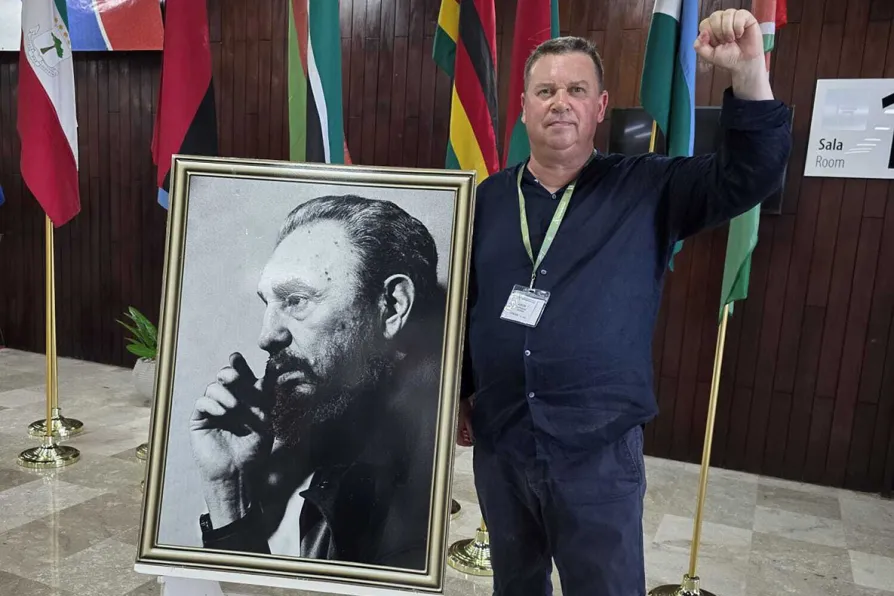
ALEX GORDON and LORRAINE DOUGLAS report from Havana, Cuba, where they represented the Communist Party of Britain at the 24th International Meeting of Communist and Workers’ Parties on August 7-8
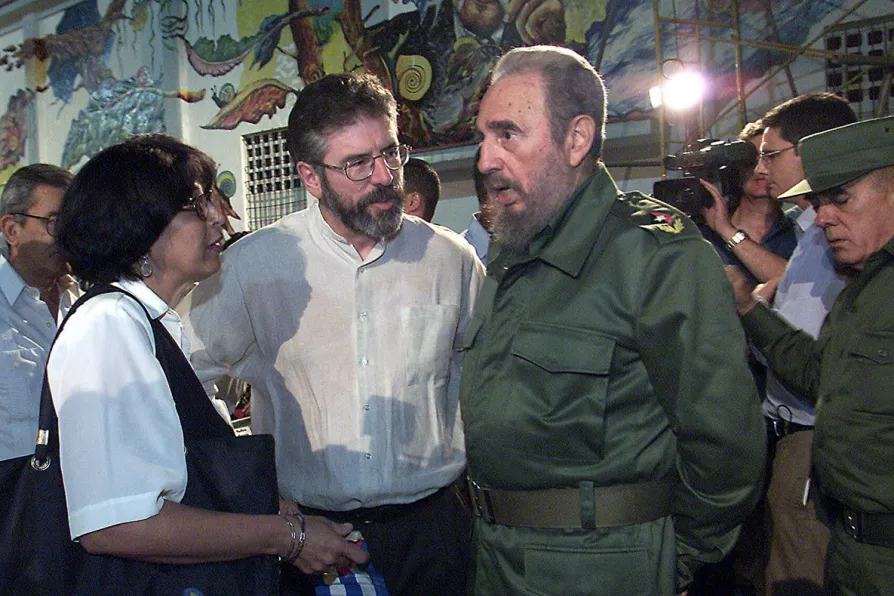
JOE DWYER of Sinn Fein reflects on the links between the Irish and Cuban struggles for independence and on Castro’s personal engagement with the cause of Irish freedom
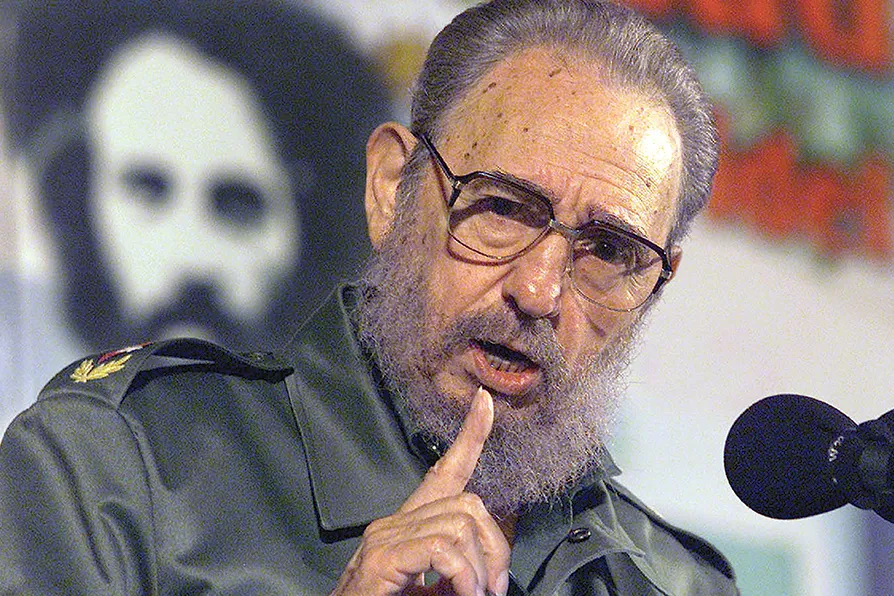
DR STEPHEN WILKINSON assesses the life and legacy of a revolutionary giant
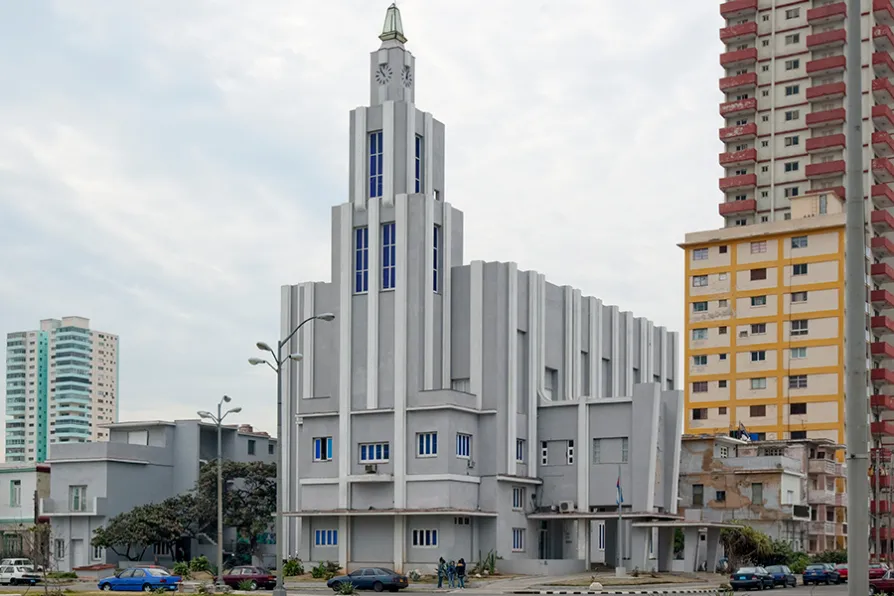
MIGUEL YOSHIDA explains the evolution and influence of the Cuban Casa De Las Americas in joining culture to the revolutionary struggle