

 Latest editorial

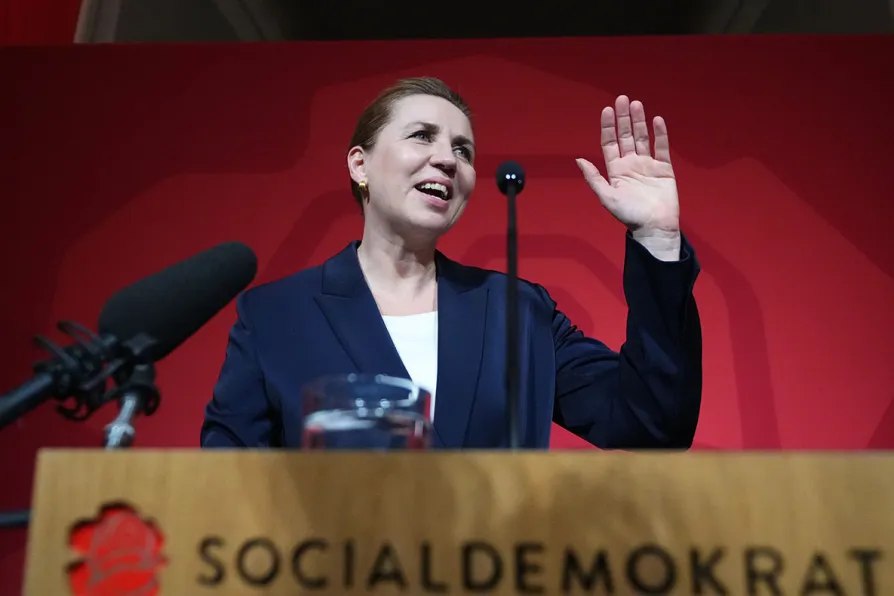 Danish Prime Minister Mette Frederiksen speaks to members of her Social Democratic Party in the Danish Parliament in Copenhagen, Denmark, after the General Election, March 24, 2026






DENMARK’S election on Tuesday ended in an inconclusive result that left the prime minister’s future unclear.
Official results showed that Prime Minister Mette Frederiksen’s Social Democrats lost ground compared with the last election in 2022, as did her two partners in the outgoing government.
The Social Democrats remained the biggest single party by some distance, but with 21.9 per cent of the vote — below the 27.5 per cent they took in the 2022 election
Neither left or right leaning blocs won a majority in parliament.
That leaves Foreign Minister Lars Lokke Rasmussen, a former prime minister, in the driver’s seat.
His Moderate party, with 14 lawmakers in the 179-seat parliament, is in a position to determine whether Ms Frederiksen can serve a third term as prime minister.
Ms Frederiksen said: “Denmark needs a stable government, a competent government. We are ready to take the lead.”
Mr Lokke Rasmussen called on rivals on the left and right to climb down from some of the positions they staked out in the campaign, and “come and play with us.”
But Defence Minister Troels Lund Poulsen, the best-placed right-wing challenger to Ms Frederiksen, made clear that he and his Liberal Party don’t intend to go into government with the Social Democrats again.
