WILL STONE samples the 20th anniversary atmosphere of this eclectic end-of-season indie festival


 Latest editorial
Taken hostage by the American Dream
ANDY HEDGECOCK peers into the US psyche to find deluded ambition, toxic aggression and an obsession with fame
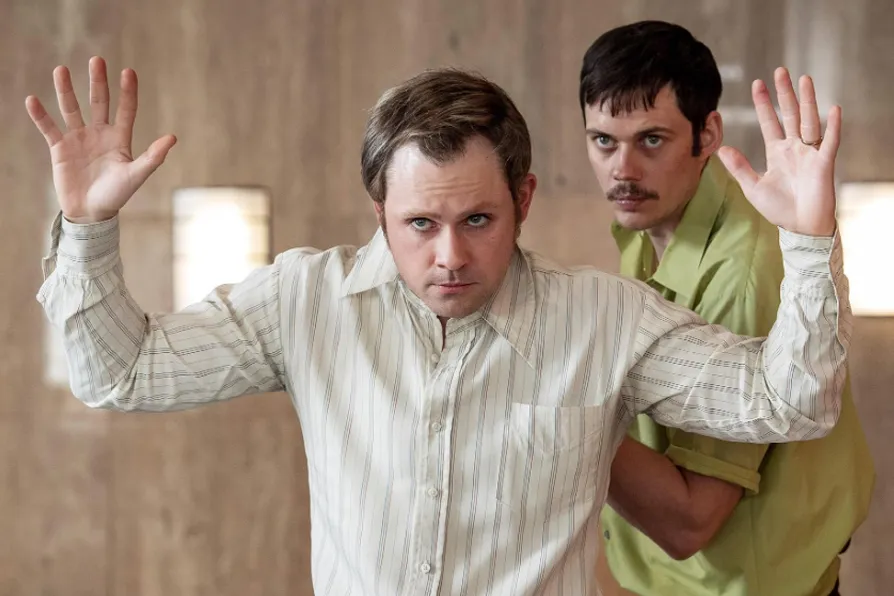 TOXIC: Bill Skarsgard and Dacre Montgomery in Dead Man's Wire [Pic: IMDb]

Comics are not just superheroes and spandex – it can be public art, telling public stories, suggests HARRIET EARLE
The bard serenades the Diggers of Wigan and their festive followers
ALEXEI SAYLE speaks to Angus Reid about a lifetime of protest, how to hone political art – and what to do now
ANDY HEDGECOCK, JAMES WALSH, LEO BOIX and MARIA DUARTE review Just An Illusion, Everybody Digs Bill Evans, Blue Film, Oasis: Don’t Look Back in Anger, and Runner
MARIA DUARTE recommends a nerve-wracking reconstruction of the 72 hours before the Normandy landings





Dead Man’s Wire (15)
Directed by Gus Van Sant
★★★☆☆
VIOLENCE triggered by a failed quest for the “American Dream” is a well-established staple of US cinema. It’s a central aspect of Easy Rider, Falling Down and There Will be Blood; and it recurs throughout the work of Gus Van Sant.
Van Sant’s critique of the deluded ambition, fame obsession and toxic aggression at the heart of American society included 1995’s To Die For – a dazzling blend of crime thriller, scathing social satire and black comedy.
He returns to these themes and genres in Dead Man’s Wire, a film with genuine tension, captivating performances and a smattering of bleak wit. Austin Kolodney’s script is absorbing but lacks the bite of Buck Benry’s work on To Die For: there’s less edge to the humour and the implications of the story are not fully explored.
The narrative is based on a hostage-taking incident in 1977: the period detail is meticulous but understated. Struggling Indianapolis business-owner Tony Kiritsis kidnaps his mortgage broker Richard Hall and ties a shotgun to his neck with a “dead man’s wire.” This means the police are unable to shoot Kiritsis without killing Hall as well.
Elliptical, Pinteresque exchanges between Kiritsis and Hal – in the kidnapper’s booby-trapped apartment – deftly capture the claustrophobic nightmare of their situation and strike a perfect balance between menace and absurdity.
Characters are sketched rather than explored in depth, but Bill Skarsgard and Dacre Montgomery are impressive in the central roles, eliciting sympathy for deeply flawed people. Skarsgard’s Kiritsis is a jittery bundle of rage and bafflement, while Montgomery dredges dignity from barely controlled hysteria in his portrayal of Hall. The question of the extent to which Kiritsis was duped and ruined by Hall’s company is unresolved, but it’s clear both characters have been shaped by a sense of entitlement to wealth.
There are strong supporting performances from Myha’la as ambitious TV reporter Linda and Colman Domingo as a local DJ Fred Temple, drawn into the crisis as mediator. Both are engaging characters, but their coverage of the affair plays into Kiritsis’s perception of himself as a national hero and, consequently, influences the course of the kidnapping and the court case that follows.
Al Pacino’s turn as Hall’s father and company president is less ambiguous – a terse but imposing study of toxic masculinity, greed and privilege.
Dead Man’s Wire isn’t peak Van Sant, but it shines light into some shadowy recesses of the American psyche.
In cinemas March 20
