Cuban trade union federation CTC leader OSNAY MIGUEL COLINA speaks to Ben Chacko about life and work under a crippling US siege


 Latest editorial
Rail safety and mental health: a breaking point for Britain’s transport workers
As the RMT Health and Safety Conference takes place, the union is calling for urgent action on crisis of work-related stress, understaffing and the growing threat of workplace assaults. RMT leader EDDIE DEMPSEY explains
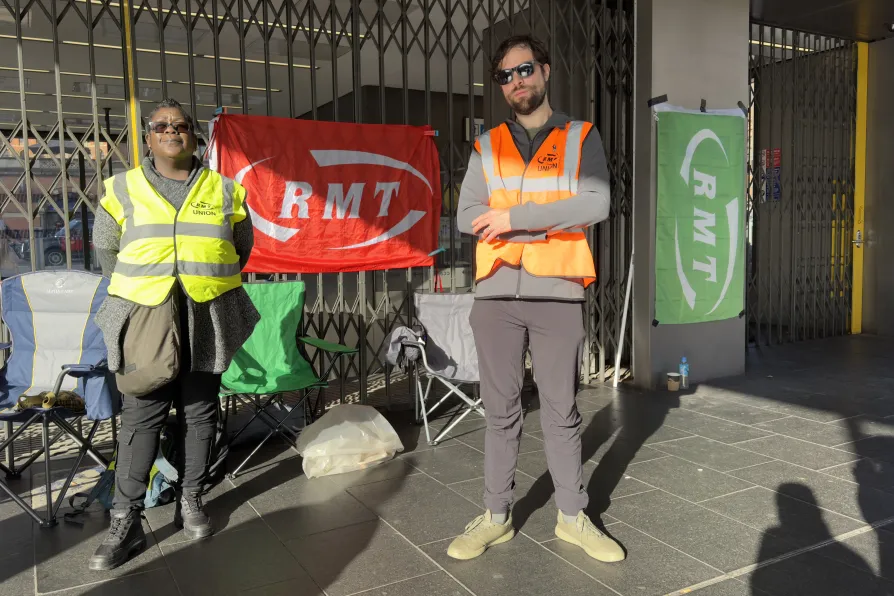 The picket line outside the closed gates at one of the entrances for the King's Cross St Pancras Underground station as members of the Rail, Maritime and Transport (RMT) union launched a series of strikes over pay and condition, September 8, 2025

A part of the British empire’s network of slavery, today the Caribbean island of Nevis faces a new form of exploitation in the form of crypto-colonialism, CLAUDIA WEBBE writes
A new book by Victoria Holmes illuminates the many hidden histories of the oppression experienced by Gypsy/Roma/Traveller community, writes ROGER McKENZIE
Even the oligarchs of the artificial intelligence industries are warning that their creations have the capacity for the ultimate destruction of the planet and its population. ANDREW MURRAY suggests that there might just be other solutions
The Labour government must deliver on its commitment to bring back privatised services into the public sector. This not only saves money but also creates accountability and generates wider social benefits, argues ANDY MCDONALD MP
Public ownership of Great British Railways has enormous potential to improve our railway network, but that can’t happen unless jobs, employee rights and union recognition is at the heart of the transition, argues MARYAM ESLAMDOUST
Challenges from the unscrupulous misuse of AI to steal actors’ voice and physical likenesses is being met with a firm union response, writes LYNDA ROOKE





AS DELEGATES gather for this year’s RMT’s Health and Safety Conference, we do so at a time when the pressures on railway workers have never been more intense.
Across all our industries, our members are dealing with rising workloads, staff shortages, outsourcing and an unacceptable increase in assaults.
If that was not enough to contend with, work-related stress and mental ill-health are becoming defining challenges of the modern workplace.
Health and safety has never been an optional extra to core industrial matters but now it is a defining part of everyday issues that are brought up by members.
The evidence on workplace stress is stark. The latest TUC survey shows that nearly eight out of 10 union representatives identify work-related stress as one of the top hazards facing workers, with 79 per cent citing it as a major concern.
The NHS has reported that one in four adults will experience mental illness.
The Chartered Institute of Personnel and Development has recorded a year-on-year rise in sickness absence, increasing from an average of 7.8 days per person in 2023 to 9.4 days last year, with mental health now the leading cause of long-term absence at 41 per cent and accounting for 29 per cent of short-term absence.
Government figures for 2025 show that 47.1 per cent of long-term sickness in the Civil Service is attributed to mental health conditions.
The Health and Safety Executive reports that 16 million working days were lost in 2023-24 due to stress, depression or anxiety.
Although these figures are not solely focused on rail, maritime or offshore workers, I know from my own conversations with members from across the industries we represent, just what a huge issue this is.
There must be change and one of the significant contributors to stress is the threat of being assaulted at work.
With our national Action Against Assaults campaign, key demands include:
• Ending lone working and late-night vulnerabilities
• Stronger legal protections, with a standalone offence for assaulting public transport workers
• Ensuring adequate staffing levels and reversal of cuts to British Transport Police
• Better reporting systems, support services, and full sick pay for victims.
Outsourcing is also central to this discussion around health and safety. It is often presented as a purely financial arrangement, but in practice it fragments accountability and weakens safety culture.
Outsourced workers frequently face inferior sick pay arrangements and greater pressure to attend work while unwell, encouraging presenteeism and undermining safe systems of work.
Layers of contractors blur responsibility and dilute standards across all the industries we represent.
Bringing workers back in-house strengthens collective bargaining, improves reporting cultures and reinforces a unified safety ethos in the workplaces where different employers are not rolling out different standards.
At this conference, delegates will debate two motions — one will be on pushing for employers to introduce wellness days, giving workers the option of taking time out without the stigma or long-term consequences often associated with sickness absence.
That is a practical step which could improve morale, reduce absence and strengthen the overall resilience of the workforce.
Conference will also debate serious concerns regarding the failure of the Office of Rail and Road to hold companies to account. The ORR is responsible for ensuring that railway companies operate in accordance with their own rule books, standards and risk assessments, and it also has financial oversight of the industry.
However, RMT has repeatedly submitted detailed evidence of significant breaches of safety procedures, only to see little meaningful enforcement action.
Our health and safety conference is our best attended by far and brings together health and safety reps from across the country.
Their agenda is critical for the union, and we will not rest until we have made significant progress in improving safety across rail, maritime and offshore.
Eddie Dempsey is general secretary of RMT.
