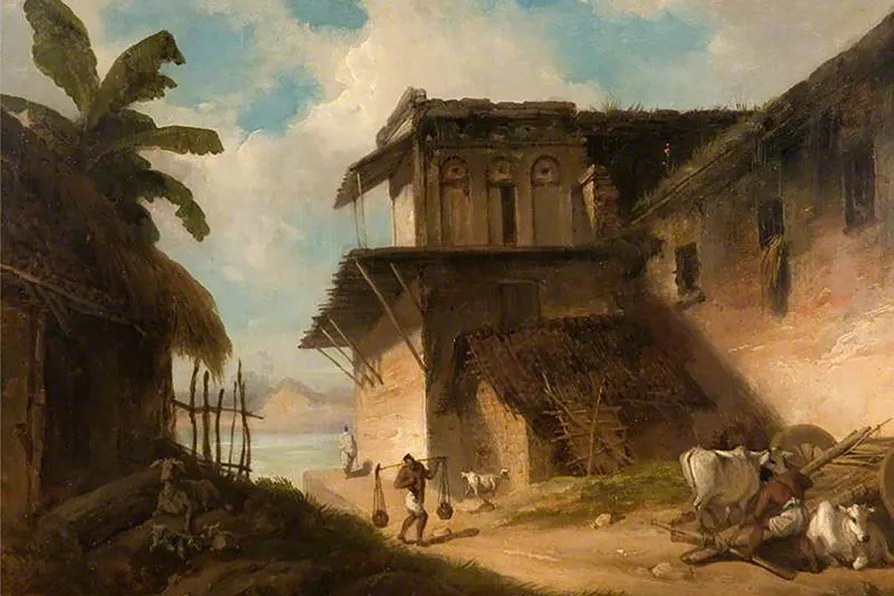
APURBA CHATTERJEE explains how British artists in India used the “picturesque” to reshape colonial landscapes and celebrate imperial power


 Latest editorial

Letters from Latin America with Leo Boix: January 20, 2026
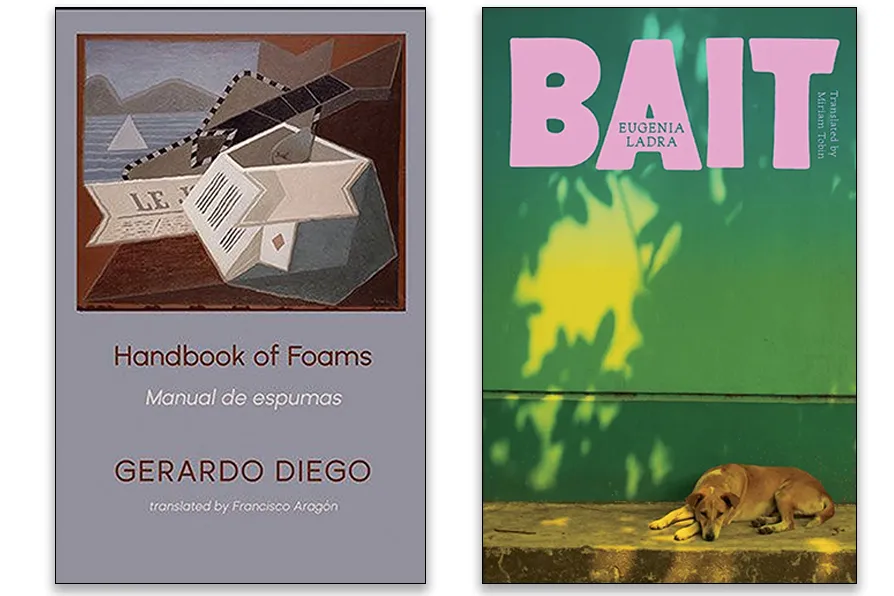
The debut novel by Uruguayan Eugenia Ladra, and poetry by Gerardo Diego
PAUL DONOVAN welcomes a revival of Reginald Rose’s classic play that reminds us of the fundamental need for trials with juries
SIMON PARSONS applauds an exceptional performance of Wesker’s little-known play, by the same actor for whom it was written 45 years ago
ANDY HEDGECOCK and MARIA DUARTE review Late Fame, The Death of Robin Hood, Leviticus, and Gail Daughtry and the Celebrity Sex Pass
ANGUS REID recommends a uniquely accomplished documentary collage that contemplates our relation to the natural world
GORDON PARSONS enjoys Kant’s ‘mind-boggling’ theory of human reality: that we create the reality we experience





PASO CHICO, the imaginary Uruguayan town at the centre of Eugenia Ladra’s Bait (Daunt Books, £10.99), is a place where summers stretch endlessly and nothing appears to happen — until everything does.
Miriam Tobin’s translation moves effortlessly through Ladra’s oppressive prose, capturing a village “pressed by custom,” where routine ferments into violence. The novel’s protagonist, Marga, is 13 years old and already marked by what the town has decided she is: unlucky, expendable, available. She retains, briefly, “a trace of unprocessed sweetness,” though the book makes clear how quickly such sweetness curdles.
Paso Chico feels like a fable gone rancid. Its inhabitants — a blind fisherman, drunk regulars at La Paraiso bar, a visiting circus — form a closed ecosystem in which cruelty is ambient rather than exceptional. “Dogs can smell fear,” Marga is told, in one of the novel’s most chilling passages, as desire, boredom and heat close in.
The relationship between Marga and Recio, a boy who drinks and demands sex, briefly dents the town’s inertia before confirming its brutality.
Ladra tightens the gap between sensitivity and insensitivity until they become indistinguishable. Tobin’s translation honours this refusal of consolation. The storm does not cleanse; it traps. Even the river stagnates.
Ladra’s prose also lingers on the textures of daily life, the minutiae that accrue into menace: a smell in the air, a door left unlocked, a look that lingers too long. These details are the novel’s quiet violence, and Tobin renders them with surgical precision, letting the reader feel the weight of anticipation as much as the shock of overt cruelty.
In this way, Bait functions less as a plot-driven narrative and more as a study of atmosphere and moral inertia, a place where the reader becomes complicit in noticing the small fractures that prelude disaster.
If Bait shows lyricism under siege, Gerardo Diego’s Manual de Espumas/Handbook of Foams (Shearsman, £12.95), translated by poet Francisco Aragon, revels in lyricism as generative force. Written in the early 20th century under the banner of creacionismo, Diego’s poems fuse sea, music and image into what the scholar Jose Luis Bernal aptly calls a “concerto.” These are poems that move by rhythm and association rather than narrative pressure.
In “Table,” Diego writes: “I travelled the seas/ on the boat of your hand,” while “Paradise” invites us to “fling the drying shirts into flight” and “climb the piano upstairs/ with fresh everyday feet.” Aragon’s translation is buoyant without being ornamental; it understands that Diego’s apparent lightness is hard-won. His images are playful, yes, but also exacting.
Aragon’s prose “braided collage,” Mostly Madrid, seals the volume beautifully. After Diego’s saturated lyricism, the translator and poet steps forward quietly, attentive to walking, drift, and lived time — translation as residue rather than monument. The coda functions as a counterpoint to Diego’s exuberance: a gentle acknowledgement that the world exists outside the page, and that lyricism does not need to dominate lived experience to remain vital.
Read together, these books reveal two opposing but related truths. Bait shows how language records damage when a community hardens. Handbook of Foams shows how language can still invent new worlds. One suffocates; the other breathes. Both, in these translations, arrive fully alive.
They remind us that literature is both witness and creation: one chronicles the fractures of human cruelty, the other charts the limitless terrains of imagination, and in the interplay between the two, the reader is given both caution and delight.
