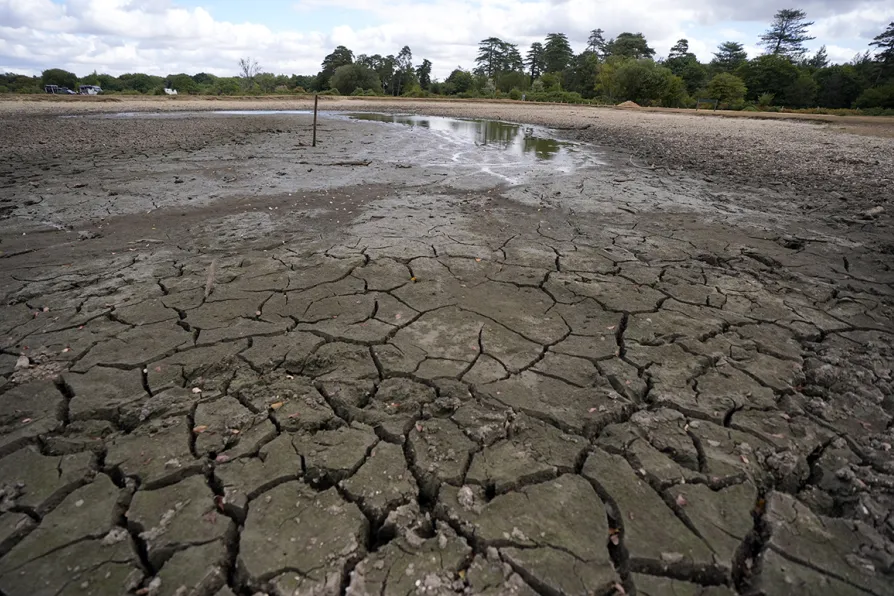
Andy Burnham could learn a few lessons from a previous Labour government in the pre-privatisation era on how to tackle water shortages, writes KEITH FLETT


 Latest editorial

Lessons of Iran — the US is in decline, but remains extremely dangerous
JOHN McINALLY assesses what we’ve learned from the disastrous US war so far
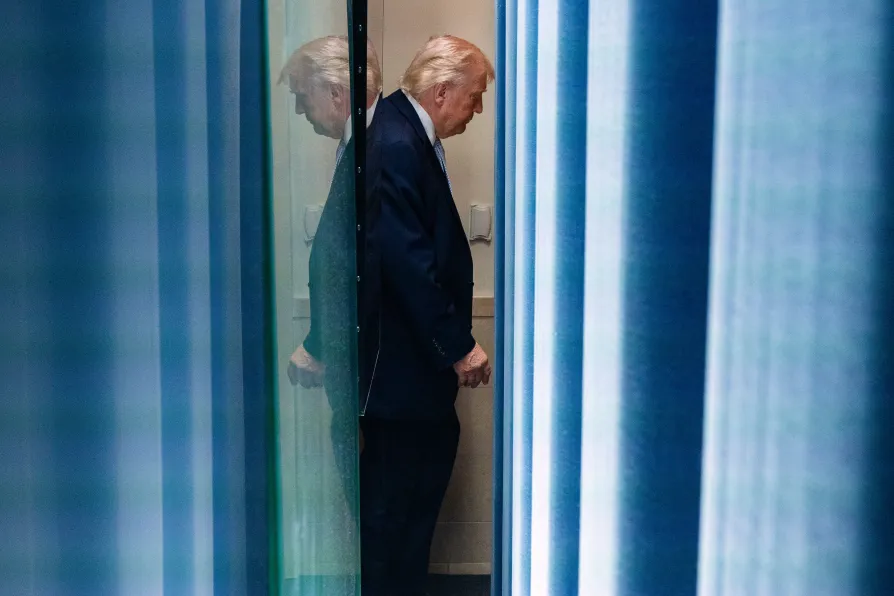 President Donald Trump departs after speaking with reporters in the James Brady Press Briefing Room at the White House, April 6, 2026, in Washington
North East Volunteers for Liberty plan to mark a double anniversary in October for local heroes who stood firm against tyranny, writes TONY FOX
India’s monsoon is running below normal overall, yet extreme rainfall has already caused deadly flooding in Kerala, explains LIGIN JOSEPH
Renewed illusions in social democratic reformism are sprouting as a result of Andy Burnham’s rhetoric, but material conditions are already intruding into the debate, argues NICK WRIGHT
The US is hell-bent on dismantling the International Criminal Court as part of its assault on global legal systems, but others also have valid reasons to seek its demise. BEN CHACKO provides the analysis





THERE are few, if any, more dangerous political circumstances than when an empire in decline, simultaneously possessed of enormous military power while haemorrhaging political and economic authority and legitimacy, seeks to reimpose its hegemony.
The American empire has been forced into a ceasefire with Iran, to pause a war President Trump boasted would be done and dusted in three to four days.
The scale of this setback should not be downplayed, but to claim it represents a “victory” for Iran is way off mark; destroying Iran is part of the US’s wider strategic aims of what is rapidly becoming a time-limited imperative to prevent China establishing itself as the world’s primary economic power.
Trump and Hesgeth may well be foul-mouthed, psychopathic barbarians, but questions of presentation and competence aside their strategy is entirely in step with that of every American president this century. The United States did not get into this war just because Netanyahu wanted it, which he did, but because it was in its own imperial interests.
And that is why no trust must be placed in the ceasefire or promises of peace — the US has received a bloody nose, but it will regroup and be back for more. And going by the fact that past Democrat presidents have raised not one objection in principle to the attack on Iran, the next war of aggression may be led by a future Obama or Clinton.
Numerous policy papers, speeches, books and policy statements in the public domain explain the US strategy: carry out a pro-Western coup in Ukraine, place nuclear weapons on Russia’s borders, draw it into a war, effect regime change and balkanise, exert control over its resources and establish hegemony on China’s borders.
This has resulted in utter disaster for the Ukrainian people and a strengthened Russian oligarchy who, ironically, are now regarded across much of the post-colonial world as the “good guys.”
Blocked, if not entirely given up in that war, Iran was next on the list, for exactly the same treatment: war, regime change and dismemberment. But here again, the limitations of US military power have been exposed, leading to an attempt to de-sensitise public opinion for the potential use of nuclear weapons — there are neocons in Washington who have argued for some time now it would be possible to win a world-wide nuclear war.
Iran demonstrated it would meet blow with blow, its strategy was either peace or every US ally in the region, including Israel, would pay a very high price.
While clear the US may has enormous military resources it has serious deficiencies in dealing with modern, technologically advanced country like Iran, which has planned for such a war of aggression against it for decades. It is no accident universities and research centres were heavily targeted by the US and Israel, and killing scientists and engineers figured prominently in their assassination list.
The US military machine has been shown to be far from all-powerful. Also, the truth will leak out about casualties; it is highly unlikely only 13 US soldiers have died.
Entirely censored in the Western state-directed “free press,” it is credibly claimed by Iran that the “heroic rescue” of the missing US pilot was in fact part of a disastrous failure to seize Iran’s enriched uranium — something that may well explain Trump’s “end civilisation” meltdown.
Iran’s very survival in itself will make it a beacon for anti-imperialist sentiment across the globe. Rather than destroying and humiliating Iran Trump’s folly has immeasurably strengthened Iranian nationalism, and its military may well now insist it develops its own nuclear weapons as the surest way to avoid future aggression.
Internationally, the US reputation is at rock bottom, Israel is a pariah state — a view also held increasingly in the US itself.
While the geopolitical consequences cannot be extrapolated in formalistic terms Henry Kissinger’s droll, and accurate, comment will be under serious consideration in countries around the globe: “It may be dangerous to be America’s enemy, but to be America’s friend is fatal.”
The ceasefire is already proving fragile, the assault on Lebanon continues, as does the genocide in Gaza, and while it cannot be ruled out that full-scale hostilities will resume, it would a very dangerous short-term strategy for both the United States and Trump specifically.
It is possible negotiations will simply be dragged out, potentially for years as Trump seeks to regain the support he has lost among his Maga base and prepares to defend himself against the inevitable attacks from what looks like almost certain defeat in the mid-term elections, and the possibility, perhaps certainty, of impeachment procedures.
The British and European security establishments have, through politicians like Starmer, Macron and Merz, sought to put a certain degree of distance between themselves and Trump, and in this they have been obligingly assisted by the media’s industrial-scale disinformation and misinformation, the BBC and Sky News, with its MI6-approved experts playing their usual skilful, deceptive role.
In one particularly nauseating and racist remark the story of the US pilot was described as showing the “human face” of the war, not so the slaughter of 175 primary schoolgirls by his murderous colleagues.
Starmer’s government was every bit as complicit in this war as it has been, and still is, in the genocide in Gaza. Every Labour MP who has not spoken out unequivocally against the US war of aggression on Iran must be opposed when they stand for re-election.
Starmer and the European leaders he now seeks to cosy up to now demand increased defence spending, militarisation and chauvinism as the order of the day.
But most people are instinctively anti-war and anti-establishment, and Trump’s Iranian adventure can only deepen that sentiment.
If we are to build an alternative to war and barbarism building the anti-war movement is an imperative, and one we cannot shirk.
