

 Latest editorial
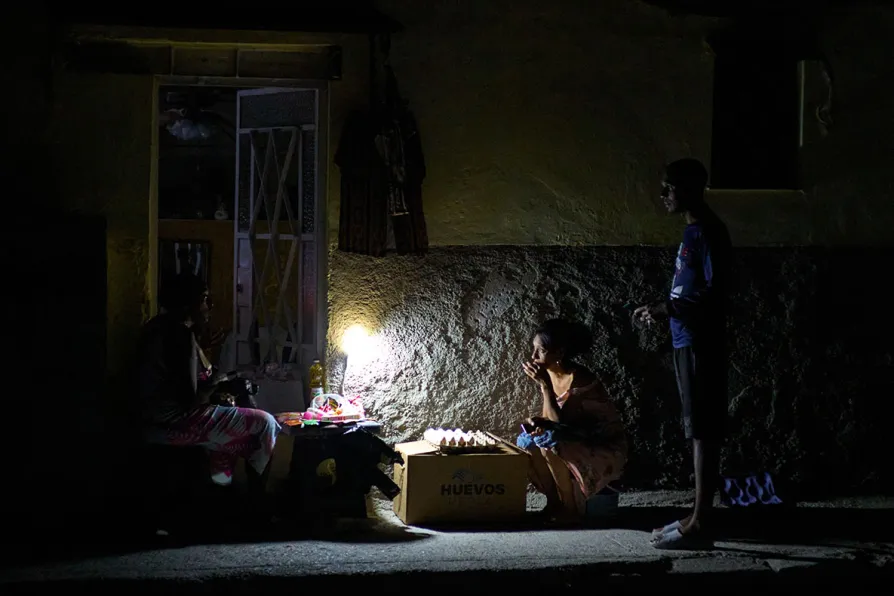 Street vendors chat during a blackout in Havana, March 16, 2026





CUBA was plunged into an island-wide blackout as the country’s electrical grid collapsed on Monday night.
The Ministry of Energy and Mines posted on social media that a “complete disconnection” of the country’s electrical system had taken place and said it was investigating.
Lazaro Guerra, the ministry’s electricity director, told local media that crews were trying to restart several thermoelectric plants, which are key to restoring power.
“It must be done gradually to avoid setbacks,” he said. “Because systems, when very weak, are more susceptible to failure.”
By late on Monday local media reported that power had been restored to around 42,000 Havana residents as well as several hospitals across the island.
Cuba has been deprived of fuel supplies by the deepening of the already brutal illegal blockade of the island by the United States.
In January US President Donald Trump warned of tariffs on any country that sells or provides oil to Cuba.
Its two main oil suppliers, Venezuela and Mexico, have stopped deliveries under US pressure. Russian promises to breach the oil blockade have not materialised, with a tanker, the Sea Horse, diverting away from Cuba without explanation late last month, presumably under threat from the US.
The far-right Trump administration is demanding that Cuba release political prisoners and “liberalise” its political and economic systems in return for a lifting of sanctions.
On Monday, President Trump said he believes he’ll have the “honour of taking Cuba.”
“I mean, whether I free it, take it. I think I could do anything I want with it,” Trump said about Cuba, calling it a “very weakened nation.”
The Trump administration has also let it be known that it wants Cuban President Miguel Diaz-Canel to leave power. The two countries are engaged in talks, but details remain confidential.
Meanwhile, the Cuban government announced on Monday that it had decided to allow more foreign investment.
Deputy Prime Minister and Minister of Foreign Trade Oscar Perez-Oliva Fraga said the move “opens the possibility for emigrants, under the category of ‘investers and businesspeople’ provided for in the immigration law, to become owners or partners in private companies in Cuba.”
