RITA DI SANTO assesses the winners of the most politically charged festival to date


 Latest editorial
Inspiring memoir of activism
STEVE ANDREW welcomes an autobiographical account of activism by a US Marxist journalist that is an inspiring introduction to the struggles of the ’60s, ’70s and ’80s

KATARZYNA KOSMALA introduces a retrospective by one of the most significant figures in contemporary US photography
MAYER WAKEFIELD is entertained but let down by an audacious production that, sadly, doesn't ring true
MARY CONWAY is disappointed by drama that, despite accomplished performances, cannot overcome an unfocused script
New releases from Sam Carter, Spell Songs and Les Thomas





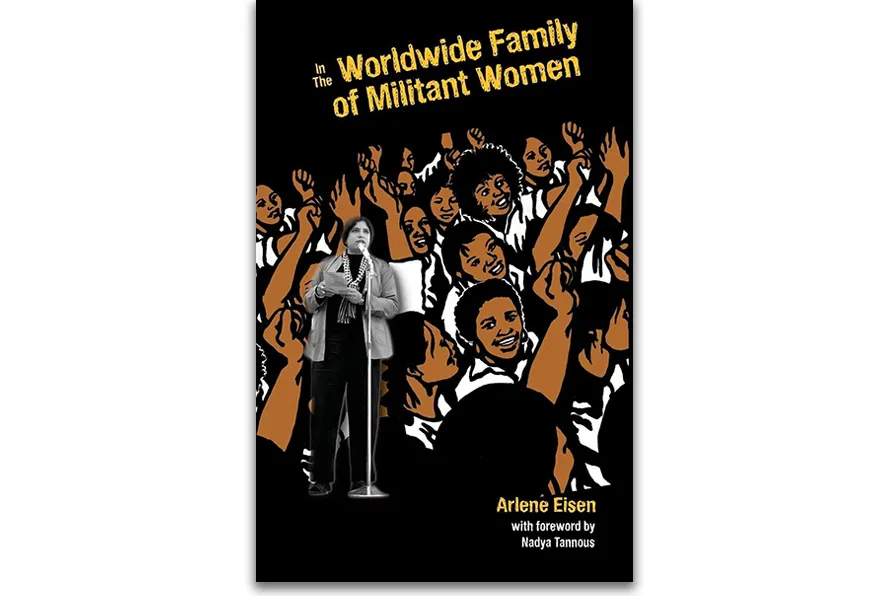
In the Worldwide Family of Militant Women
Arlene Eisen, Iskra Books, £20
MOST people who have heard of Arlene Eisen will know her not just as a committed activist but as a prodigious writer. A lifelong journalist, she achieved renown acting as both the editor of the widely influential “Movement newspaper“ and as a later contributor to the US Guardian. In addition, she also wrote seminal books like Women Of Vietnam, which older readers might well have on their bookshelves.
This latest work recently published by Iskra Press breaks new ground in the sense in that it is a profoundly personal and autobiographical text as well as being an eminently and unashamedly political one that covers her life from 1962 to 1982.
Born in New York to a liberal middle-class family, after initial involvement in the free speech, anti-war and civil rights movements, I think that it would be fair to say that Arlene came to associate with what have been called “anti-revisionist currents” within the Marxist Leninist movement. For those who associate such forms of Marxism with a male-centred, workerist and economistic perspective, Eisen’s continued insistence on the centrality of both radical feminism and black liberation, a position shared by many of her comrades, might well come as a shock.
Personal contact on an individual and organisational level with the Black Panther Party and the Weatherman organisation, combined with stories of events such as the Days of Rage and the effects of the covert, largely illegal and often deadly FBI operation COINTELPRO, add an incredible level of depth and experience that more academic accounts lack altogether.
Likewise, Eisen’s extensive solidarity work in Cuba and Vietnam and Venezuela means that she can give significant and firsthand detail to some of the most important revolutionary struggles of the second half of the 20th century, her ability to both listen and learn in these contexts being second to none.
Living in a period when the left began effectively to rediscover the fact that the personal is so often political, a fair amount of space is given over to exploring relationships with friends, family, lovers and comrades, and to everyday concerns around work and housing. Eisen does so in a way that is very open and honest and that remains aware of both the strengths and weaknesses of herself and others. An additional strength is her unquestionable ability to tie together an intimate and very much individual journey with the other monumental — and sometimes world historic — events that were taking place.
Having joined an unnamed Maoist group, Arlene works in factories for several years, a move reminiscent of the Narodnik’s back to the land movement in Tsarist Russia and a path which tens of thousands of middle-class radicals took during the 1970s in a bid to gain influence. It was in many ways an understandable strategy and not without positive elements but also very problematic, if not often doomed to failure. Eisen’s comments about her having “become working class,” and her naivety as to what her fellow workers would be like are cringey to say the least.
Given her commitment to “anti-revisionism” surprisingly little mention is made of the Communist Party of United States of America, despite its size and influence at the time. What I found more surprising, though, is that there is also only a minimal attempt to explain why Eisen became a Marxist Leninist, no note of the gains of the October Revolution 1917, zero reference to how she characterised the Soviet Union, and few comments about the growth and development of the People’s Republic of China.
It’s often said that few of us understand that we are living through history. In an era of unbridled imperialist warfare, unchallenged neoliberal economics and resurgent fascism, revisiting the experiences of the past becomes not just an academic exercise but something absolutely central to the rebuilding and rearming of the worldwide communist project. Eisen’s account deals with a tumultuous time in history in which not only did the left makes gains, but in which millions of people, including within the heart of the imperialist beast, often thought that radical change was possible and even inevitable.
This is a brilliant story and, read in conjunction with, say, Max Elbaum’s Revolution in the Air (Verso, 2006), it is an inspiring introduction to many of the struggles and movements of the period.
