TUC president and POA leader STEVE GILLAN speaks to Ben Chacko on the eve of Congress 2026


 Latest editorial
How the strike was provoked
JOHN LANG recalls how Murdoch used scabbing electricians and even devised a fake newspaper to force a confrontation with printers – then sacked them all
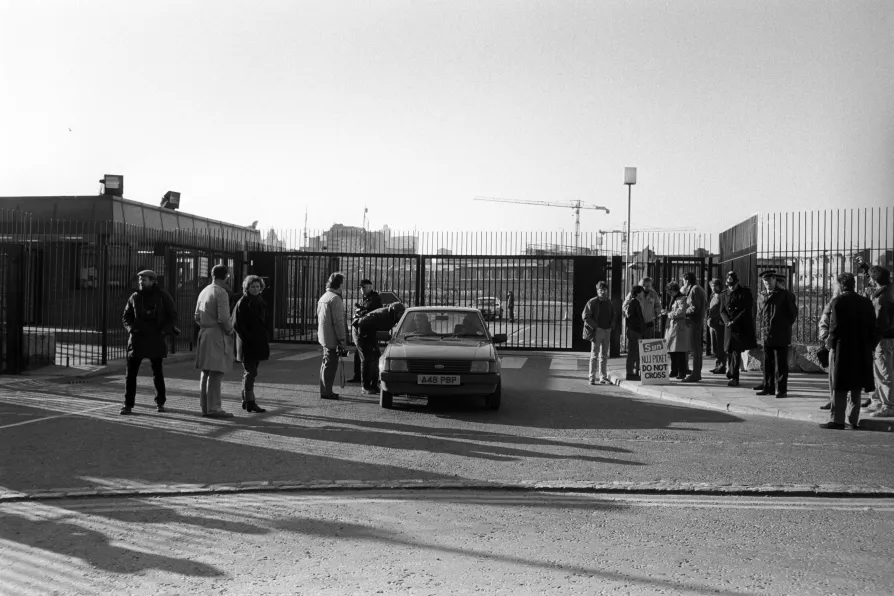 Protesters outside the main gate of Rupert Murdoch's News International plant at Wapping, East London, January 25, 1986

DOUG NICHOLLS welcomes a turning point at this year’s Congress, where many motions call for a co-ordinated plan to revive British industry, a perspective outlined in his new book
HOPE VIRGO of campaign Dump the Scales warns MPs voting today they should be alert to the threat legalised assisted death poses to people with eating disorders
The Together Alliance is hosting two summits, North and South, to build power and plan action against the scourge of racism peddled by the right. DANIEL KEBEDE urges mass participation
The drift toward militarisation in Europe is not inevitable, left-wing and peace movements can preserve sovereignty and prevent war, says DÁIRE HUGHES MP
Whatever differences exist among international sympathisers of the Bolivarian revolution about its current trajectory, they should unite against the imperialist power that is the source of an enforced retreat, argues ROGER D HARRIS
Trade unions need to step up and force a turn in the policies of the labour movement to effectively confront the far-right threat, argues NICK WRIGHT





I WAS 28 years of age when the Wapping dispute started. Even now, as I fast approach my seventieth year, it can still stir a great range of emotions within me.
I was a librarian at Times Newspapers Limited (TNL), publishers of the Times and the Sunday Times, and was a member of the clerical chapel committee (a shop steward).
Rupert Murdoch’s News International had purchased TNL in early 1981, adding them to his other national newspaper titles, the Sun and the News of the World, which he obtained in 1969.
Murdoch had bought the 13-acre site at Wapping, close to Tower Bridge in east London, in 1978 and building work had commenced in 1980.
It was to be the place where his News Group Newspaper (NGN) was going to print the Sun and the News of the World.
The Sun was earning him an estimated £26 million per year (£101.5m today) but it was being printed in filthy conditions on old worn-out presses in Bouverie Street off Fleet Street.
Murdoch needed to guarantee that the profits continued as he had borrowed heavily to invest in television and film companies in the US.
Although he regularly complained about industrial relations problems costing him money, the breakdown of machinery was much more of a threat. Wapping was supposed to be the answer to this problem.
Because it was proposed purely as a place for printing the Sun and News of the World, Wapping was barely mentioned among the workforce at the TNL building in Gray’s Inn Road until a few months before the dispute started.
At the start of 1985 the News of the World machine chapel had reached agreement with NGN for the move to Wapping but within a few weeks the company had suspended negotiations with all the other chapels.
Suddenly in March the company announced that it was going to use the Wapping site to print a completely new newspaper, The Post. It was to be Britain’s first 24-hour newspaper with morning editions being distributed nationally and afternoon and evening editions in London only.
But the national aspirations of the new paper were soon dropped and it became known as the London Post.
The paper was no more than a front, a tactic designed to divert attention from News International’s secret preparations for printing its four national newspapers at Wapping without the print unions.
After the suspension of negotiations, information was leaked from contacts within the plant which gave staffing details of over 500 employees and a list of companies contracted to work at the site.
Also plans to convert some of the printing presses from tabloid (the format of the Sun and News of the World) to broadsheet (the format of the Times and Sunday Times) had been obtained.
By June entrance to the plant could only be gained with a special pass, and closed-circuit TV and electronically controlled gates were also installed. In addition, the high steel fences erected earlier in the year were reinforced with razor wire.
Many of those being recruited at Wapping were supplied by the Electrical, Electronic, Telecommunications and Plumbing Union (EETPU). It was not until late August that Society of Graphical and Allied Trades (Sogat) general secretary Brenda Dean and National Graphical Association (NGA) general secretary Tony Dubbins met the company.
After the meeting Dean issued a press statement which said that she was “pleased to say that they [the company] totally denied any personnel were being recruited, were currently working in the premises, or were being trained in jobs traditionally done by Sogat members.”
The statement also said that the EETPU had been contacted and that it had confirmed that its members at Wapping were carrying out electricians’ work and “certainly were not doing any work which would normally be that of members of Sogat.”
She also stated that Murdoch would be visiting Britain during September and that “no agreements would be reached with any union” until this visit.
The EETPU played a treacherous role in the dispute, supplying staff for Wapping and Kinning Park (where northern editions of the Sun were to be printed) to be trained to carry out print workers’ jobs.
In his autobiography, aptly titled Maverick, the then general secretary of the EETPU Eric Hammond tells how Murdoch had approached him and asked if the electricians could set up machinery at Wapping.
He replied: “Not only that, they could operate it as well.”
Despite Hammond’s connivance, Murdoch refused to formally recognise the EETPU at Wapping and Kinning Park, and a single union deal was never signed. Hammond states in his autobiography that Murdoch had not shown “one spark of gratitude.”
In early September a dummy newspaper, similar to the Sun, was produced at Wapping but despite this provocative move, no action was taken.
Soon after, on September 11, the London Machine Branch held a mass meeting of its News International members at which a proposal by its branch committee for a 24-hour strike at all four newspapers was rejected.
Murdoch did not meet the general secretaries of the print unions, including the EETPU, again until the last day of September.
He told them that they had until Christmas to reach agreement regarding the London Post and until such time no negotiations would take place concerning the Sun or the News of the World.
It was not until November 1, eight months after the London Post announcement, that the company presented the unions with a document containing the proposals for the terms and conditions that their members would have to work under at the newspaper.
The document, calculated to be totally unacceptable to the unions, included: no recognition of chapels or branches, no closed shop, union reps being able to be removed by management if they received a written warning for any disciplinary offence, no union recognition for supervisors or managers, the company having exclusive rights to manage and to select people for jobs, classifying and reclassifying them, hiring, promoting, demoting and transferring employees as required.
In addition they would suspend, discipline, dismiss and lay off employees as they saw fit. All of this was to be legally binding on the unions and their members.
The terms and conditions that had taken many years to achieve were to be swept away overnight at the London Post.
The delaying tactics being used and the belief by the unions that the London Post was genuine allowed Murdoch the time to put his plans in place.
He had already purchased 1,000 delivery vehicles and signed a five-year distribution contract with Thomas Nationwide Transport to bypass the railways and wholesale distribution companies where Sogat had 100 per cent union membership.
He had also received legal advice from the Queen’s firm of solicitors, Farrer & Co, which recommended that “when it was necessary to dispense with the present workforce at TNL and NGN, the cheapest way of doing so would be to dismiss employees while in a strike or other industrial action.”
On December 10, with negotiations with the company deadlocked, the Sogat national executive recommended industrial action over the dispute with News International and that a ballot would take place after a mass meeting of members.
It hoped that this threat would shift the company’s negotiating position but instead, at the end of December, News International announced that it would be going ahead with the London Post without trade union agreement.
The pace of events quickened in the new year. On January 11 the Sunday Times was being printed as usual at Gray’s Inn Road when a change was made to the final edition which states that on the following week the 16-page appointment supplement would be printed at and distributed from Wapping.
Following frantic calls between union officials it was decided to print the final edition as it was felt that they were being provoked into taking action ahead of the ballot.
On January 13 the company gave employees at TNL and NGN six months’ notice of termination of their contracts of employment.
This applied to everyone except the journalists — the vast majority of whom went on to ignore their national union’s instruction and crossed the picket line at Wapping.
The mass meeting of the members took place on the same evening and the announcement about the supplement and the termination of contracts ensured that the atmosphere was highly charged.
Brenda Dean made it clear that a Yes vote was needed and stated: “We either hit them now [the company] or we do not hit them at all.”
The result of the ballot was announced on January 21 with both Sogat and the NGA voting by large majorities for industrial action. Armed with these results, Dean announced that she was to have one last attempt at a negotiated settlement.
A meeting took place with the company on January 23 at which major concessions were offered by the unions.
Murdoch’s response to this offer was: “I reject any recognition for your members at Tower Hamlets [Wapping].”
The following day Sogat and the NGA called their members out on strike and the company issued them with dismissal notices.
Hopes that Murdoch would never be able to produce and distribute his newspapers from Wapping quickly faded as the presses rolled and the distribution lorries left the “fortress” under heavy protection.
The use of the Tory anti-union laws led to Sogat being sequestrated and other unions being threatened with the same laws if they took secondary action in support.
The following year was an extremely difficult one for many of the strikers. Despite this they showed incredible solidarity and courage and continued to fight against the injustice that had been inflicted upon them.
On February 5 1987 Sogat called off the strike, citing possible legal action from the company as the reason. The NGA made a similar announcement later on the same day.
John Lang is one of the authors of Bad News: Spokesman Books) and was a chapel rep (deputy FoC) of the Times Newspapers Clerical Chapel during the dispute.
This article is a slightly edited reprint from the Morning Star’s Wapping 30th anniversary edition supplement.

Similar stories
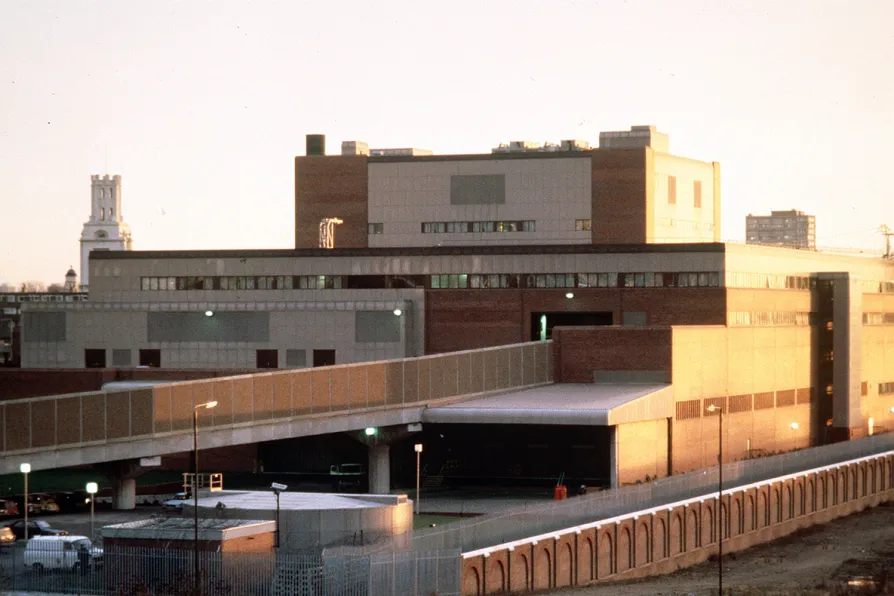
Forty years on, TONY DUBBINS revisits the Wapping dispute to argue that Murdoch’s real aim was union-busting – enabled by Thatcherite laws, police violence, compliant unions and a complicit media
![[Pic: Andrew Wiard]](https://msd11.gn.apc.org/sites/default/files/styles/desktop/public/2026-01/19860406_a_wiard_0001.jpg.webp?itok=d2RMNwWw)
LAURA DAVISON traces how Murdoch’s mass sackings, political deals and legal loopholes shattered collective bargaining 40 years ago – and how persistent NUJ organising, landmark court victories and new employment rights legislation are finally challenging that legacy
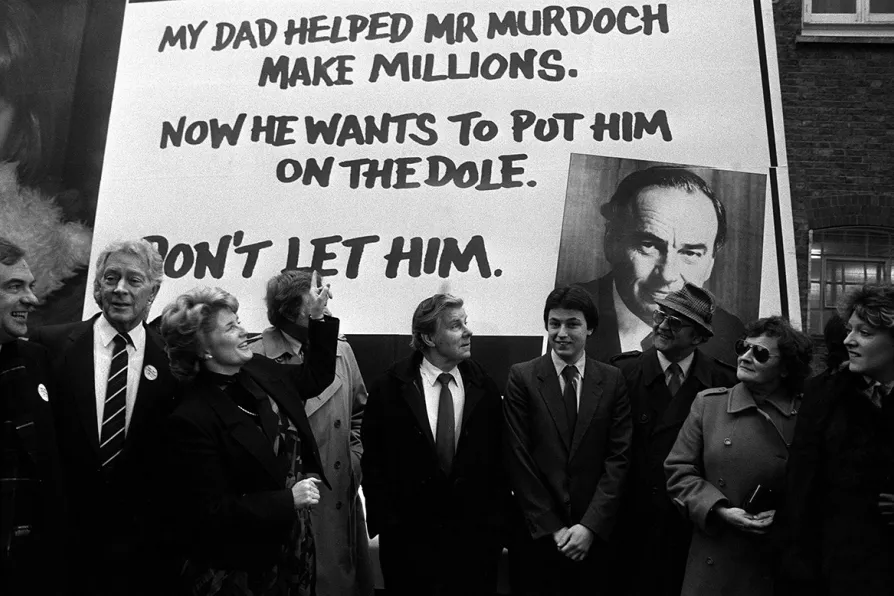
Enduring myths blame print unions for their own destruction – but TONY BURKE argues that the Wapping dispute was a calculated assault by Murdoch on organised labour, which reshaped Britain’s media landscape and casts a long shadow over trade union rights today
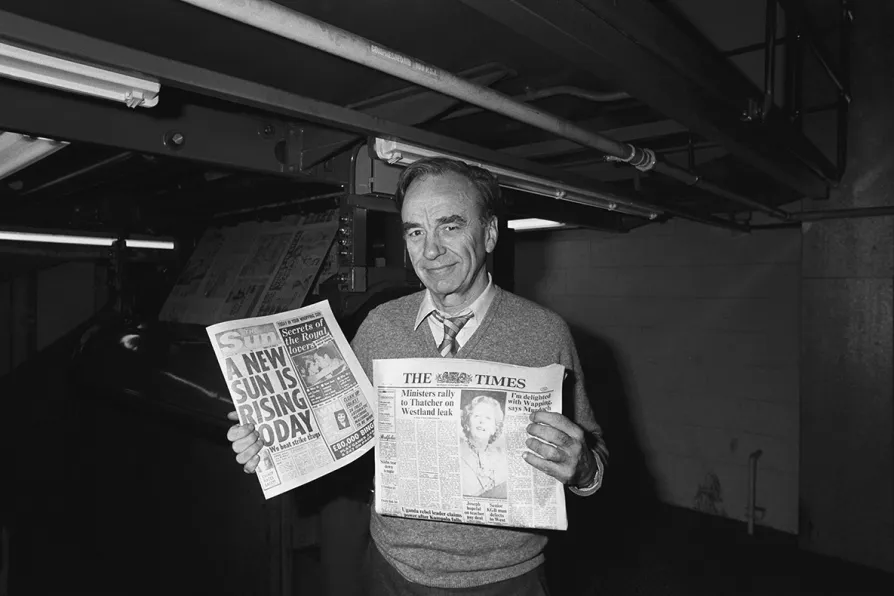
On the 40th anniversary of the Wapping dispute, this Morning Star special supplement traces the long-planned conspiracy that led to the mass sackings of printworkers in 1986 – a struggle whose unresolved injustices still demand redress today, writes ANN FIELD