
The UK Prime Minister may have the regal touch in northern England, but he’s been wrong-footed on the constitutional challenges posed by the Celtic Alliance of first ministers from Scotland, Wales and Northern Ireland, argues KENNY MacASKILL

How parents and workers forced Derbyshire Council to act on Send
After years of austerity and denial under a new Reform UK council, a failing Send service was pushed into the spotlight by staff, unions and parents — culminating in a £1.3m funding boost and a 50% increase in front-line workers. MARTIN PORTER explains
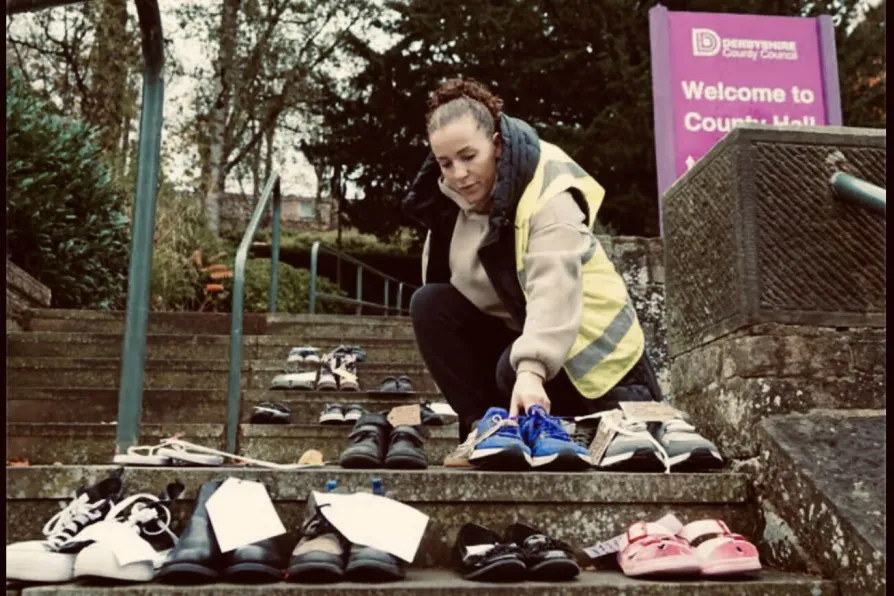
 Photo: Derbyshire Unison
NEIRLAY ANDRADE, a member of the Communist Party of Venezuela’s political committee, outlines her party’s position on the crisis facing the country
A look at Taylor Wimpey’s accounts shows why Labour’s market-led housing strategy won’t deliver more, cheaper homes, as promised, says SOLOMON HUGHES
DAVID HORSLEY remembers the remarkable life and death of US black revolutionary George Jackson, whose politically passionate prison letters were published as Soledad Brother
Cuban trade union federation CTC leader OSNAY MIGUEL COLINA speaks to Ben Chacko about life and work under a crippling US siege
A part of the British empire’s network of slavery, today the Caribbean island of Nevis faces a new form of exploitation in the form of crypto-colonialism, CLAUDIA WEBBE writes
Challenges from the unscrupulous misuse of AI to steal actors’ voice and physical likenesses is being met with a firm union response, writes LYNDA ROOKE





WHEN Reform UK won control of Derbyshire County Council in 2024, they inherited a council whose services had been hollowed out by eight years of Conservative austerity. Nowhere was this truer than in the teams that assess children with special educational needs and disabilities (Send).
As part of the children’s social services, Send is a speciality within a speciality for social workers. Unlike child protection, which can result in high-profile cases that embarrass local authorities, Send work had previously been low-key and out of the limelight. This made the Send department ripe for cuts when money was tight.
Even when a critical Ofsted report found “significant concerns” in the Derbyshire service in September 2024, the issue struggled to get noticed. An action plan was produced by the council, but it contained no significant extra funding. Instead, staff were pressured to work harder, with many going off sick.
They contacted Unison Derbyshire for support, but attempts to engage the council though were unsuccessful, and building a collective action was slow, as so many staff — especially experienced staff — were leaving for other councils.
As the anniversary of the Ofsted report approached, the only comment on the issue by Reform UK council leader Alan Graves was to tell the BBC that the problem was one of “overdiagnosis,” and that schools were encouraging parents to apply for help they didn’t need. He also said, in a separate statement, that the council was “overstaffed.” Meanwhile, the Send assessment backlog continued.
Then, two things happened that moved the campaign forwards. Firstly, Derbyshire County Council appointed the very experienced Gary Saul from Leeds City Council as interim head of Send.
An outsider, he was able to tell DCC they could not turn around their failing team without more staff — a lot more staff. Then on November 3 2025 there was a National Day of Action by the campaign group The Send Sanctuary UK called Every Pair Tells a Story.
In Derbyshire, this saw mothers bringing empty pairs of shoes to County Hall, along with very personal message of how failures in the system were affecting them and their children. It was a powerful record of the council’s failure.
Unison Derbyshire supported this protest, and afterward we joined with these parents, and sympathetic politicians, to create Send Action Derbyshire.
The pressure worked. On December 4 2025, the cabinet of Derbyshire County Council agreed a £1.3 million increase in spending, with the money to come from reserves, for the Send assessment teams. This represented an increase in front-line staff of about 50 per cent. So much for being “overstaffed.”
Hayley Chapman, whose son is waiting for an assessment, said: “On a personal level, the decision brings hope. Like so many families, we’ve been living with the uncertainty and frustration that brings. I’m so proud to have been part of the Derbyshire team at the Every Pair Tells a Story event last month. I’d like to be seen simply as a parent who refuses to give up — someone who speaks out not just for my own child, but for every family waiting for the support their children deserve.”

Similar stories
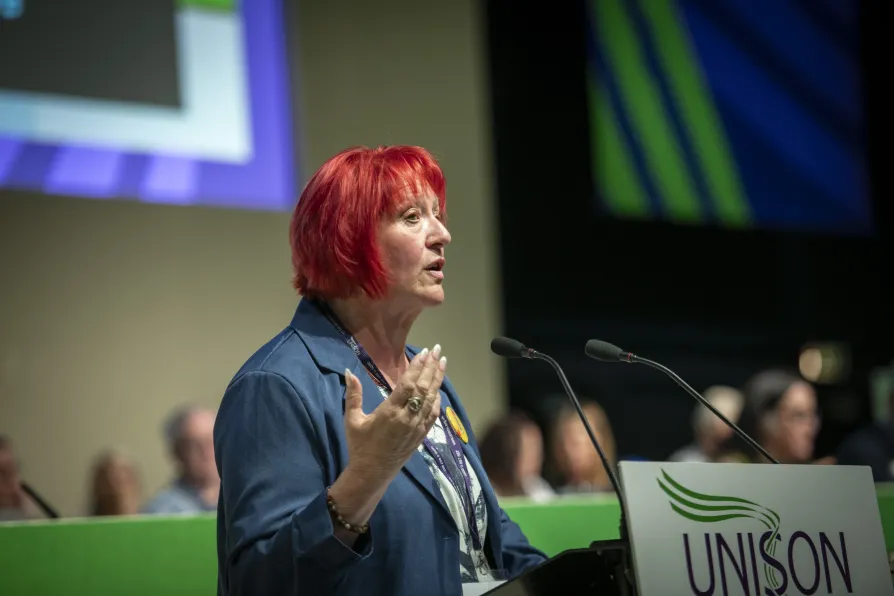
Roger McKenzie talks to general secretary of Unison CHRISTINA McANEA about the impact of the cost-of-living crisis on members, the local government funding emergency and the threat of Reform UK