

 Latest editorial
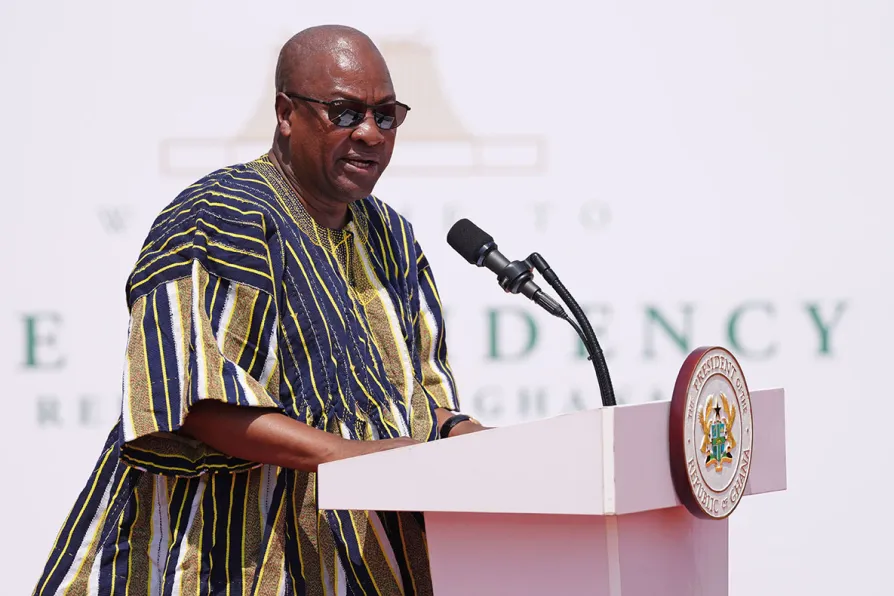 The President of Ghana John Mahama giving a speech, as he attends a durbar with the Duke of Edinburgh at Jubilee House in Accra, Ghana, November 25, 2025





GHANA’S President John Dramani Mahama on Tuesday accused the administration of US President Donald Trump of “normalising” the erasure of black history.
Since his return to power, President Trump has targeted US cultural and historical institutions, including museums, monuments and national parks, and insisted they remove what he calls “anti-American” ideology.
President Trump’s declarations and executive orders have led to the dismantling of exhibits about the US history of the enslavement of Africans, the restoration of Confederate statues and other moves that civil rights advocates say could reverse decades of social progress.
Speaking at an event at the United Nations on slavery reparations, President Mahama said: “These policies are becoming a template for other governments as well as some private institutions.
“At the very least, they are slowly normalising the erasure.”
President Mahama said that in the US black history courses were being removed from school curricula, institutions were being mandated to stop teaching the “truth of slavery, segregation and racism,” and books addressing these subjects were increasingly being banned.
The White House did not immediately respond to a request for comment.
President Mahama, who last year announced a deal to accept West Africans deported by the US, previously criticised President Trump for his false claims of white genocide and land seizures in South Africa.
The Ghanaian president blasted the claims as an insult to all Africans.
President Mahama is in New York to table a resolution at the UN general assembly to recognise the transatlantic trade and enslavement of Africans as the “gravest crime in the history of humankind” and calling for reparations.
The west African nation has been a leading voice internationally for reparations, a cause that has gained significant momentum in recent years, even as a growing backlash in the US has emerged, particularly since the return of President Trump to the White House.
But elsewhere, a number of Western leaders have opposed even discussing the subject, with critics arguing that today’s states and institutions should not be held responsible for historical wrongs.
The draft resolution urges UN member states to engage in dialogue on reparations, including issuing formal apologies, returning stolen artefacts, providing financial compensation, and guarantee there is no repeat.
The resolution has the backing of the African Union and the Caribbean community, as well as countries like Brazil.
Ghana’s foreign minister Samuel Ablakwa said that the European Union and the US had already let them know they would not be supporting the resolution.
