

 Latest editorial
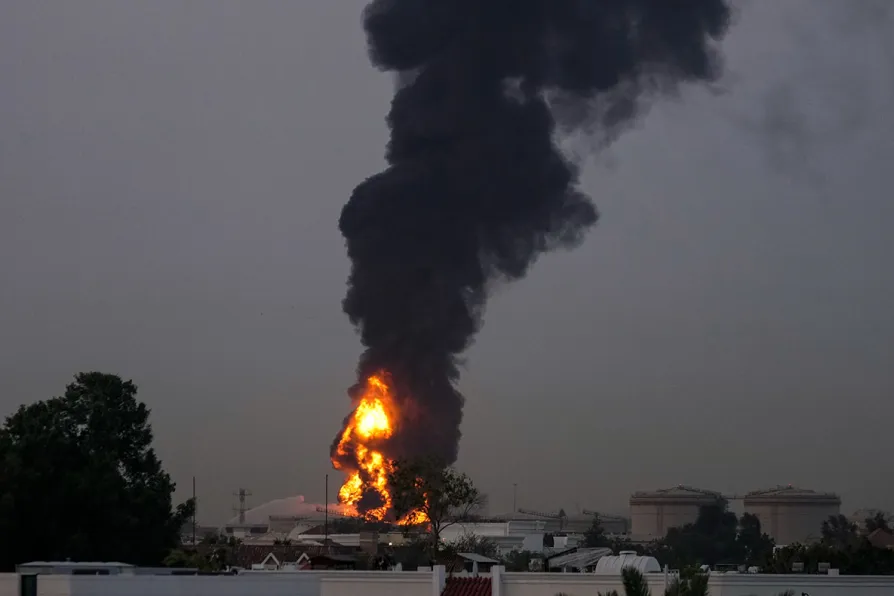 Fire and plumes of smoke rises after a drone struck a fuel tank forcing the temporary suspension of flights near Dubai International Airport, in United Arab Emirates, early March 16, 2026





FEARS of a global energy crisis rose today as the war in the Middle East raged on.
The United States and Israel continued their illegal and unprovoked war on Iran as they bombarded the Iranian capital Tehran and Israel maintained its assault on Lebanon.
An Iranian drone strike temporarily shut Dubai’s airport, a crucial global travel hub, underscoring the threats to the world economy.
The war, which began on February 28, has seen Iran hit back by attacking Israel and US bases in the region, and Gulf Arab countries’ energy infrastructure.
The Iranians have also closed the Strait of Hormuz through which a fifth of the world’s oil is transported. That has dramatically increased the price of oil and put pressure on Washington to do something to ease the pain for consumers.
Brent crude, the international standard, remained more than $100 (£75) a barrel on Monday.
US President Donald Trump said that he has sent a demand to seven countries to send warships to keep the Strait of Hormuz open.
The US president said on Sunday that he wanted these other nations to help police the strait to make it safe for shipping, with his party increasingly concerned that rising prices for US consumers will hurt the Republicans in November’s mid-term elections.
He did not identify the countries that he asked to help with those efforts, but he is known to have previously appealed to China, France, Japan, South Korea and Britain.
“Whether we get support or not, but I can say this, and I said to them: we will remember,” President Trump said.
But his demand has so far secured no commitments to help.
President Trump also suggested that he might delay a planned trip to China, a key trading partner of Iran, as he seeks to put pressure on Beijing to help restore shipping through the strait.
As the fighting continued, Iranian Foreign Minister Abbas Araghchi called claims by the Trump administration that his country may be seeking a negotiated end to the war “delusional,” saying in a social media post early today that Iran was seeking neither “truce nor talks.”
Meanwhile, the Israelis continued to attack the Lebanese capital, Beirut, targeting what they described as infrastructure linked to Hezbollah.
In southern Lebanon, seven people were killed in Israeli air strikes, according to authorities and news reports.
Lebanon’s National News Agency said two of them were paramedics responding to an earlier strike.
At least 850 people have reportedly been killed in the country by Israeli bombing.
