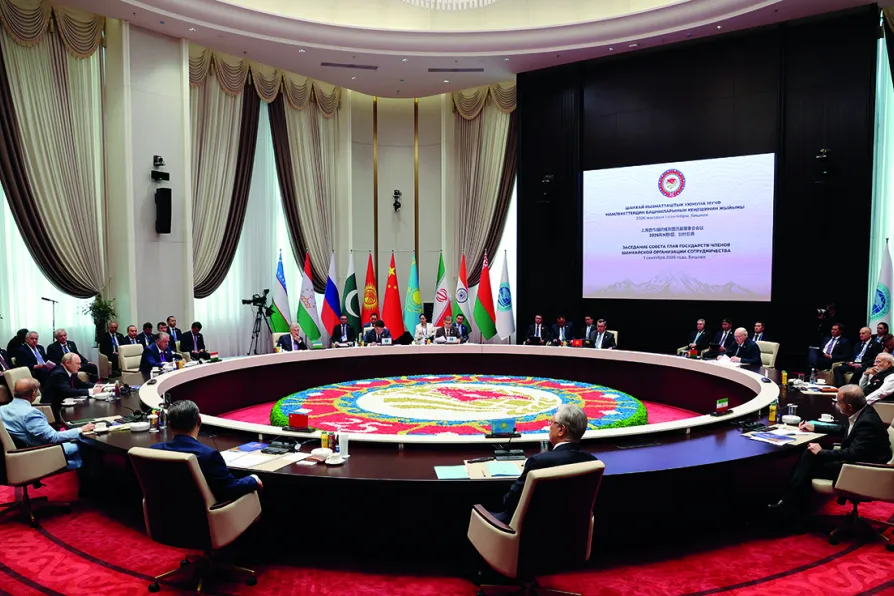
The 25th anniversary meeting of the Shanghai Co-operation Organisation in the Kyrgyz capital may offer a glimmer of hope that international relations do not need to be defined by endless confrontation, writes KENNY COYLE


 Latest editorial

Scientists beware!
The government's pledge to increase funding for scientific research comes with strings attached, warn ROX MIDDLETON, LIAM SHAW and JOEL HELLEWELL

The artist, who has just died, is embedded in the subconscious of the Palestinian people
The five young men killed in the A66 crash were responsible for a devastating tragedy — but the crash should force us to ask difficult questions about wider society, argues RENATA MEDEIROS MIRRA
Britain funds the policing of black culture 16 times better than the culture itself. The Diamond Jubilee is the moment to end that, argues CLAUDIA WEBBE
Despite Andy Burnham’s declaration defending the continued partition of the island, all major international and internal trends are converging to make Irish reunification inevitable
Humans are part of the ‘animal kingdom’ – and of nature in general – but also distinct from it and labour (work) is part of what makes us unique, declared Engels. His insights 150 years ago into how our species came to be and how we differ from the rest of nature, are as important today as they were then, says the MARX MEMORIAL LIBRARY
Committee for the Defence of the Iranian People’s Rights general secretary GAWAIN LITTLE discusses the impact of the US-Israeli war on the Iranian people and economy





SCIENCE does not intrinsically promote technological advancement. It concerns the study and understanding of the natural world and its constituent parts.
However, when combined with technological enthusiasm, the synthesis is responsible for radically changing society. We live in an age of scientific funding that began at the start of the 20th century.
To understand this age, we can look to the end of the industrial revolution which produced the work of Karl Marx. As discussed in an excellent answer by the Marx Memorial Library in April, Marxism’s inception as a “scientific socialism” was meant to indicate a foundation on the objective material world beyond the utopian imaginings of other socialists.

Similar stories
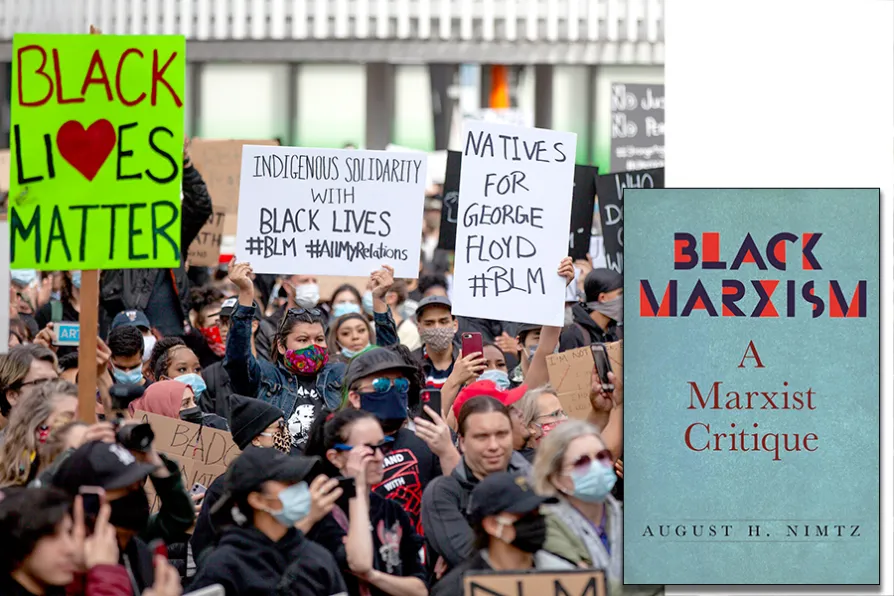
SETH SANDRONSKY recommends a Marxist critique of the ‘race-first’ views of the influential black US theorist Cedric Robinson
China’s investment and commitment to scientific research is already paying off, pushing the country to the centre stage of global technological advance, writes S Krishnaswamy

Nature as well as society works dialectically, asserts the Marx Memorial Library and Workers’ School

The selection, analysis and interpretation of historical ‘facts’ always takes place within a paradigm, a model of how the world works. That’s why history is always a battleground, declares the Marx Memorial Library