Councillor SAM WHEELER says there’s a tangible shift in mood on the left in the city whose mayor has recently become PM — but there’s no room for complacency



Leading the way: Salford Council’s impressive record on housing
JACK YOUD explains how Salford City Council has taken on rogue landlords and won, setting an example to the rest of the country
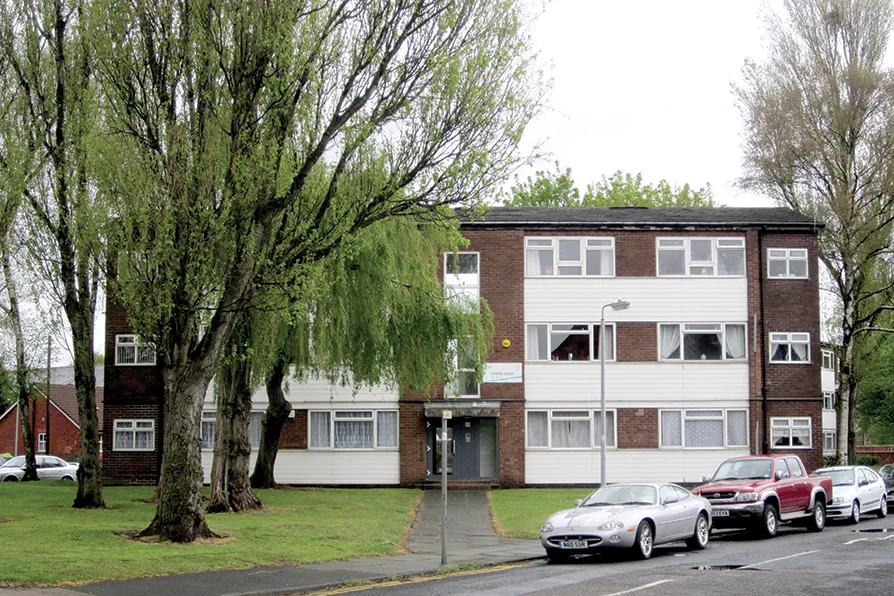
 ELEMENTARY, DEAR BRITAIN: Keeping housing stock in good nick, Eccles, Salford / Pic: Rept0n1x/flickr/CC

Communist Party leaders Alex Gordon and Lorraine Douglas deliver vital medicines in trip to besieged socialist island
TUC Cymru is playing a leading role in tackling far-right ideas in the workplace, says LAURA DOEL
A New Delhi press conference in which Sheikh Hasina and her son implied the new order in Bangladesh is a security threat to India has sparked fears she is planning a comeback. SIAM SAROWER JAMIL reports on the fallout
Two months of student unrest have forced out India’s education minister and rattled the BJP regime. Could this be the beginning of the end for Modi, asks Communist Party of India (Marxist) general secretary MA BABY
MAT COWARD says the heatwave is a testing time for gardeners — but he has some tips





MORNING STAR readers who have been at the mercy of the private rented sector over the past few years and decades will be all too familiar with the predatory practices, neglect and exploitation that are endemic within the sector.
Socialist Salford, however, has refused to let rogue landlords get away with it in our city. Salford Council has issued £2.4 million in civil penalties to negligent landlords across our city since 2017, using powers under the Housing and Planning Act 2016.
These penalties, for offences such as refusing to comply with an improvement notice, force landlords to resolve potentially dangerous hazards in their tenants’ homes, helping to drive up standards in the rented sector across Salford.
Beyond this, we have reinvested the money collected through these penalties into our Housing Enforcement Team at Salford City Council. The income from these penalties is being used to fund two innovative pilot schemes.
The first is targeted at supporting tenants living in Houses in Multiple Occupation (HMOs) and driving up standards within these properties.
One of the problems with identifying and regulating HMOs is that smaller ones can remain hidden. If landlords do not register their properties correctly, they can operate undetected. We have therefore carried out targeted inspections to identify properties being operated as HMOs.
Through this work, 135 Category 1 hazards (defined as posing a serious risk to the health and safety of occupants) have been identified.
The second scheme funded through these civil penalties is a pilot to enforce the Electrical Safety Standards in the Private Rented Sector (England) Regulations 2020. Under this scheme, if the council’s report recommends work, the landlord must ensure it is carried out.
The pilot started in October 2022 and, in addition to obtaining electrical safety certificates, the team has also been ensuring compliance with requirements for smoke and carbon monoxide detectors.
Through this initiative, council officers have inspected over 1,500 properties in Salford and issued over £100,000 in civil penalty notices.
Should landlords persistently refuse to rectify the issues described above, the council will not hesitate to take further enforcement action to improve standards in the private rented sector across Salford.
We are rightly proud of this enforcement work, which forms a key plank of one of our core priorities: ensuring every family in our city has access to a good, healthy, affordable home.
It is disappointing, and a real missed opportunity, that the vast majority of local authorities across the country are not following our lead.
The statistics back this up: data from a 2024 report by the National Residential Landlords Association shows that 60 per cent of civil penalties were issued by just 20 local authorities.
The same report identifies that across the entire local government sector, 49 per cent of local authorities have not issued any civil penalties since the legislation came into effect — failing to adequately enforce against negligent landlords.
The same report identifies that across the entire local government sector between 2021–2023, just £13 million worth of civil penalties were issued, and of that, £7m remained uncollected.
These figures clearly demonstrate that the vast majority of local authorities are failing to make full use of these powers and failing to adequately enforce against negligent landlords.
This is disappointing and a clear wasted opportunity. Of course, the primary reason local authorities should engage in this enforcement work is to protect tenants and improve standards in the private rented sector.
But, as demonstrated above, proactive enforcement and the issuing of civil penalties can enable councils to increase capacity in these areas. Local authorities are still reeling from 14 years of Conservative austerity with Salford Council alone losing £245m from our budget during that period.
These additional revenue these civil penalties provide are an innovative way of improving capacity in services that are integral to ensuring our residents have a good place to call home.
Salford has clearly demonstrated that with political will and investment in enforcement, we can hold rogue landlords to account, drive up standards for tenants, and improve capacity in our own organisations.
This, of course, will not solve the housing and homelessness crisis on its own – after all, building council housing peaked in 1953 with almost a quarter of a million council homes completed.
Salford Council is leading the way in this regard too, having established its own council house-building company. So far the majority (58 per cent) of new homes built have been let at genuinely affordable social rent.
This has contributed to the completion of over 1,700 affordable homes, significantly more than many other cities of a similar size.
Labour local authorities urgently need to follow our lead in tackling housing issues, and recognise local government as a key driver in delivering affordable housing.
As the Labour Party faces an unprecedented challenge from Reform UK in the May elections, ensuring people have a safe home is both a deep moral imperative and an absolute electoral necessity.
Jack Youd (Labour Party) is deputy city mayor and lead member for Finance, Support Services and Regeneration on Salford City Council. He represents the Walkden North ward.
