Councillor SAM WHEELER says there’s a tangible shift in mood on the left in the city whose mayor has recently become PM — but there’s no room for complacency



Establishment of the Joint List is the need of the hour, says new Hadash leader
Election of a new leadership at Hadash’s convention signals a renewed effort to forge a broad Arab-Jewish alliance in Israel, says AMNON BROWNFIELD STEIN
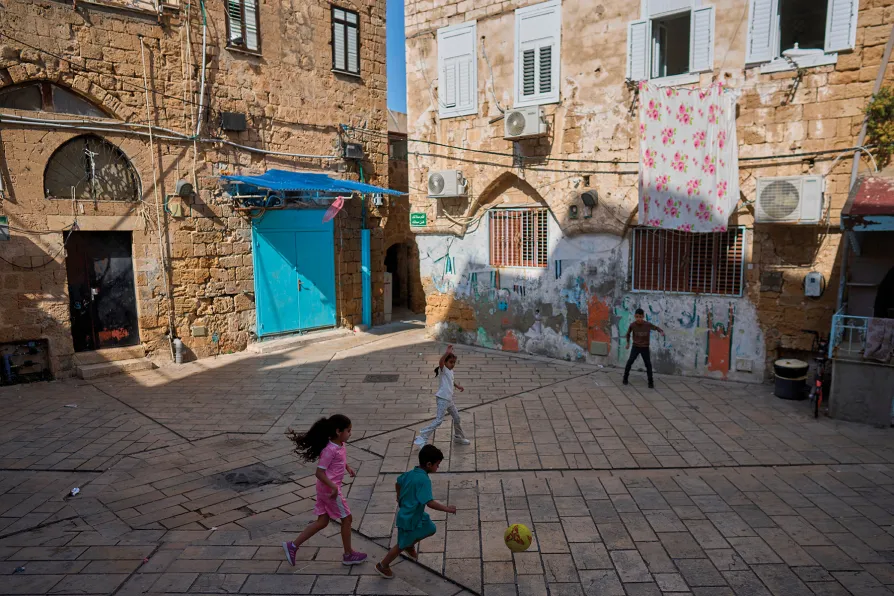
 Children play football in the old city of Acre, northern Israel
Communist Party leaders Alex Gordon and Lorraine Douglas deliver vital medicines in trip to besieged socialist island
TUC Cymru is playing a leading role in tackling far-right ideas in the workplace, says LAURA DOEL
A New Delhi press conference in which Sheikh Hasina and her son implied the new order in Bangladesh is a security threat to India has sparked fears she is planning a comeback. SIAM SAROWER JAMIL reports on the fallout
Two months of student unrest have forced out India’s education minister and rattled the BJP regime. Could this be the beginning of the end for Modi, asks Communist Party of India (Marxist) general secretary MA BABY
MAT COWARD says the heatwave is a testing time for gardeners — but he has some tips





DR YOUSEF JABAREEN was elected to lead Hadash in the upcoming general election, replacing veteran Ayman Odeh.
He will be joined by publicist Jafar Farah, lawmaker MK Ofer Cassif and attorney Youssef Atauna — as all hope the new faces will draw other Arab parties and left-wing movements into a joint electoral list.
On Saturday, the Democratic Front for Peace and Equality (Hadash) held its electoral convention, in preparation for the upcoming general election in Israel.
Around 1,000 electors, representing different branches and organs of the front, gathered in the northern town of Deir Hanna.
The location holds a special place in the Palestinian national heritage, as the main base of Daher al-Umar’s rise to power and subsequent revolt against the Ottomans in the 1700s.
About 200 years later, in 1976, the town revolted again. This time against oppressive Israeli policies, launching the general strike known as the Land Day.
Hundreds of thousands of Arab-Palestinians citizens of Israel joined forces for a collective civil unrest that prevented further land confiscations.
Today, the electoral convention looked for similar unity between the Arab-Palestinian citizens of Israel and comradeship with the democratic Jewish forces.
The dire political question towering over the convention was the prospect of re-establishing the Joint List (a unified parliamentary list of the four main parties of the Arab society, that ran successfully in 2015, 2020 and 2021 elections).
Ayman Odeh, the outgoing head of Hadash who also led the Joint List, alluded to this endeavour in his farewell speech: “Hadash doesn’t break its own promises. We support the re-establishment of the Joint List in its entirety, because that is the way to boost participation in the election and deafeat fascism.”
Odeh is correct, in every election that the Joint List was formed, a higher turnout of Arab voters emerged. Some polls suggest up to 17 seats out of 120 (about 15 per cent) in the Knesset could be achieved this year, pending re-establishment of the Joint List.
Two doctors fought for the leading spot in Hadash’s list. Dr Yousef Jabareen, an academic and jurist, easily defeated the GP Dr Shukri Awada.
Jabareen previously served as member of the Knesset between 2015 and 2021. In his first term as a lawmaker, he chaired the children’s rights parliamentary committee and used his position to shed light on issues affecting the impoverished children in Israel, such as healthcare accessibility and education quality.
He also led the international advocacy group of the Joint List during that period, and visited London and Brussels regularly. In 2018, the Israeli government prevented his departure for speaking tour in the United States with Jewish Voice for Peace, a prelude for many of the draconian limitations on political freedoms that followed in recent years.
In his victory speech, Jabareen also said that “establishing the broadest and strongest Joint List” is the “need of the hour.”
The battle for second place was much fiercer, pitting three candidates against each other.
They were Nisreen Morqus, secretary general of the Women’s Democratic Movement (TAND); Jafar Farah, a publicist and director general of the NGO Mosawa; and Shadi Shweeri, a former local councillor. Morqus was the only Arab woman candidate in a securly electable position. She emphasised the importance of Arab women’s representation in decision-making bodies, hoping to follow in the footsteps of MK Aida Touma Sliman. But Farah prevailed, gaining support of many of the youth.
While criticism has already surfaced regarding the lack of women’s representation, Hadash countered that “women’s representation and leadership are expressed in many areas of our public and political activity, not just on the Knesset list,” and pledged to “work to strengthen women’s representation at all levels.”
On Sunday, Jabareen, the new parliamentary forerunner, commented on the issue and expressed his support to change Hadash’s constitution and guarantee at least one woman’s spot out of four in every parliamentary list.
Ofer Cassif, the sole Jewish member of the Knesset of Hadash, retained his third spot as Youssef Atouna, an attorney and Bedouin leader from the Negev, returned for the fourth position.
In the aftermath of the electoral convention, Hadash is placed in a prime position to drive the formation of the Joint List forward. As settlers terrorism and ethnic cleansing in the West Bank is deepening, and the drums of war are still heard loudly in Gaza and Lebanon, this may be the only chance to redeem the region from a dark future for years to come.
