Committee for the Defence of the Iranian People’s Rights general secretary GAWAIN LITTLE discusses the impact of the US-Israeli war on the Iranian people and economy


 Latest editorial

DWP actions blamed in string of claimant deaths, coroner reports reveal
The suicide of Tamara Jade Logon after her disability benefits were wrongly withdrawn is the latest in a series of deaths in which coroners have cited DWP failings, exposing a pattern of preventable harm, says DYLAN MURPHY
Capitalism has extracted itself from crisis before, argues PRABHAT PATNAIK – but through methods no longer available. So it is turning to authoritarianism, militarism and neocolonialism
The five young men killed in the A66 crash were responsible for a devastating tragedy — but the crash should force us to ask difficult questions about wider society, argues RENATA MEDEIROS MIRRA
Britain funds the policing of black culture 16 times better than the culture itself. The Diamond Jubilee is the moment to end that, argues CLAUDIA WEBBE
Despite Andy Burnham’s declaration defending the continued partition of the island, all major international and internal trends are converging to make Irish reunification inevitable
Humans are part of the ‘animal kingdom’ – and of nature in general – but also distinct from it and labour (work) is part of what makes us unique, declared Engels. His insights 150 years ago into how our species came to be and how we differ from the rest of nature, are as important today as they were then, says the MARX MEMORIAL LIBRARY





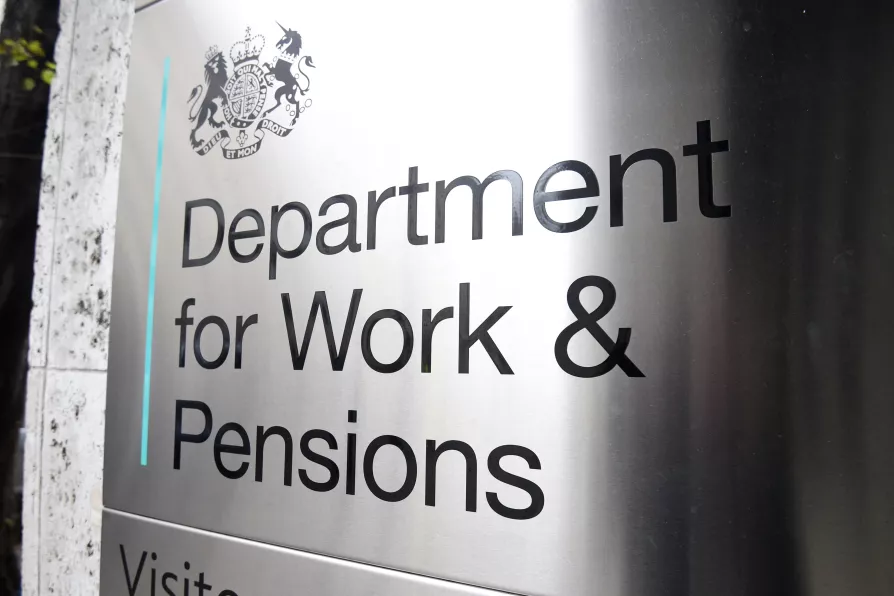
A DAMNING coroner’s report has concluded that the Department for Work and Pensions (DWP) played a significant role in the suicide of a vulnerable young woman, Tamara Jade Logon.
This case is the latest in a deeply disturbing pattern of deaths where the DWP’s actions have been officially cited as a contributing factor, intensifying calls for a full independent inquiry into the department’s systemic safeguarding failures.
A ‘catastrophic’ and fatal decision
Tamara Jade Logon, a 28-year-old mum, had a documented history of severe mental health issues. She took her own life after the DWP incorrectly withdrew her enhanced personal independence payment (PIP) allowance.
The decision was communicated in a standard letter, a method the coroner, Alison Mutch, deemed “not appropriate given her known vulnerabilities.”
The coroner stated unequivocally that the DWP’s incorrect decision and the manner of its communication “significantly contributed” to the decline in Logon’s mental health and her subsequent death.
In her formal report, Coroner Alison Mutch wrote: “On the balance of probabilities, the incorrect decision to withdraw her enhanced daily living allowance and the method of communication of the decision significantly contributed to her declining mental health and her actions on May 18 2025 which led to her death on May 20 2025.”
A pattern of preventable tragedies
Logon’s death is tragically not an isolated incident. It echoes numerous other cases where vulnerable claimants have died following DWP errors, benefit stoppages and safeguarding failures.
These cases paint a stark picture of an unaccountable system in crisis.
- Jodey Whiting (2017): A second inquest in 2025 found the DWP’s decision to stop her benefits after she missed a work capability assessment (WCA) was the “trigger” for her suicide. The coroner highlighted five missed opportunities to safeguard Whiting, who had a known history of severe mental illness.
- Errol Graham (2018): Graham, who suffered from severe mental distress, starved to death weighing just 4.5 stone (30kg) after his benefits were stopped because he failed to attend a WCA. The coroner noted the “huge distress” caused by the loss of income and that the “safety net that should surround vulnerable people… had holes within it.”
- Philippa Day (2019): Day, who had unstable personality disorder, died after taking an overdose. An inquest found 28 errors in the handling of her case and concluded that a flawed disability assessment was a “predominant factor” in her death.
- Kristie Hunt (2023): A coroner found that DWP failings, including an incorrect penalty charge and a subsequent error that affected her housing benefit, contributed to the decline in the 31-year-old’s mental state before she took her own life.
‘Marking its own homework’
These cases are not just individual tragedies but evidence of a systemic problem. According to a BBC investigation, the government has conducted over 150 internal reviews into cases where its actions were alleged to have caused serious harm or death since 2012. Of these, 82 claimants died, with mental health vulnerabilities being a factor in 35 of those deaths.
Critics, including Labour MP Debbie Abrahams, argue these internal reviews amount to the DWP “marking its own homework” and that the known cases are merely “the tip of the iceberg.”
The fact that coroners have issued multiple Prevention of Future Deaths (PFD) reports to the DWP since 2013, with little apparent change, reinforces this concern.
As John Pring, editor of the Disability News Service, argues in his powerful book The Department: How a Violent Government Bureaucracy Killed Hundreds and Hid the Evidence, these events are not accidents but the result of what he describes as “slow bureaucratic violence” committed against disabled claimants.
Pring’s decade-long investigation reveals a pattern of calculated harm which neither Tory or Labour government governments have done anything to address: “That worries me, it saddens me, that there are many, many countless — probably thousands — of deaths that we will never hear about, [that are] just as traumatic as those I write about in The Department,” as reported by Now Then Magazine.
An urgent call for action: three essential reforms
The repeated loss of life demands more than internal reviews which won’t stop the unnecessary deaths of disabled people. The deaths of Tamara Jade Logon, Jodey Whiting, Errol Graham, Philippa Day, Kristie Hunt, and countless others must be a catalyst for fundamental change.
The government could start by implementing the following three specific, actionable policy reforms:
1. Mandatory vulnerability-informed communication protocol. All benefit decisions affecting claimants with documented mental health vulnerabilities, self-harm history, or suicidal ideation must be communicated through a multi-stage process: initial notification by phone call from a trained caseworker, followed by written confirmation, and a mandatory welfare check within 48 hours. Claimants flagged as vulnerable must receive decisions in person or via video call with mental health support present. This would have prevented Tamara Jade Logon’s mental health from deteriorating so rapidly following receipt of a standard letter.
2. Independent quality assurance and oversight of benefits assessments. Establish an independent statutory body with the power to conduct random audits of at least 10 per cent of all benefits assessments each quarter, overturn DWP decisions, and publish quarterly reports on error rates and systemic failures. This addresses the failure of internal checking processes that allowed Logon’s incorrect assessment to reach her despite being checked before the final decision was made.
3. Statutory duty of care and safeguarding framework. Introduce a new statutory duty requiring the DWP to conduct mandatory safeguarding assessments before making adverse benefit decisions, contact claimants’ GPs before reducing benefits, and implement a 14-day cooling-off period. Create a new criminal offence of “gross negligence in safeguarding” with penalties for DWP officials who ignore safeguarding flags. Establish a “claimant safeguarding commissioner” with independent authority to investigate complaints and issue fines.
It is time to end the culture of secrecy and unaccountability that has allowed these tragedies to occur under both Tory and Labour governments.
The Labour government must live up to its obligations under international human rights law and take action to stop the continuing abuses committed by the DWP against disabled people.
The labour movement must help build a social security system based on dignity, trust and compassion, and ensure that the DWP is held responsible for its duty of care to every single claimant. The lives of the most vulnerable members of our society depend on it.
