TUC president and POA leader STEVE GILLAN speaks to Ben Chacko on the eve of Congress 2026


 Latest editorial
Demonstrations in history: the importance of keeping on keeping on
KEITH FLETT looks at the political impact of protest
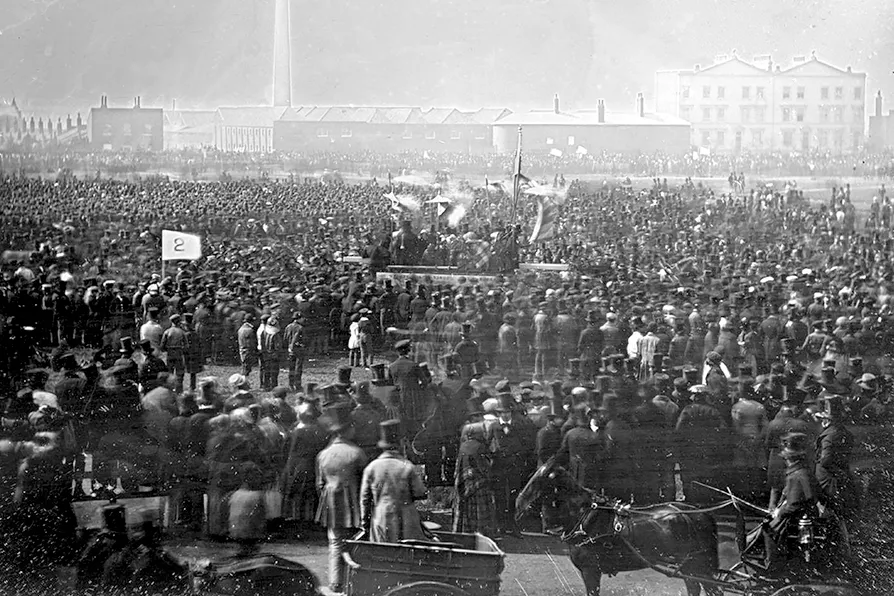 The great Chartist meeting on Kennington Common on April 10, 1848 [Pic: William Kilburn/Creative Commons]

DOUG NICHOLLS welcomes a turning point at this year’s Congress, where many motions call for a co-ordinated plan to revive British industry, a perspective outlined in his new book
HOPE VIRGO of campaign Dump the Scales warns MPs voting today they should be alert to the threat legalised assisted death poses to people with eating disorders
The Together Alliance is hosting two summits, North and South, to build power and plan action against the scourge of racism peddled by the right. DANIEL KEBEDE urges mass participation
The drift toward militarisation in Europe is not inevitable, left-wing and peace movements can preserve sovereignty and prevent war, says DÁIRE HUGHES MP
Whatever differences exist among international sympathisers of the Bolivarian revolution about its current trajectory, they should unite against the imperialist power that is the source of an enforced retreat, argues ROGER D HARRIS
Trade unions need to step up and force a turn in the policies of the labour movement to effectively confront the far-right threat, argues NICK WRIGHT





ON SATURDAY January 31 100,000 people marched in central London for Palestine. It was the 34th march since October 2023.
On the same day despite a ceasefire allegedly being in force Israeli forces killed 32 Palestinians, something they presumably regard as a business-as-usual activity.
There have been bigger marches for Palestine and while size is important the key thing is that the protests have continued.
The Labour government would very much prefer that they did not and have done a range of things short of an absolute ban to deter them. That includes re-routing marches, banning words and image which are not liked and any number of petty restrictions imposed by the Metropolitan Police.
The resilience of protesters and protest organisers is likely to be unprecedented in recent British history.
Media coverage when it happens usually suggests that such events don’t really make any difference to things and repeat protests even more so.
This is not what history tells us.
Of course there have been occasions when demonstrations have led to some quite immediate and striking results. The march of Birmingham workers to Saltley Gates in the 1972 miners’ strike which shut a coke depot and effectively won the day is one such occasion in living memory.
Looking much further back to May 6 1867 the Reform League called a protest in Hyde Park to demand the vote. The protest was banned but it went ahead and sheer force of numbers won the day in the Park. The Home Secretary Walpole resigned in short order and further legislation to extend the franchise followed.
The first mass demonstration not only in British but world history was held by the Chartists on Kennington Common on Monday April 10 1848. Somewhere over 100,000 people attended which with a population around a third of current totals was sizeable.
The demonstration, as history books remind us, was not a success.
Yet in the years that followed all but one point of the People’s Charter (annual parliaments) became law.
The government was not minded to give way in April 1848. Neither however did subsequent governments wish to see repeats of such protests.
The same might be said of a much more recent occasion — February 15 2003 — when well over a million people marched in central London against war with Iraq.
Tony Blair’s spin doctor Alistair Campbell noted in his Diaries that he felt nothing but disdain for those that marched.
Yet the march set a political tone.
Afterwards no politician could claim that launching such a war had support across the spectrum or was uncontroversial.
The point is that even when demonstrations do not appear to succeed in their immediate aims they still make a considerable difference.
Finally a word about size and history. Ever since that Chartist demonstration in April 1848 protesters and the authorities have been arguing about the numbers of people that showed up for a protest. Counting numbers on such occasions is an imprecise science as anyone who has ever attended one will know.
People join after the march has started or leave before the end.
Size, however, is not quite everything.
The most effective demonstrations combine a good turnout with a sense of the times in which they take place. The Chartists in 1848 were listened to because the whole of Europe was in revolutionary uproar.
Demonstrations in support of Palestine in central London represent a resilience of activism, historically unusual, but honed over 25 years of anti-imperialist activism and politics. Further because of Britian’s imperial history they echo around the globe as beacons of solidarity.
