

 Latest editorial

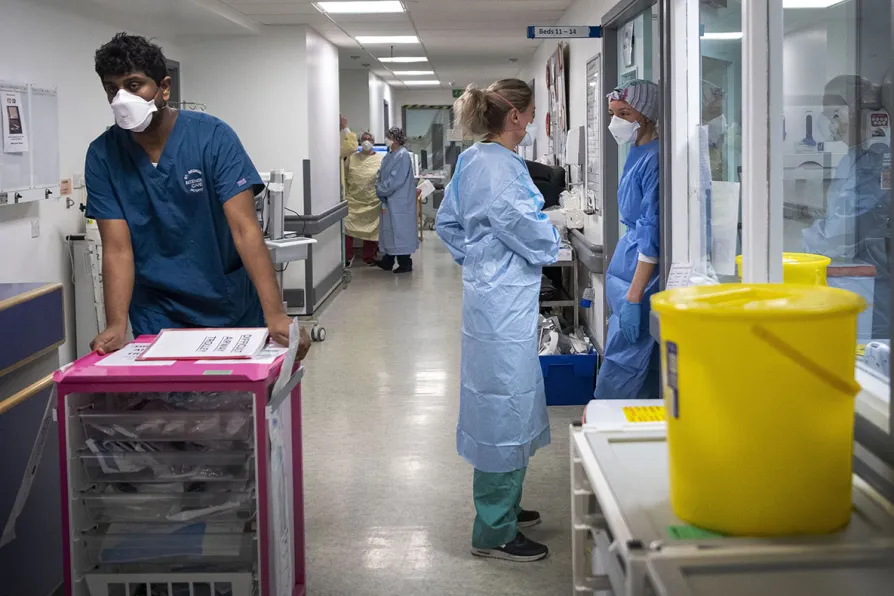 Staff members in a corridor in the ICU (Intensive Care Unit) in St George's Hospital in Tooting, south-west London, January 2021






THE number of patients in England cared for in hospital corridors or makeshift areas has remained above 3,000 a day for the second month running, as the NHS experiences a “summer surge.”
Health officials reported a record 2.5 million A&E attendances last month amid two heatwaves.
An average of 2,300 patients received corridor care in A&E departments each day in July, alongside 728 elsewhere in hospital wards, totalling 3,028 — down slightly from 3,188 in June.
Nuffield Trust deputy director Sarah Scobie said: “The fact that we even need a proper definition and data for corridor care in the NHS shows just how far A&E performance has spiralled out of control, with very long waits now the norm.
“What’s especially saddening in July’s data is that on almost every day of the month, there were cases of corridor care for children in other areas of hospitals while they waited for a proper bed on a ward.”
Meanwhile, the overall NHS waiting list fell slightly after rising for two consecutive months, with an estimated 7.27 million treatments outstanding at the end of June.
Some 65.8 per cent of patients began treatment within 18 weeks of referral, while 75.4 per cent were seen within four hours in A&E.
Society for Acute Medicine president-elect Dr Ragit Varia said: “From permawinter to permaheat, there is no longer a quiet season for the NHS.
“Month after month, patients are left waiting far too long in overcrowded emergency departments, corridors and other unsuitable spaces.”
Health Secretary Yvette Cooper thanked NHS staff for “their extraordinary efforts over this hugely challenging summer,” and said the health service must start planning for summer pressures in the same way as winter.
Temperatures climbed above 35°C by mid-afternoon in parts of England today in what was set to be the hottest day of the year, with the Met Office expanding its amber “extreme heat” warning.
The Royal College of Nursing warned of staff collapsing in workplaces due to facilities “not fit for humans” during heatwaves, as reported by the Morning Star yesterday.
NHS national medical director Professor Frankie Swords urged staff and the public to “keep hydrated, avoid the sun during the hottest part of the day, especially if you are clinically vulnerable, and check in on older or vulnerable friends, relatives and neighbours.”

