Labour must deliver its manifesto promises in full and begin the bigger task of restoring workers’ collective power, says MATT WRACK


 Latest editorial
Common class interests should generate shared priorities across our borders
The rise of the far right on the one hand and the emergence of a new style of Labour leadership on the other, create similar challenges and opportunities for unions in Scotland and beyond, argues DAVE MOXHAM
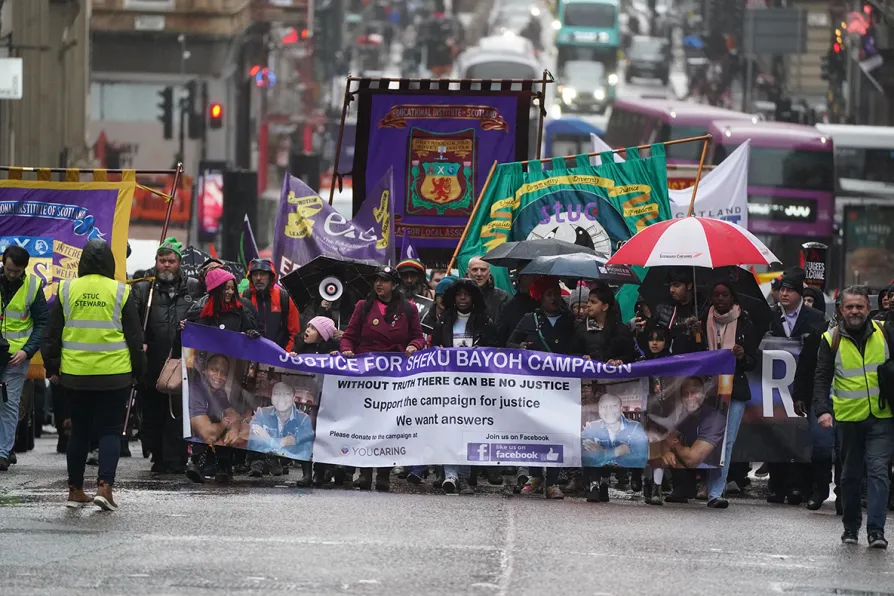 The annual anti-racism and anti-fascist march in Glasgow, organised by the STUC, as part of the St Andrew's Day rally. Picture: Saturday November 26, 2022.

This summer’s fire outbreaks highlighted once again the deadly cost of job, equipment and funding cuts to the fire service. Ten years after the Grenfell tragedy, serious lessons still need to be learned, says STEVE WRIGHT
Live music and musical education are both under attack and threaten to impoverish our culture. The Musicians’ Union seeks allies in the fightback, writes NAOMI POHL
The TUC fell for the illusion of a ‘Social Europe’ in 1988 and backed single-market membership. DOUG NICHOLLS argues that dramatic changes in the EU prove the need for an independent economic policy
As Cuba faces an unprecedented US energy siege and growing threats of military intervention, TUC Congress must stand unequivocally with Cuban workers and their right to determine their own future, writes STEVE GILLAN, POA general secretary and TUC president
By organising for boycotts, divestment and sanctions, trade unionists can turn solidarity into action, writes JESS BARNARD





WITH TUC Congress under way in Brighton, many Scottish delegates and their wider delegations are debating the policy positions and, perhaps more importantly, setting the strategic and tactical direction of our movement for the months and years ahead.
Our devolved settlement and somewhat different political discourse here is nonetheless rooted in the economic, fiscal and social context across these islands. As things stand, most of UK employment rights, tax and investment decisions and industrial policy impact Scottish workers directly. Even where powers are devolved, decisions made at Westminster have deep indirect impacts here.
Thus, it is impossible not to address the potential impact of a new prime minister in Downing Street. It’s fair to say that mood music is, on balance, positive. It might seem like a simple statement, but when Andy Burnham took to the dispatch box a week or so ago to say that the crux of our current economic difficulties lies with Thatcher’s privatisation decade, it felt like change.
Of course, recognising a problem and remedying it are two different things. We already have the GB Rail Bill in the pipeline and have seen the positive, if in our view, under-resourced, GB Energy come into being. Looking forward, the PM seems less embarrassed to champion the case for council housing and municipal transport ownership.
If his much spoken of return of economic power to councils and regions is to work best, then local democratic ownership could be the powerhouse that drives that vision forward.
Such approaches could also present a much need challenge to the Scottish government. A few years ago, the SNP were somewhat ahead of the game compared to the rest of the UK. This was evidenced by its commitment to public ownership of life-line ferries and Scotrail. It was also willing, albeit reactively rather than proactively, to put stakes into industry.
Government ownership intervention was seen at BiFab in Fife, at Prestwick airport and at Ferguson Marine. More recently, Unite has successfully lobbied the Scottish government to support threatened workers in Alexander Dennis through furlough, although the final outcome for them is far from secure.
Missed goals
These interventions notwithstanding, there is a growing feeling that more goals have been missed than scored recently. Despite the glowing example of privately owned Lothian buses, the Scottish government has been silent on bus municipalisation and failed to take public stakes through the ScotWind process. Moreover, its claim that it cannot create a Scottish Energy Company due to a lack of devolved powers has been called into serious question by the Welsh government’s launch of a consultation into creating just such a body in Wales.
Of course, the Prime Minister’s commitment to extending public ownership remains largely theoretical at this point. Bringing back energy and English water into public hands would present enormous challenges. Nevertheless, there is the potential for a continuing move towards active government intervention across the UK, married with a proactive and respectful commitment to devolution and further devolution which could form a key plank of the economic and democratic renewal we desperately need.
This, of course, should be a necessary ambition of itself. Yet the growing threat of far-right ideas and organisation move such a strategy from the category of much-needed to existential. The debates that took place earlier this week, and the TUC’s announcement of extra resources to combat far-right disinformation and hate, leave us in no doubt of the importance our unions attach to this issue. It also reminds of what we have long known. Working-class politics and organisation are the only antidote to far-right organisation.
While it is immensely important to campaign along civil society and anti-racism organisations, we can never outsource our fundamental responsibly to fight these battles ourselves and take leadership in workplaces and the wider community. That is why it is no surprise that in Scotland and across the UK, we have seen far-right parties focusing their ire on trade unions. They know fine well the power we can harness to push back.
When it comes to racism or other anti-minority sentiment, any complacent last vestiges of Scottish exceptionalism must now have been put to bed. There are far more similarities between the approaches and activities of the far right in England and Scotland than there are differences. Context can always vary, but our communities are exposed to the same misinformation and memes wherever they live across these islands. Their economic disempowerment and resultant political alienation are broadly the same.
This is why it was welcome to see Congress pass fresh policy this week pledging to counter the use of social media by far-right parties to influence supporters. It is an open secret that millions upon millions of pounds are being ploughed into the social-media space by the powerful. It is an equally open secret that this is a battleground where we are currently losing.
Allied to our traditional tools of workplace organising, activist education and creation of community alliances, we need to do more to combat that threat.
Importantly the TUC motion also resolved that we should be “engaging with those audiences by addressing cultural concerns rather than relying on ideological labels.” We need to meet people where they are, rather than where we would like them to be. That can involve difficult conversations, but conversations we must nonetheless have.
It will hardly be a surprise to hear that, whether in the fight against racism or the wider pursuit of democratic control of our economy, the STUC will continue to work hand in hand with the TUC and the other trade union centres across this island, as we move the shared priorities of workers forward.
Dave Moxham is deputy general secretary of the STUC

Similar stories

Funding education properly is the surest means of empowering new generations to play a full part in democratic participation and social progress, it is also essential for children with special needs to achieve their potential, writes ANDREA BRADLEY
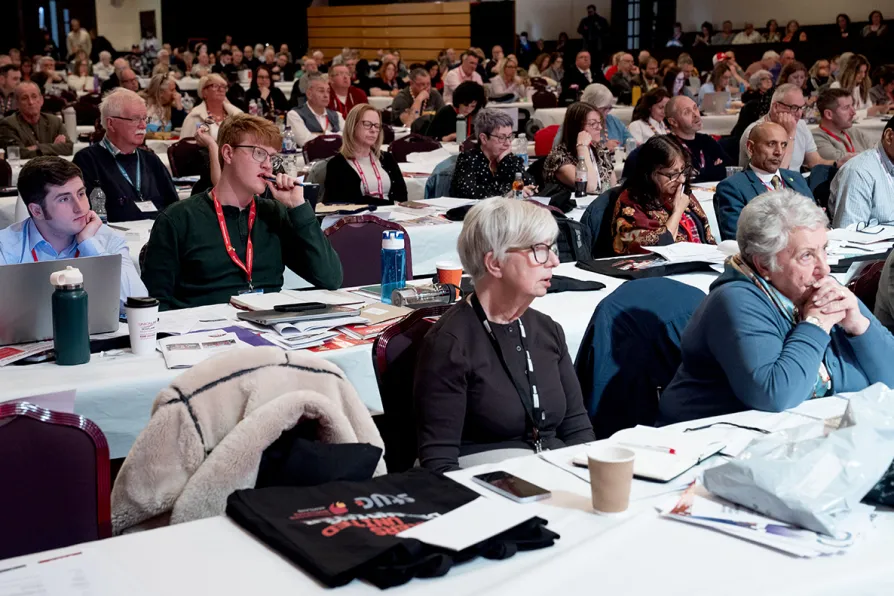
ANN HENDERSON looks at the centenary of the foundation of the STUC women’s committee, and the challenges facing women in the trade unions today
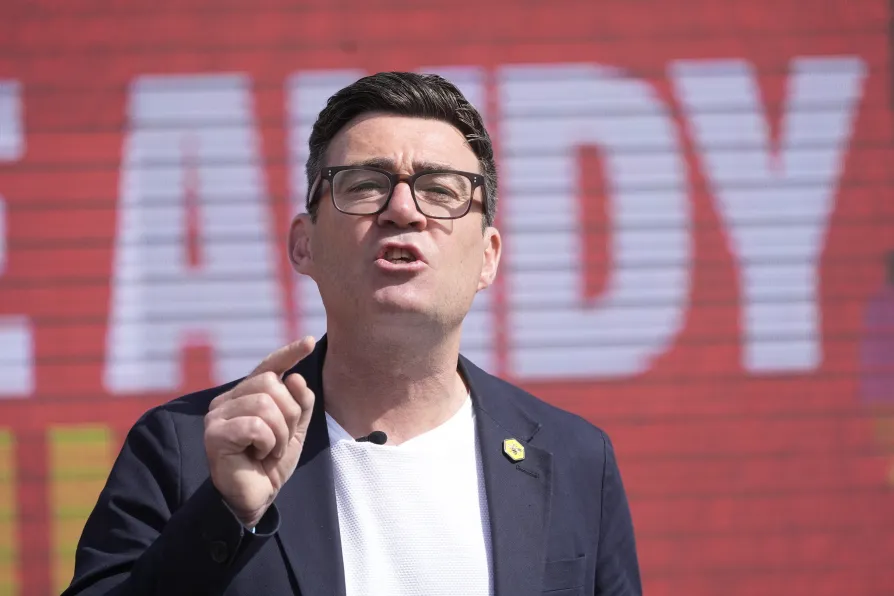
Burnham’s Makerfield triumph offers the party the opportunity to reconnect with working people, but only if it rejects business as usual, says CAROL MOCHAN MSP

ROZ FOYER explains the significance and tradition of today’s St Andrew’s Day March and Rally